We had been looking forward to this part of the trip with some eagerness and some trepidation. We were worried about the currents on the Mississippi, the debris that might be in the water, and the long stretches with no marinas in sight. The whole month of September, even with stops in Chicago, Ottawa, and St. Louis, took us from the latitude of Boston to that of Norfolk, Virginia. And it was exciting!


September 2025 was memorable! We started with Labor Day in Racine, Wisconsin and made our way to Chicago and then down the Illinois River to the Mississippi River just north of the joining of the Missouri River and St. Louis. We stayed at the marina in Alton, Illinois for the weekend and enjoyed this little town north of St. Louis that was near the First Nations city of Cahokia (https://cahokiamounds.org); the conjunction of the Illinois, Missouri, and Mississippi Rivers; and the point where Lewis and Clark set off on their Voyage of Discovery to the Pacific Ocean.
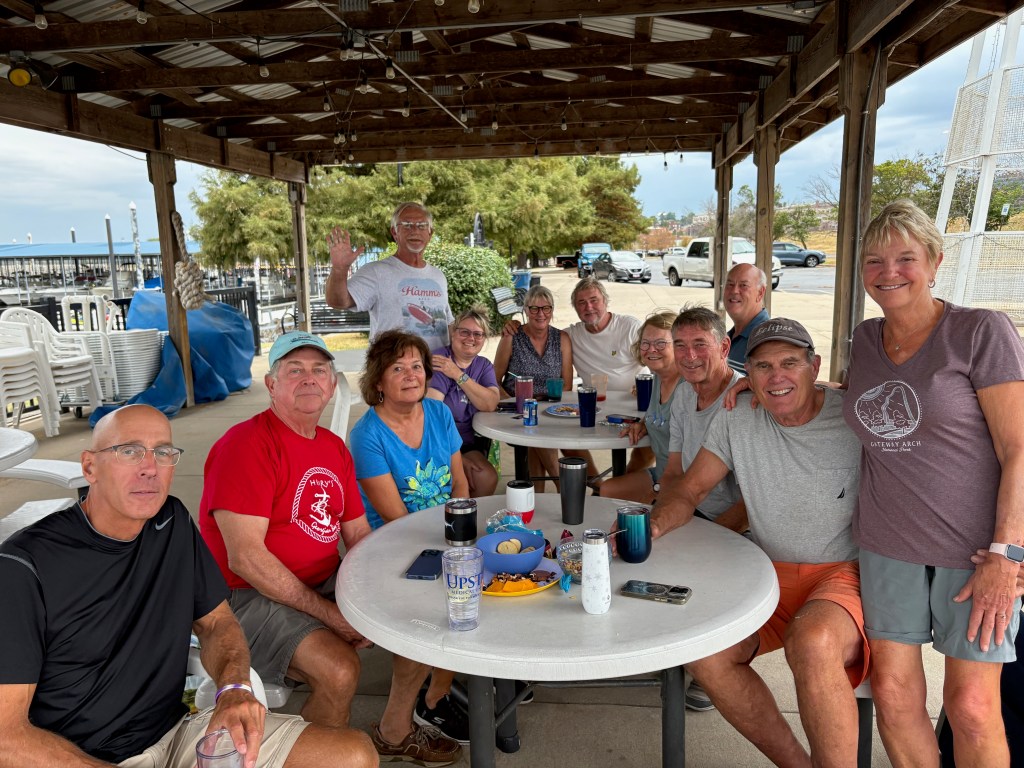

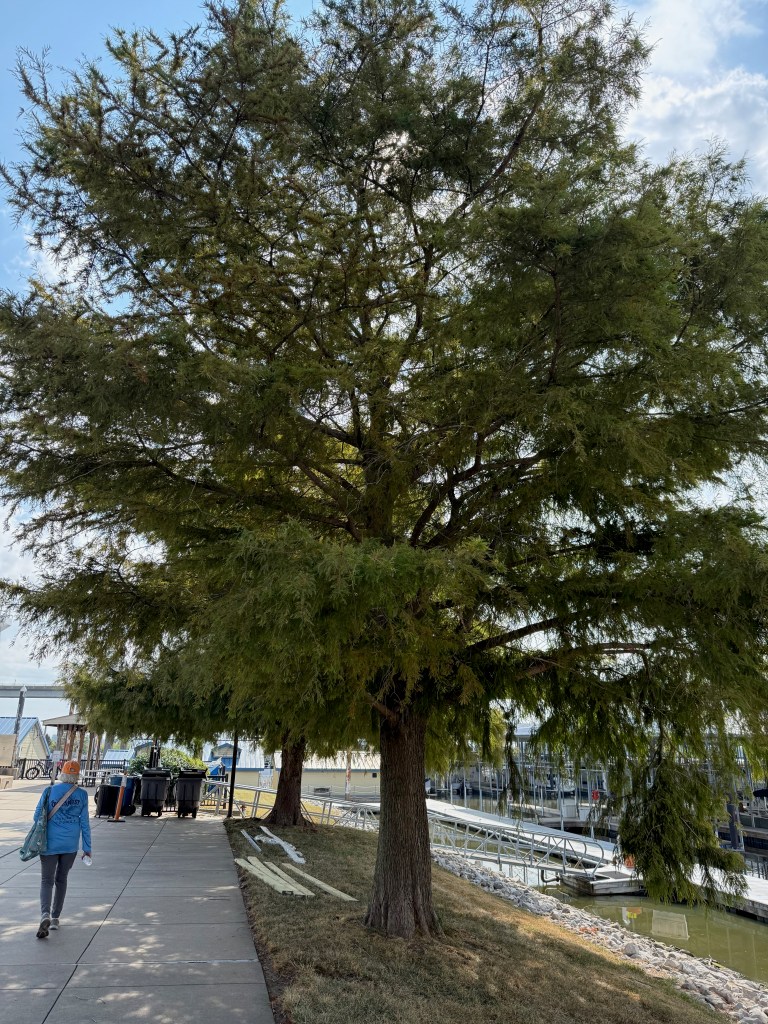
The weekend at Alton, IL was filled with visiting with other Loopers and trying to get the generator working. We purchased a new battery, in case that was the problem (it wasn’t!) and hit the local farmer’s market. The town was very nice, but our attention kept gravitating towards the river and those moving down it. We hit the local Target for other groceries and necessities before retreating to the boat for some rest and relaxations as we gathered our energy for the challenge ahead. On Monday, Sept 22, we left the safety of our marina, knowing we would have to anchor out that night with no generator and no windlass, expecting the best and planning for the worst.

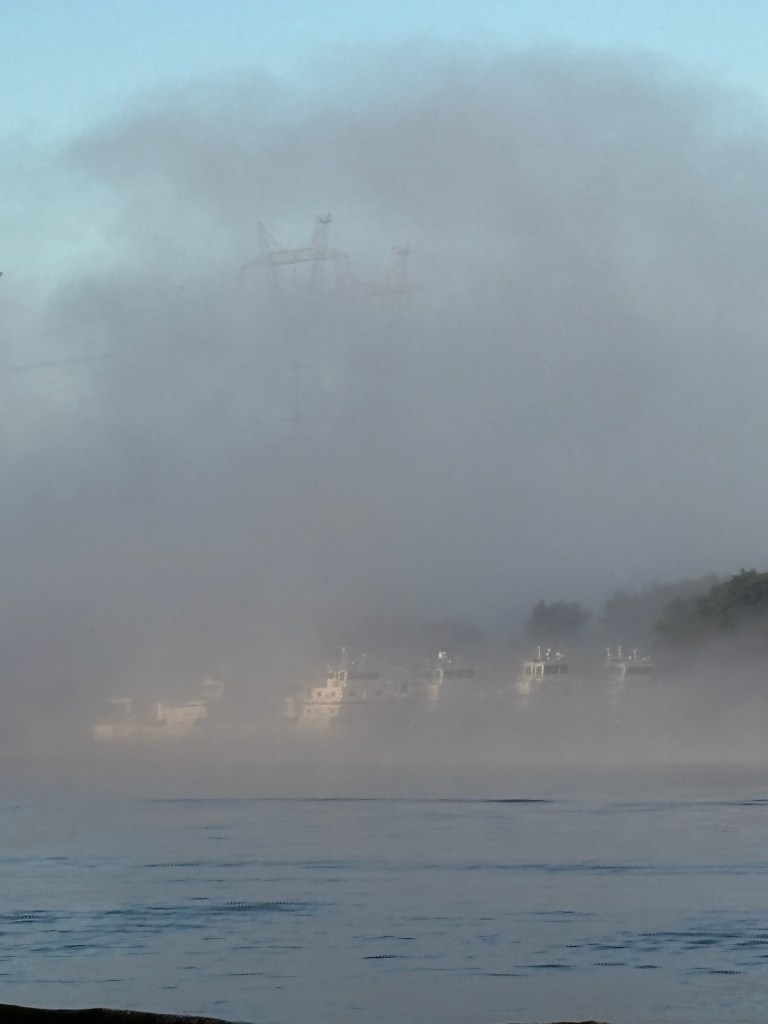
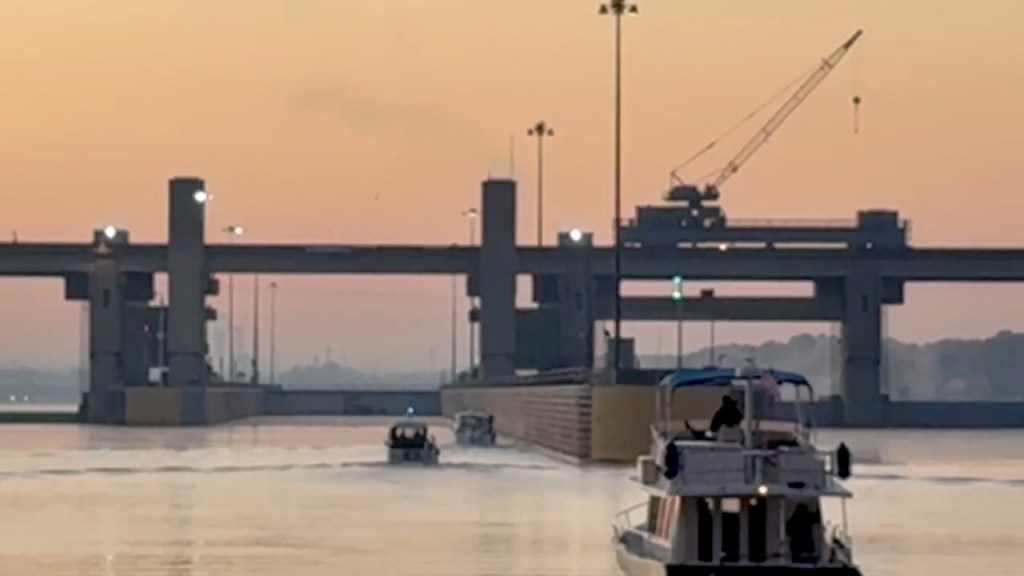

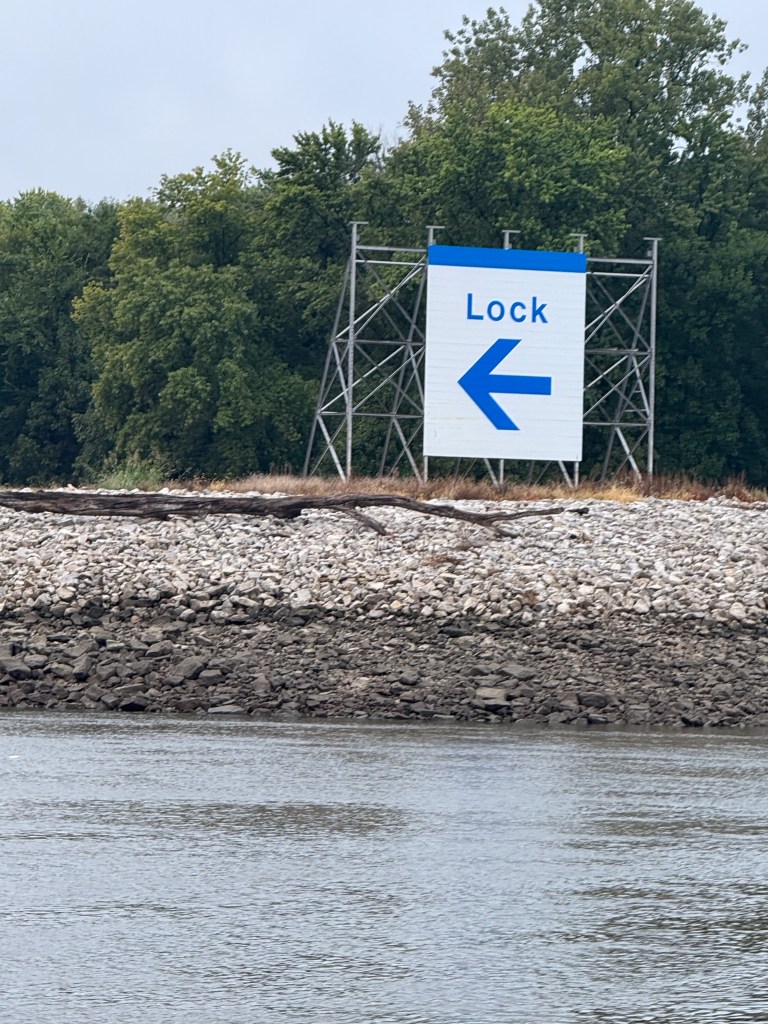

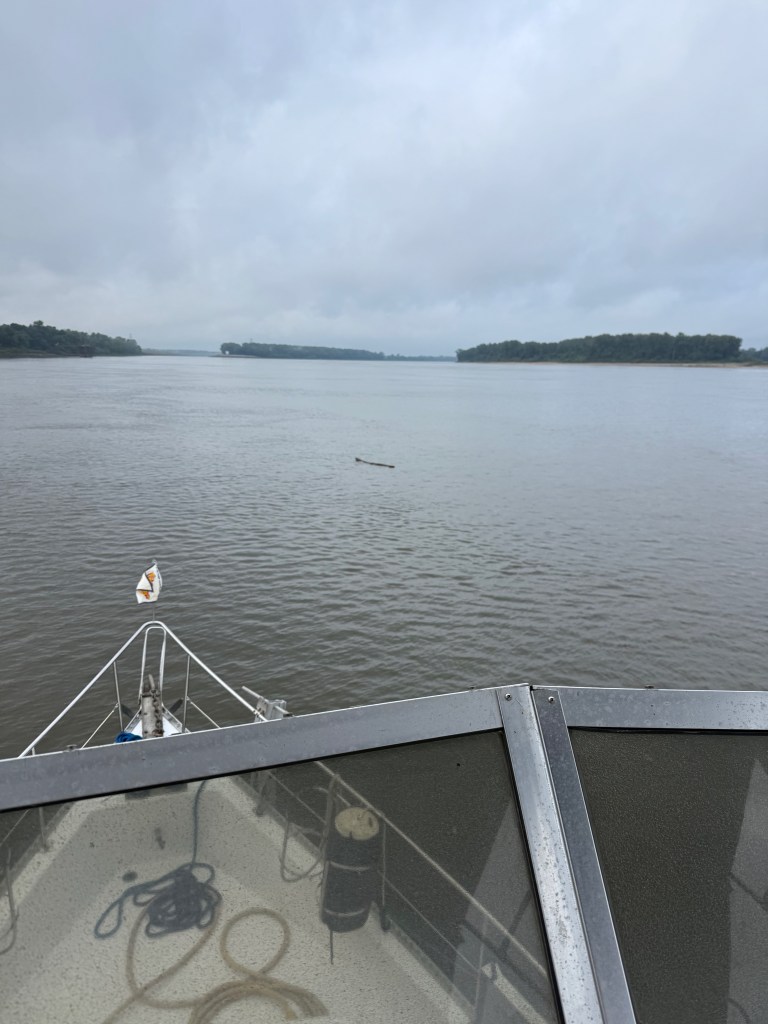


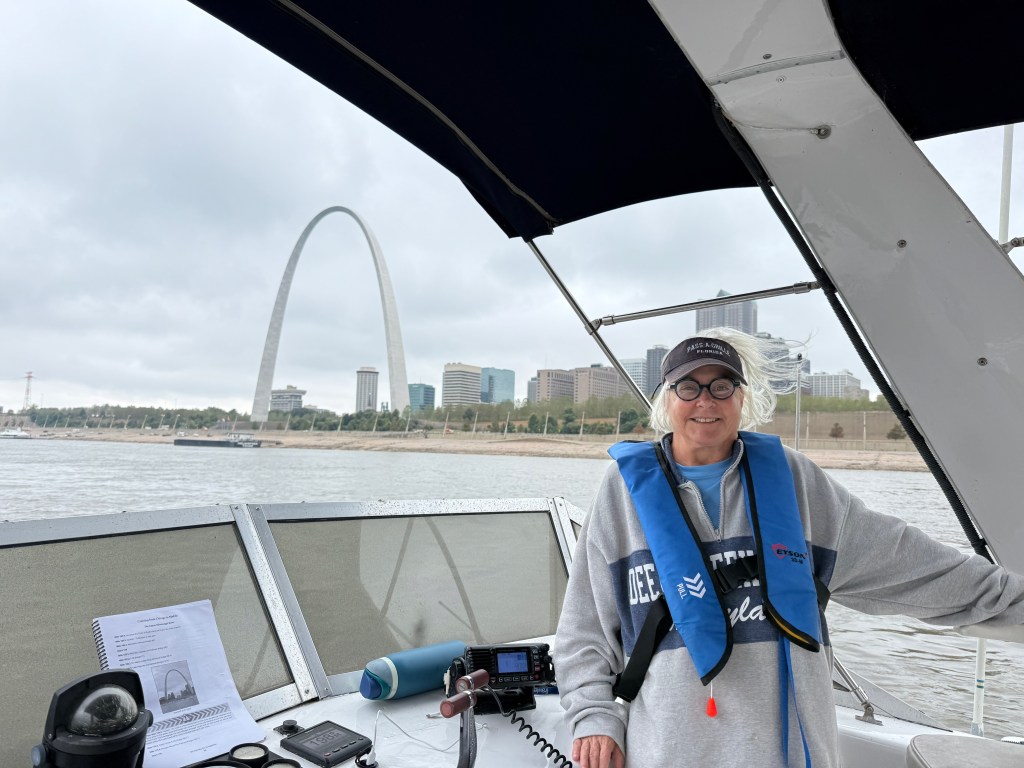
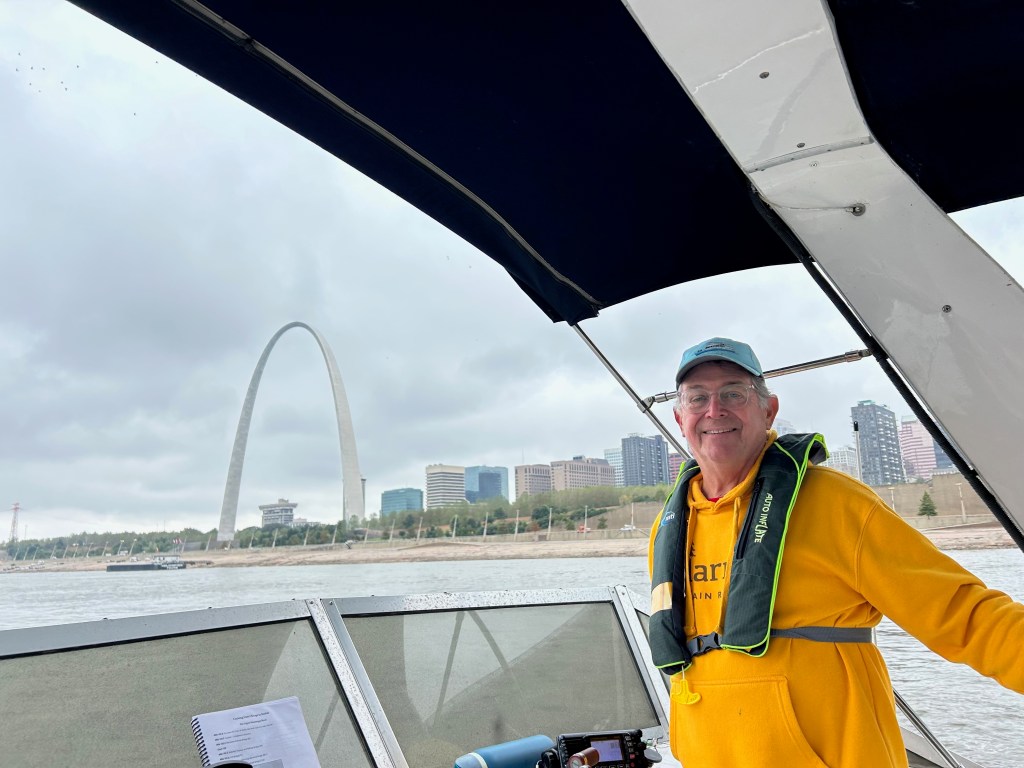


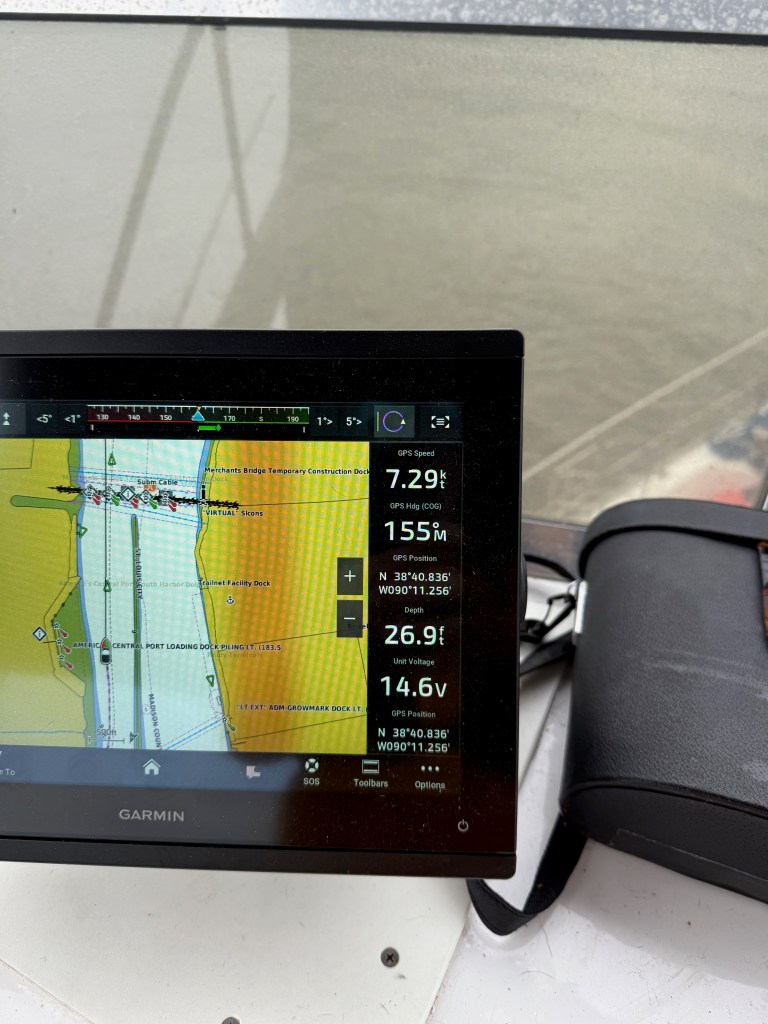
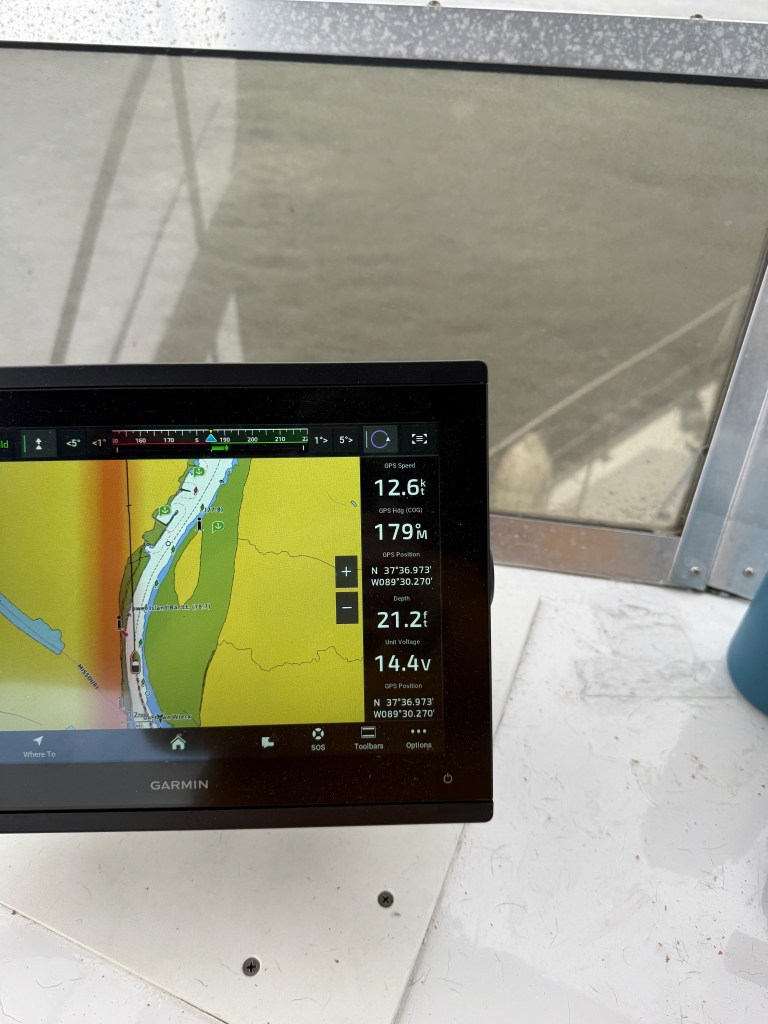


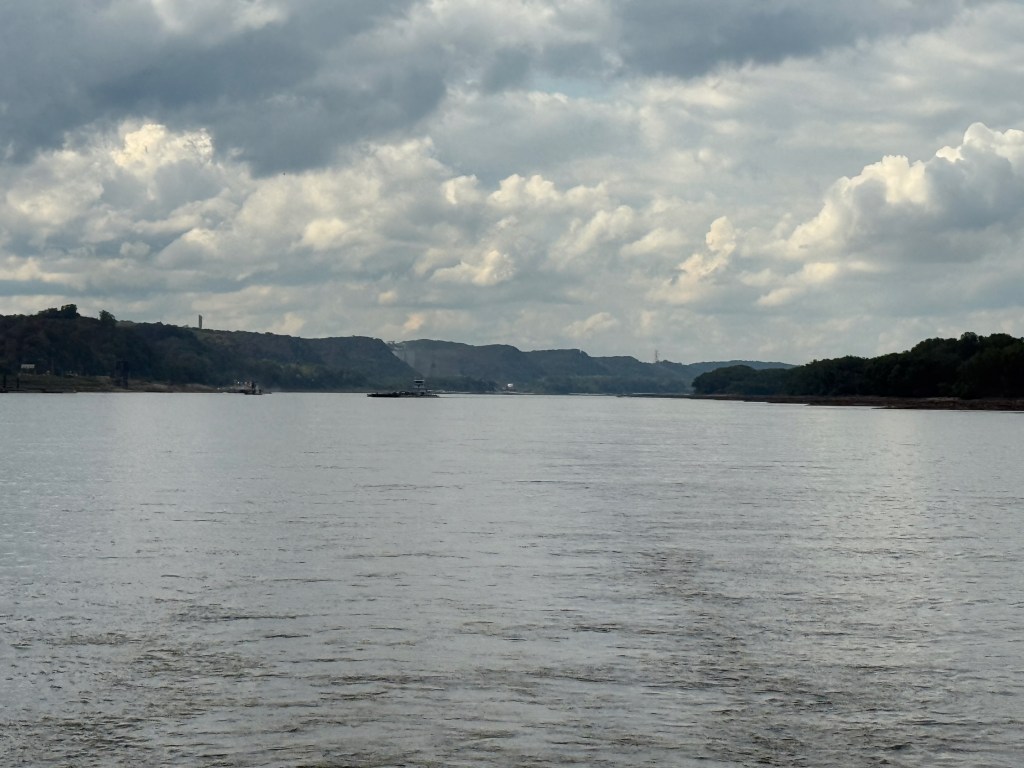
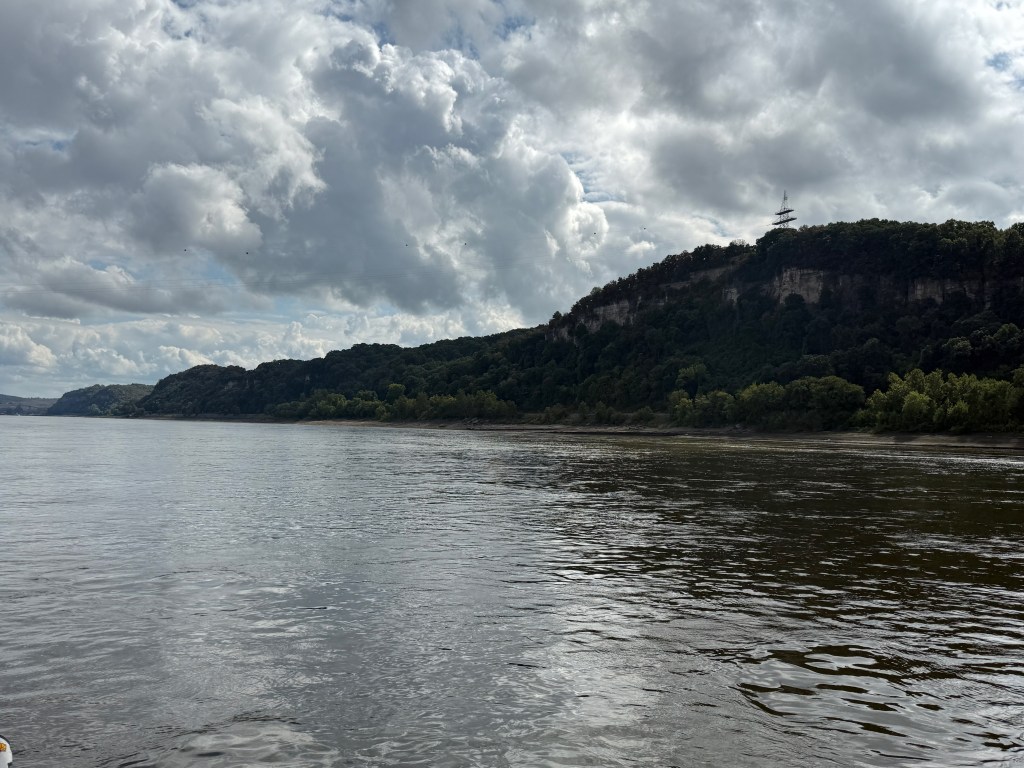

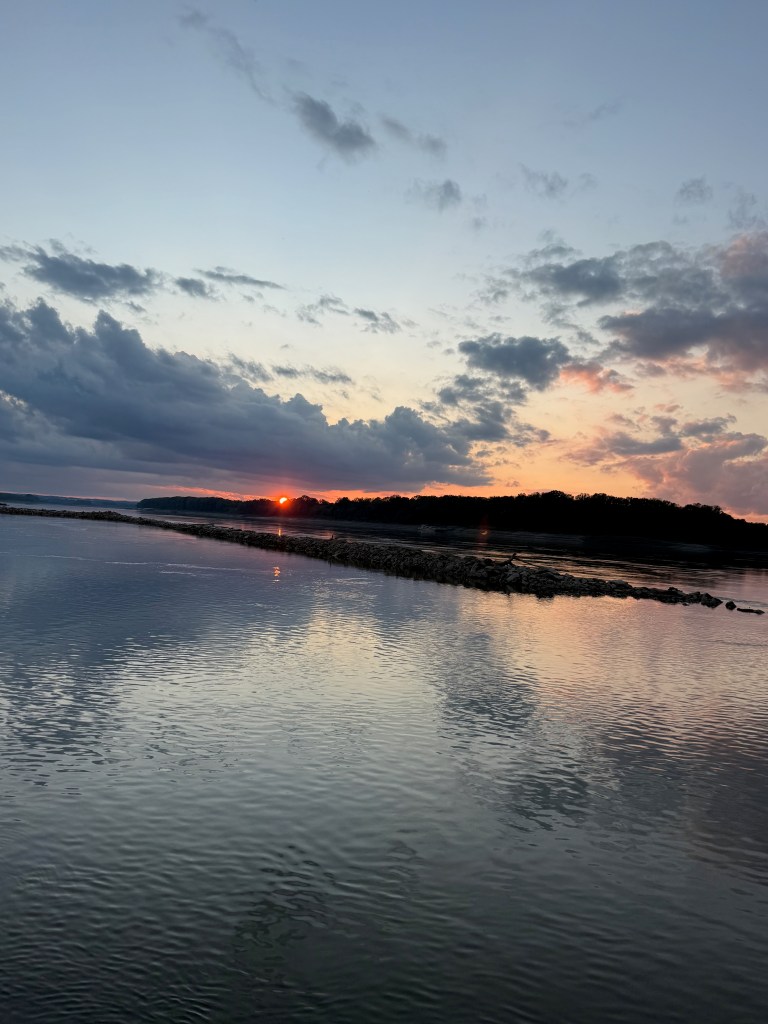
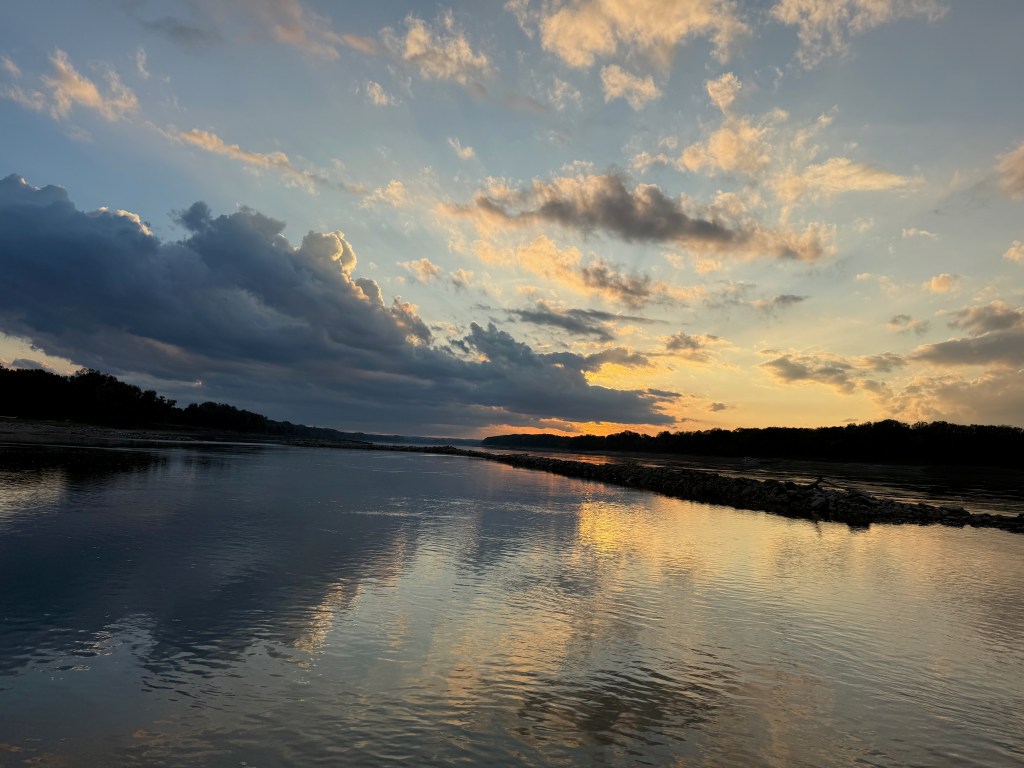
This first day on the Mississippi started with our normal early departure, as we approached the first of two locks for the day and made it through swiftly. Watching the current, we realized that we were in the “pool” of the next lock at Chain of Rocks (the last downstream lock on the Mississippi — before it becomes “wild”) As the mighty Missouri River joined our journey to the sea, we did not notice much change, but quickly moved out of the main channel as we approached the lock. Had we missed the large sign that pointed us in the correct direction, we would have met a terminal fate on the rocks above St. Louis (like this captain: https://www.youtube.com/watch?v=jcw1gj8JZNc). Disaster averted! Instead, we entered a long canal that led up to the lock and waited for over two hours until we could lock through. This wait is normal on these big rivers, since PCs (Pleasure Craft) are the lowest priority in river navigation, obligated to defer to the big barges and tows.
We anchored and waited. …and waited. As we finally locked through, the river gathered speed and we found ourselves going as fast as 12.6 knots (x 1.151 = 14.5 MPH) relative to the shore. That translated to over 70% increase in speed for us. In the water, it felt like a normal speed, but we had to keep an eye out for trees and other debris. even as we enjoyed the sights of the big city going by. It was a heavily industrial area, with little attention paid to the beauty of the waterfront (no Riverwalk here) and we contemplated the Gateway to the West as we passed Lewis and Clark landmarks and the Gateway Arch.
As urban St. Louis and the metroplex faded away to the north, we made our way south towards the mouth of the Ohio River at Cairo, Illinois (200 statute miles or 177 nautical miles) ahead. The hills and small towns soon gave way to farmland and bluffs as the river found its way. We had read about a lock on the Illinois side where we might be able to tie up, but the area was closed for remediation and we found our way to an anchorage just south of the Kaskaskia Lock and Dam, behind a wing dam. These structures extend out into the river from the shore and divert the current into the main channel to keep it clear. They can also provide a safe place to anchor, if you can find one with a large back eddy (reversing current) and enough depth to be safe. We anchored just after 5:00 pm and Hervey took Duke to the shore for some long-awaited relief and a run on shore..
And the evening came. With no generator, we set an anchor alarm on our iPhone to alert us if the anchor started to drag and went to bed early.
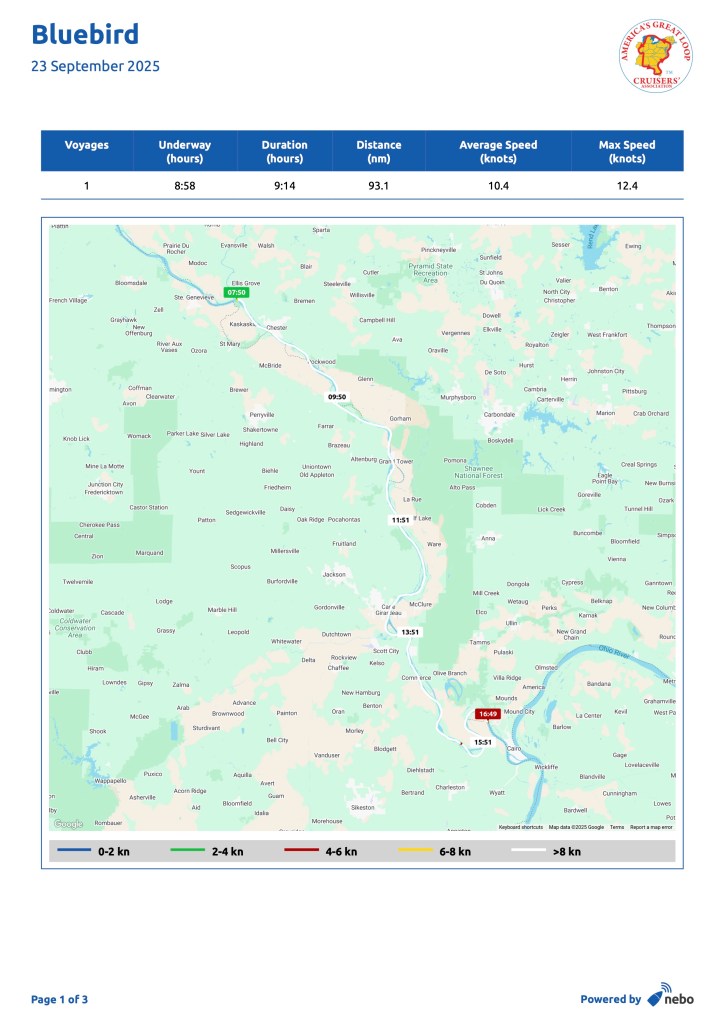

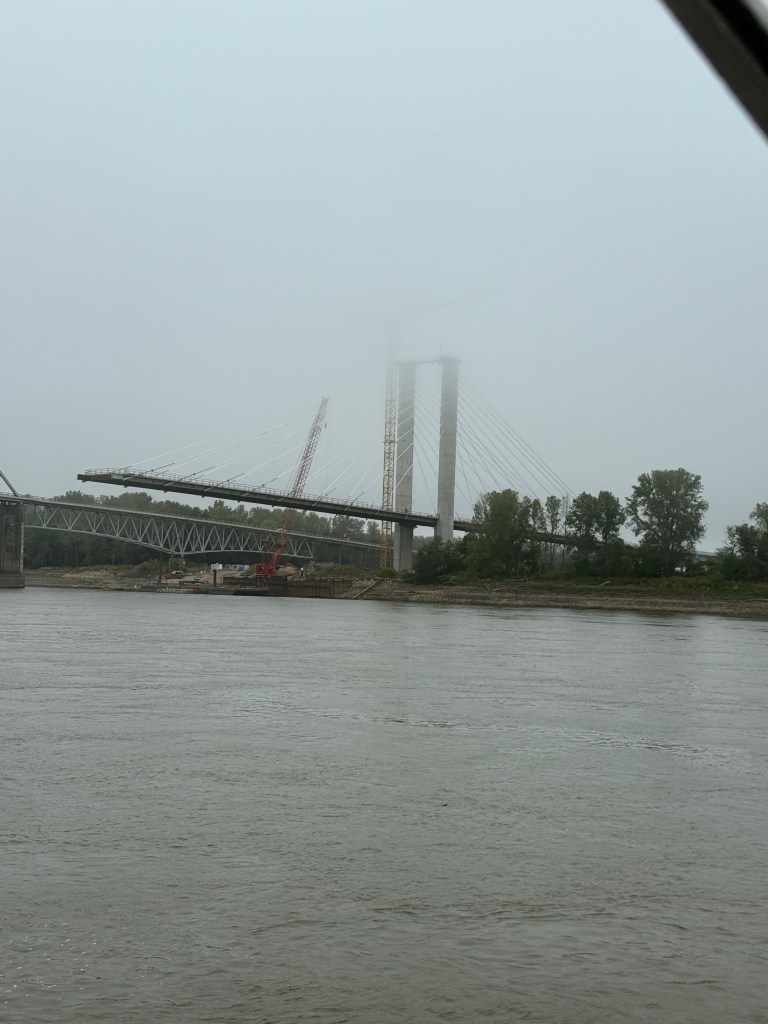
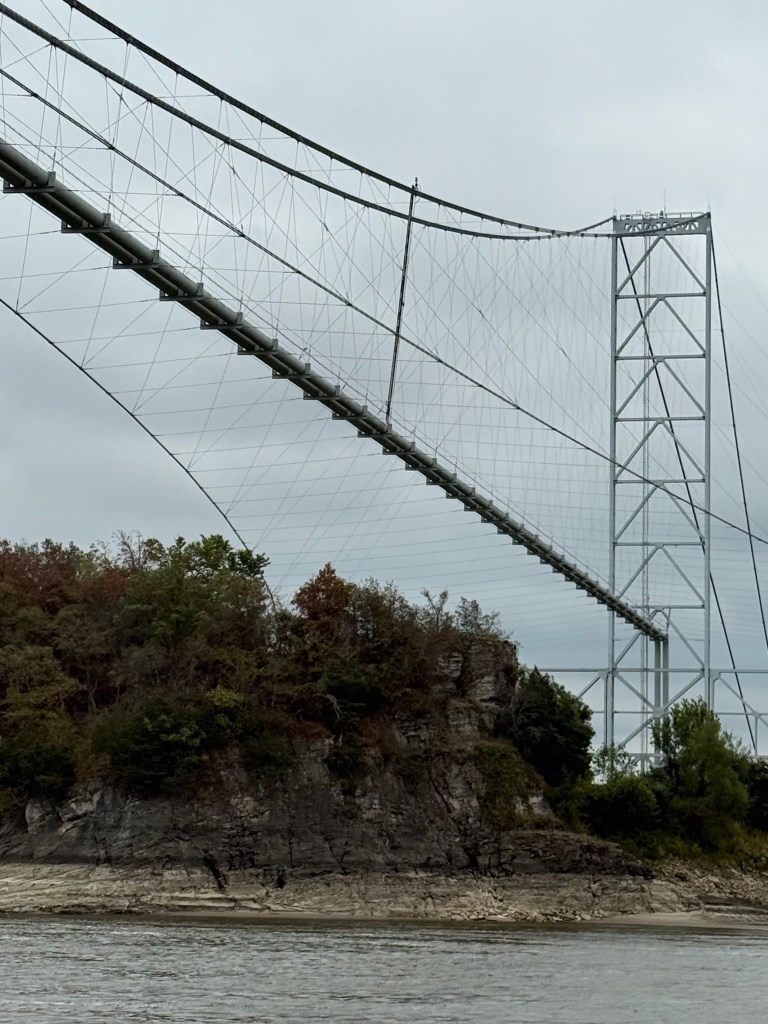
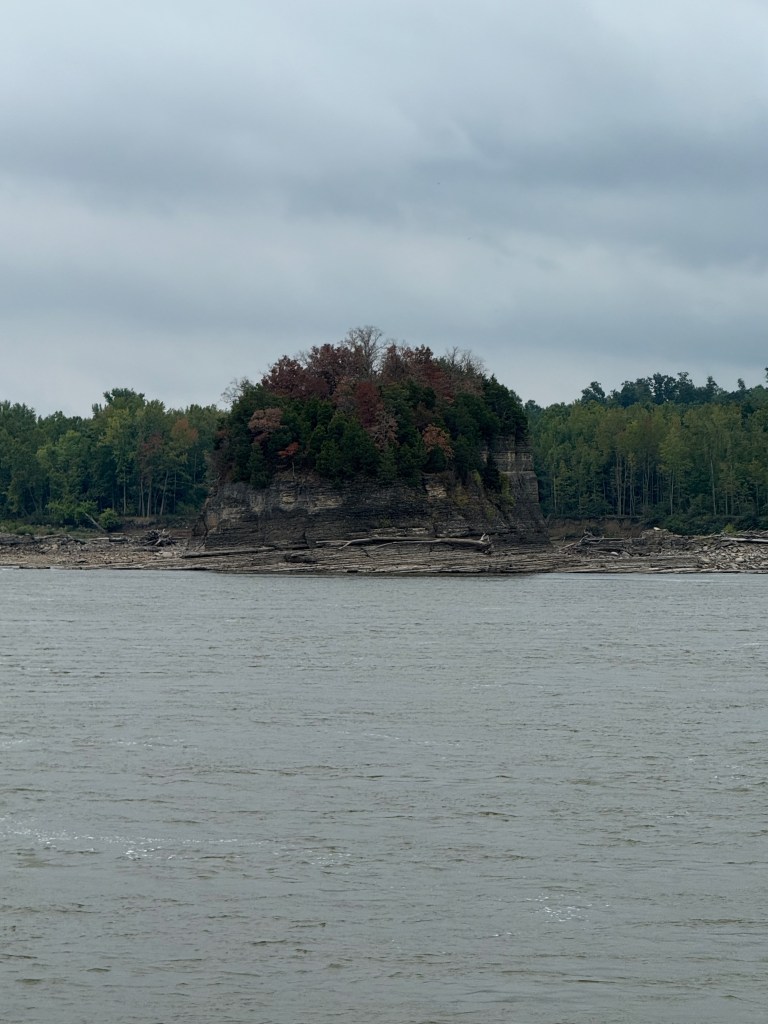


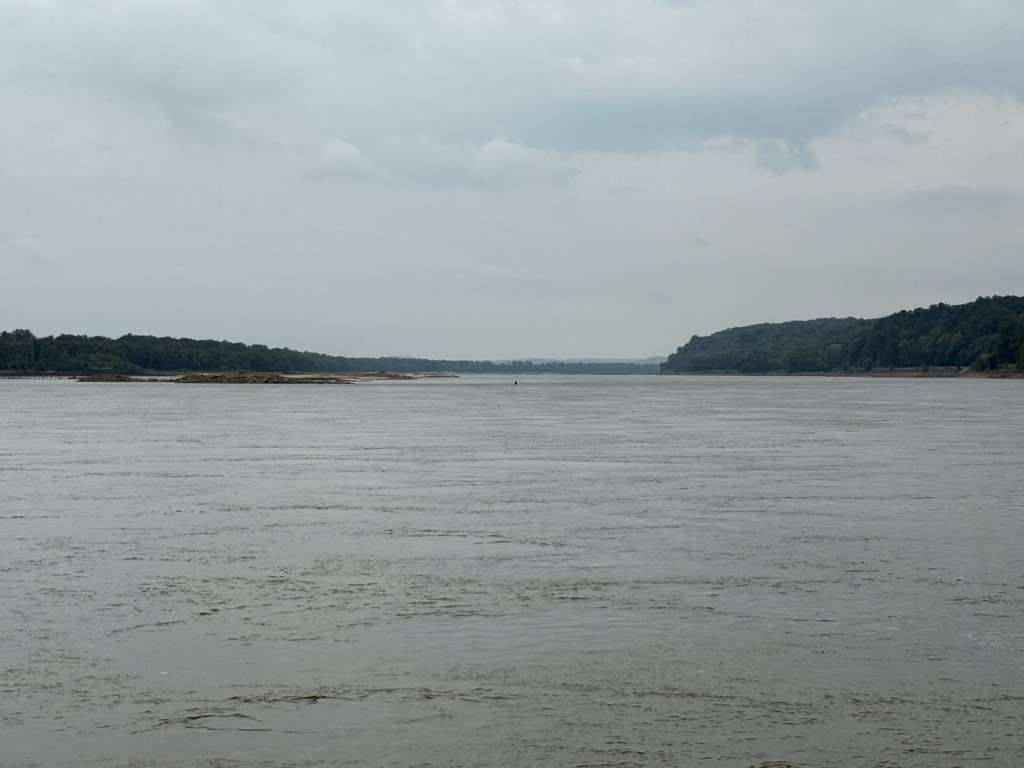
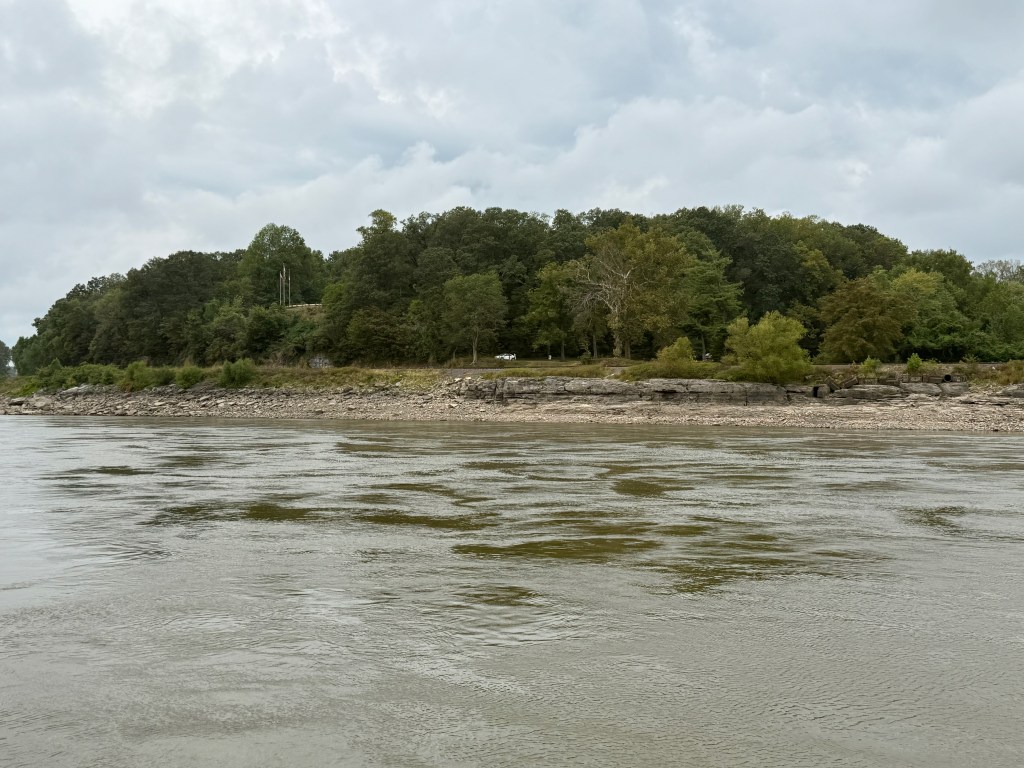

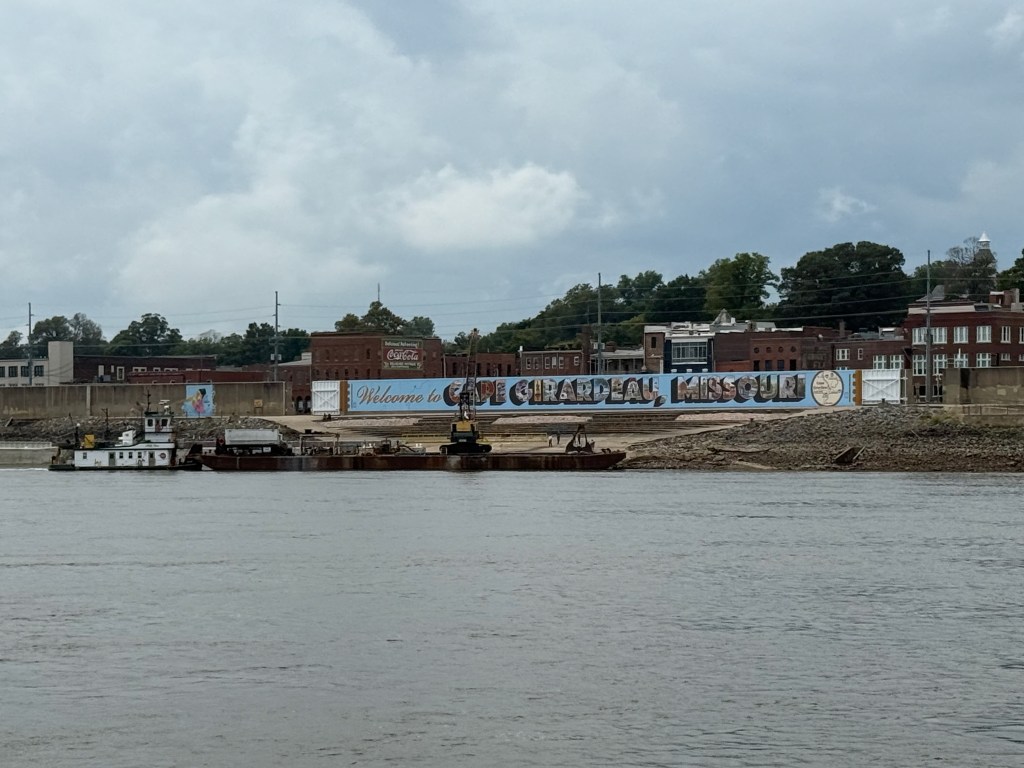
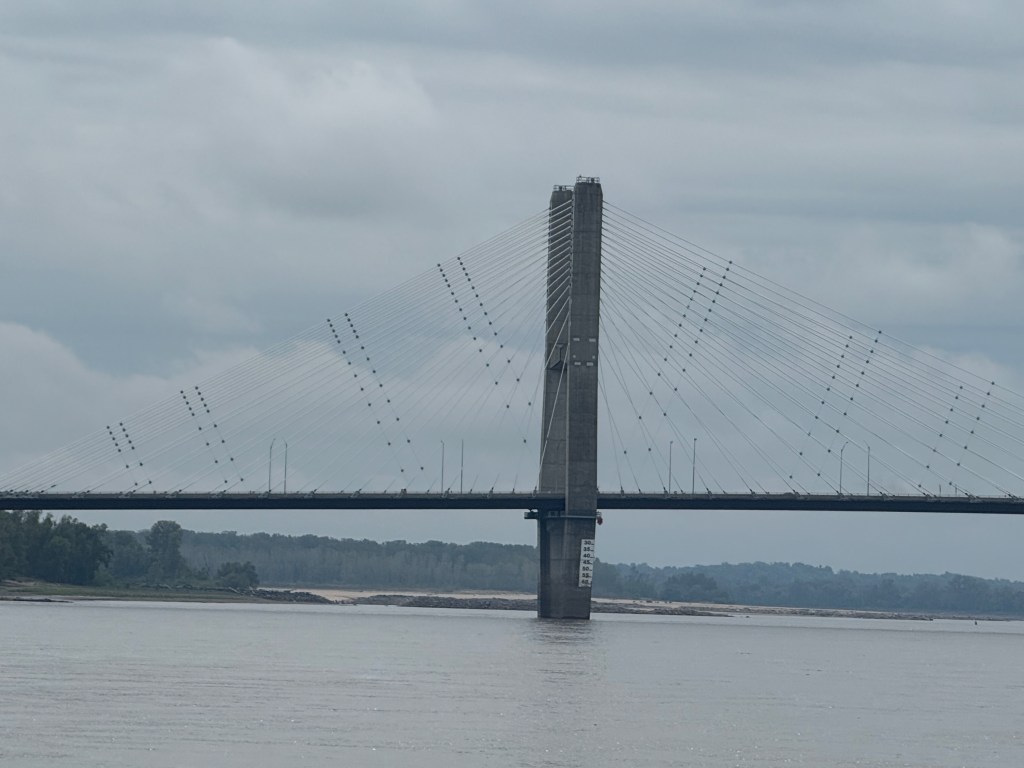

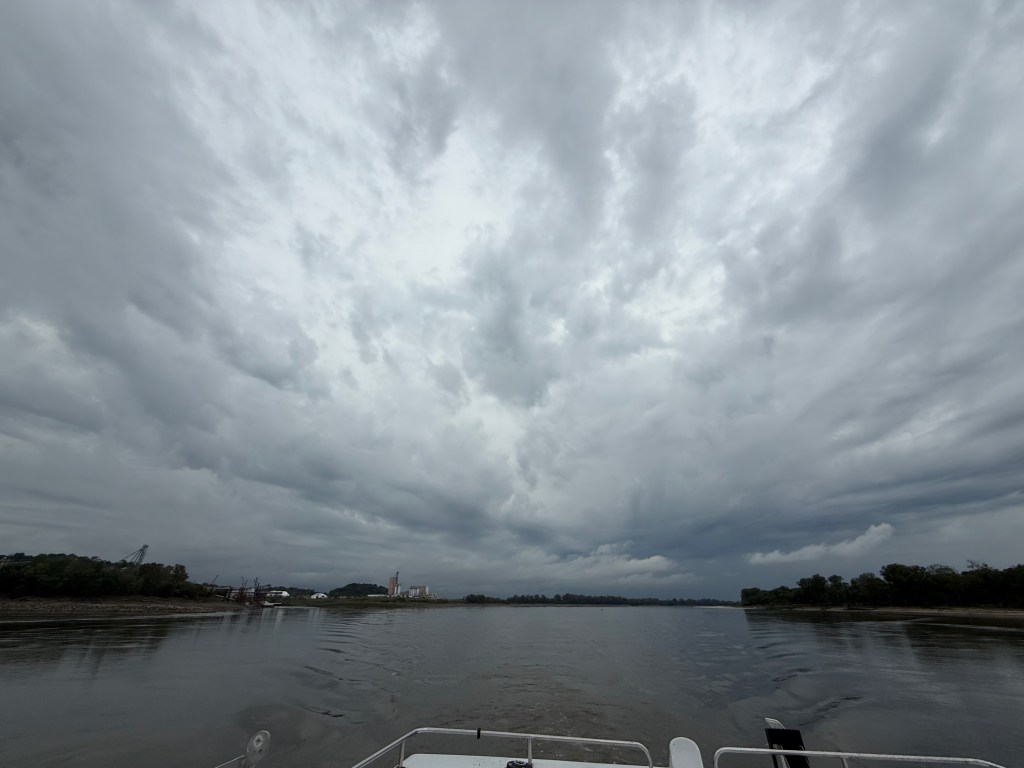


The second day on the Mississippi started early and, after taking the dog to shore once more, we headed south again. This was a long day but, mercifully without locks, it went very quickly. Our average speed was over 11 knots and we hit 12.4 knots at one point. The 93.1 nautical mile trip took nine hours with an average speed of 10.4 knots and we arrived at our second anchorage at 4:30 pm. We dodged rain storms and thunderstorms all day and as we moved south, seemed to avoid the worst of them. The captains of the towboats were concerned for us and warned us about the weather, but we listened to the interval between the thunder and the lightning flashes and could tell from that, and from the radar images, that we had dodged the main thrust of the storm. Were the interval to drop to less than six seconds, we would have headed to shore and anchored.
The country we passed was wooded and populated by small towns, prisons, and river-based industry. The river began to wander a bit and long bends appeared that seemed to take us north, then west, then east and south. We were concentrating hard today and had to avoid a lot of debris, but managed to stay safe and clear of all danger.
We were getting close to the conjunction with the Ohio River at Cairo, IL but decided to stop about 11 miles north of the junction to save some energy for the next day’s 50-mile run to Paducah, KY. Hervey chose a wing dam on the Illinois side that seemed secure and we pulled into the eddy and dropped the anchor. The boat swung a bit and settled with the bow into the eddy and the stern looking at the river current. As Hervey went to launch the dinghy and walk the dog, he noticed three floats in the river next to the stern. We had no idea what these could be…
After a comfortable nights sleep with the anchor alarm nearby, Hervey woke early to walk Duke again. As he retuned to the boat, a large skiff came zooming up the river and approached us. We had backed into a catfish “trot line’ with 10 sharp hooks suspended from a strong, 100- foot length of parachute cord and the floats we had seen. We were apologetic but the fisherman was not concerned and simply cut the line at both ends. Now, it seemed, we had 100 foot of line wrapped around our port propeller shaft with ten very sharp hooks! AND, it appeared that we had not been anchored securely at all but had been kept in place all night by the eddy current and the bank that we had backed into. As Hervey hauled up the anchor (by hand, as you might remember), it turned out that it had become fouled in the anchor chain and not embedded in the river bottom at all. We had to wait until we docked at Paducah to untangle that mess.


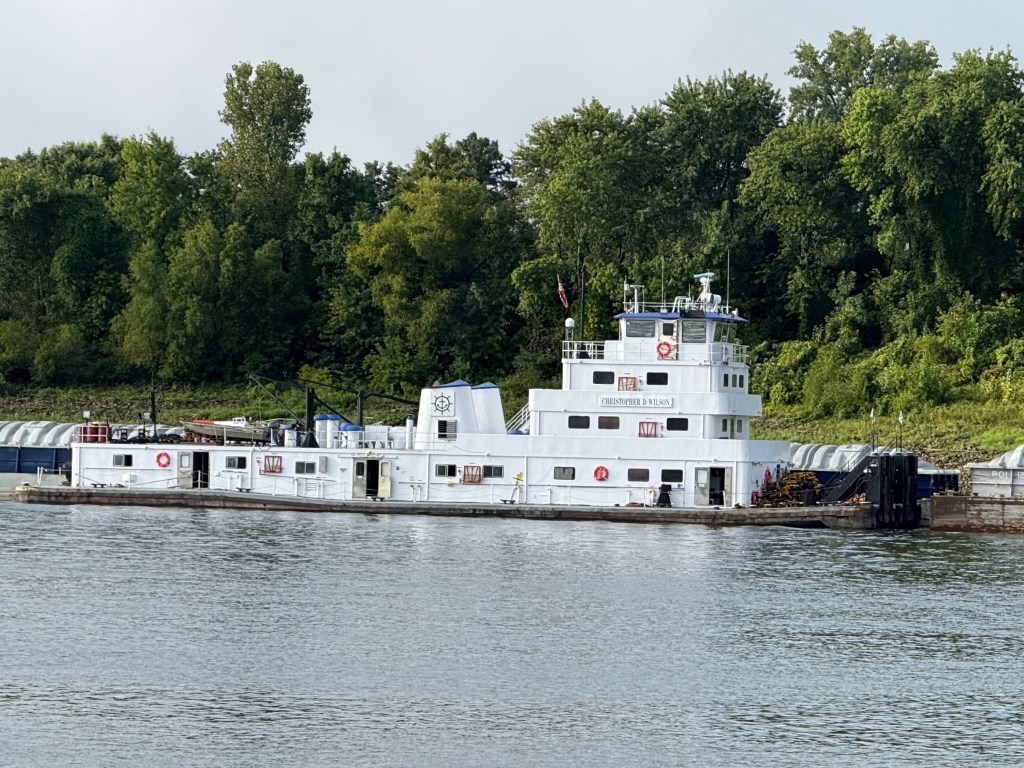
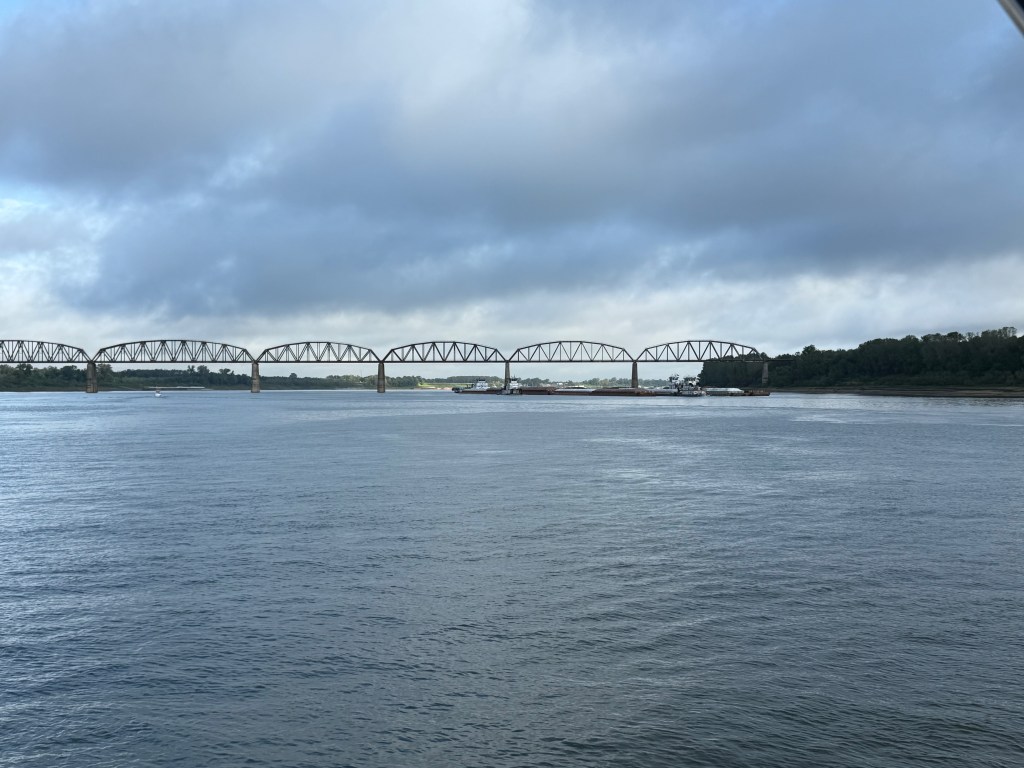
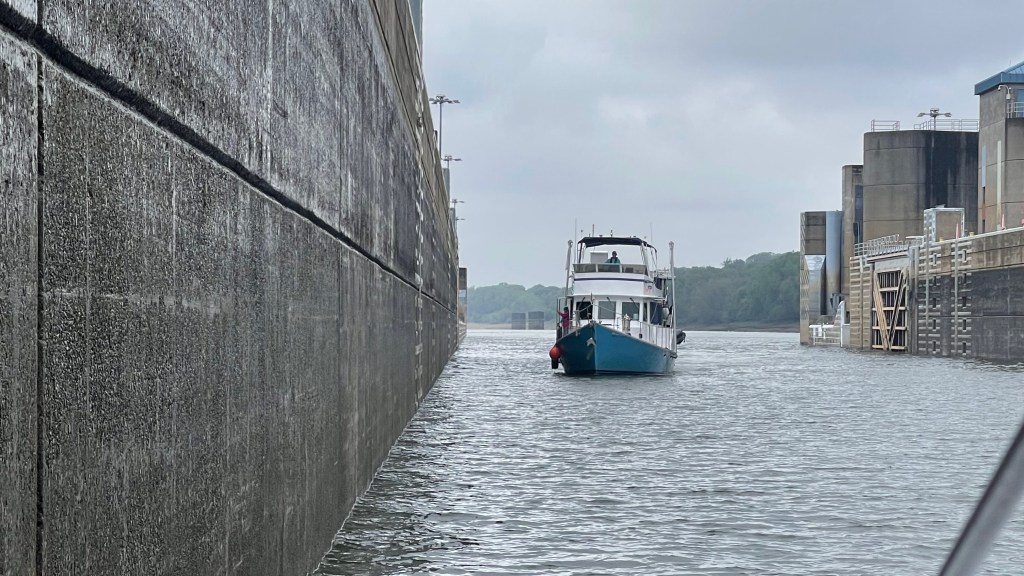

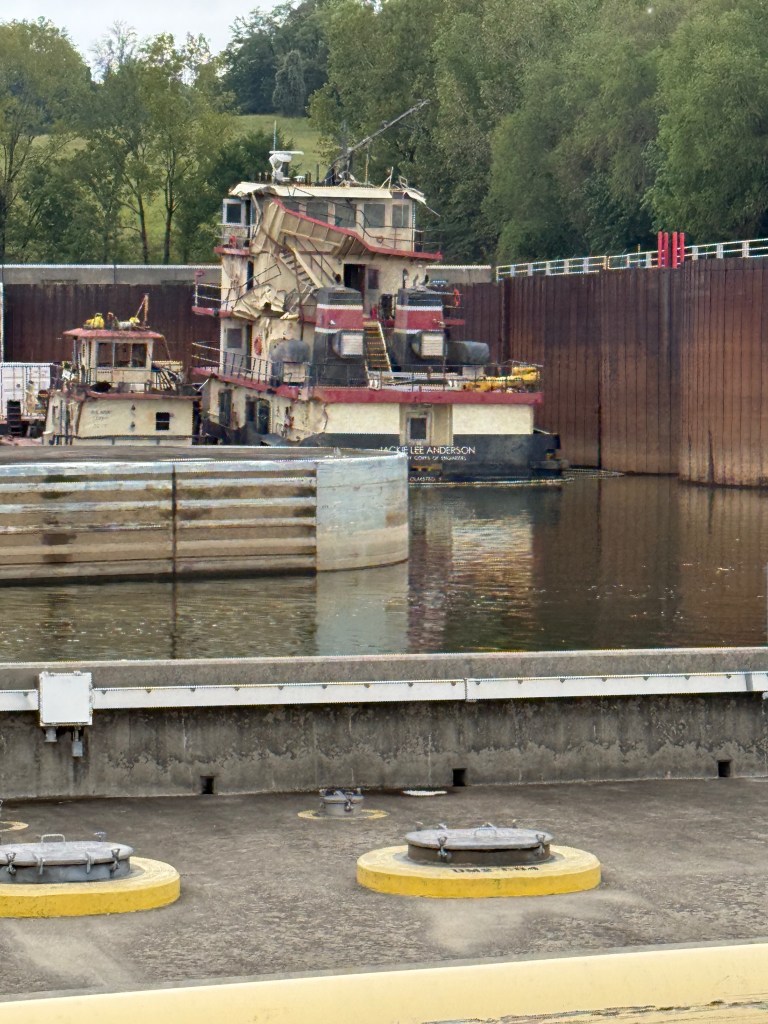
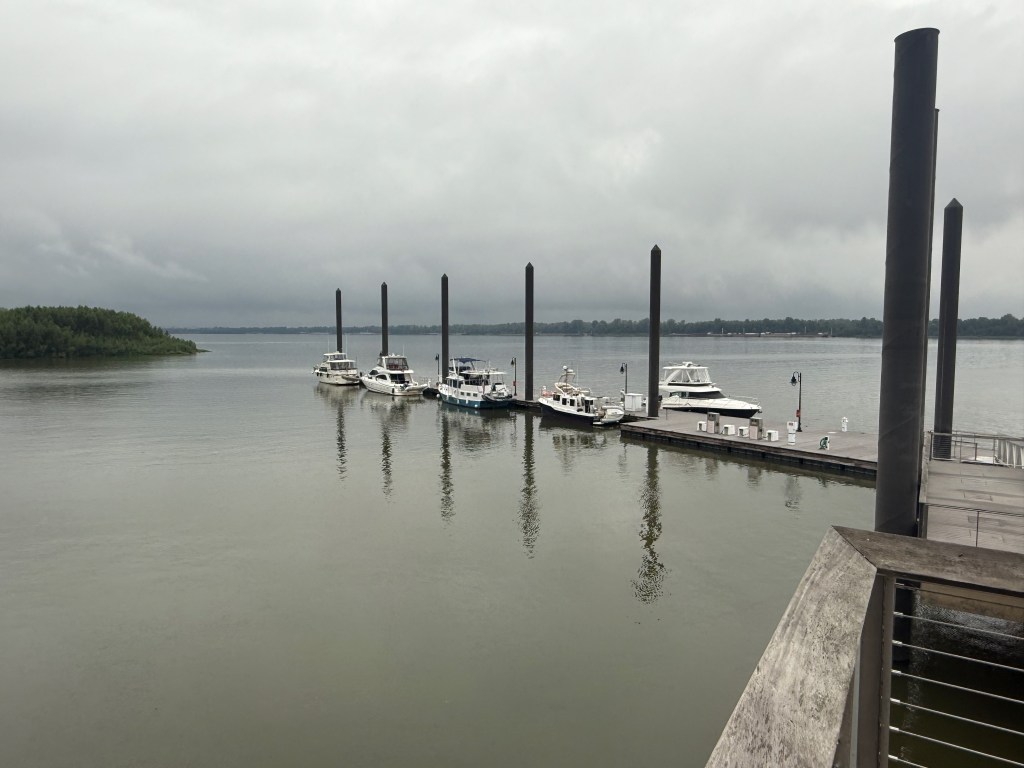
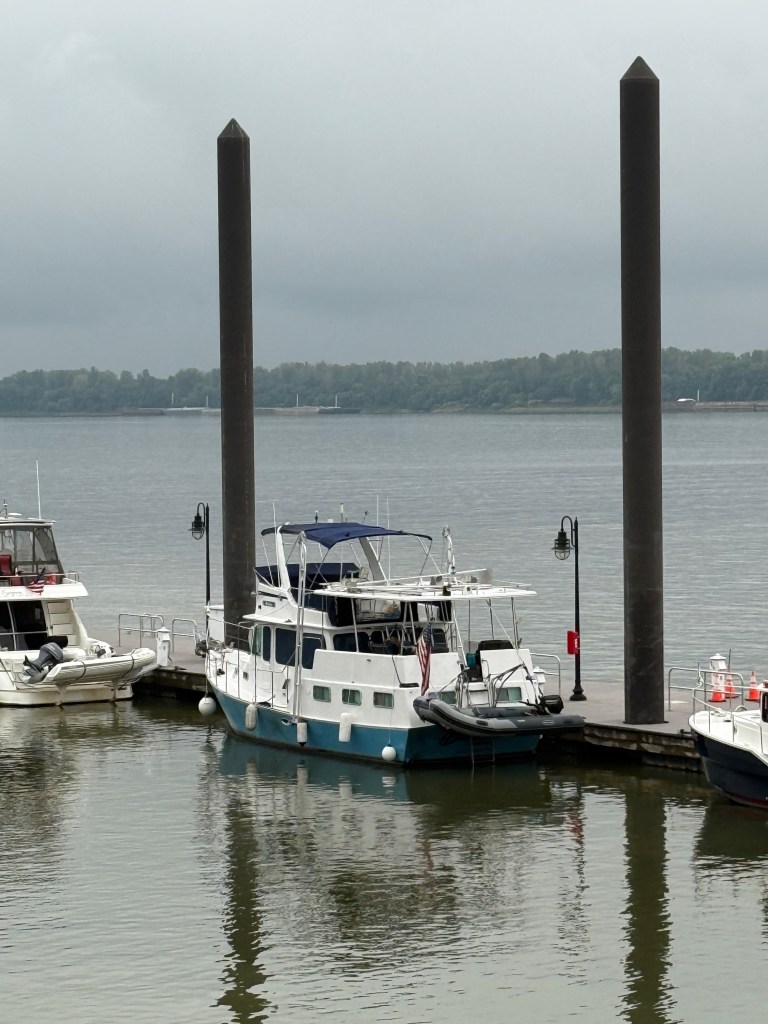
This third (or fourth) day on the Mississippi was sedate and easy. As we took off in the morning, we listened for the sound of something wrong in the props but, hearing nothing, headed south to the Ohio. We will resolve this in a couple of days when we change props. The turn up the Ohio was a shock as our speed dropped from 11.5 knots to 6 knots within a few hundred yards. Our ability to maneuver was also affected and we had to be much more deliberate in the slower current, recognizing that the oncoming barges and traffic now had the benefit of the momentum we had just recently enjoyed. It was only 48 miles to Paducah from our anchorage but it took the better part of the day. We navigated the Olmsted Lock with little problem and no delays (they had two chambers, one dedicated to commercial traffic) and made our way to a restful evening at the municipal docks in Paducah. We plugged into the shore power, turned on the AC and took Duke for his walk on shore
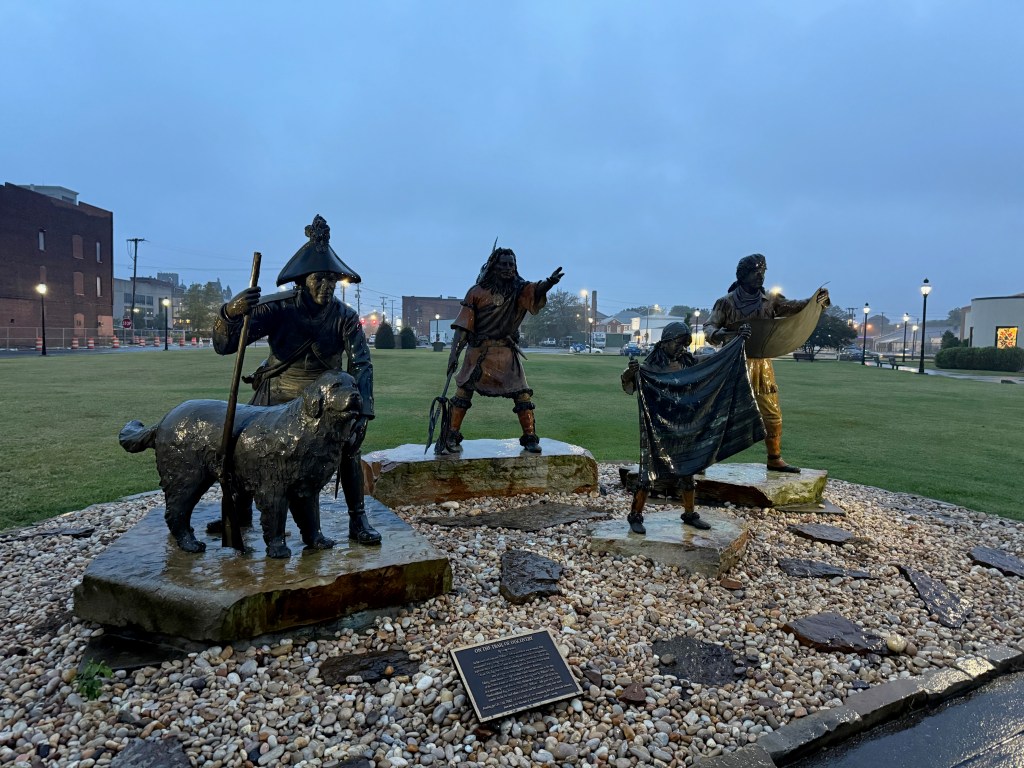
Vendors were setting up for a big music and barbecue festival in town and we went out to dinner at a lovely restaurant in town. We walked past the Lewis and Clark “Corps of Discovery” memorial statures in the rain and past the National Quilt Museum. But our thoughts were of bed in a safe dock and we were excited to be done with this part of our journey.


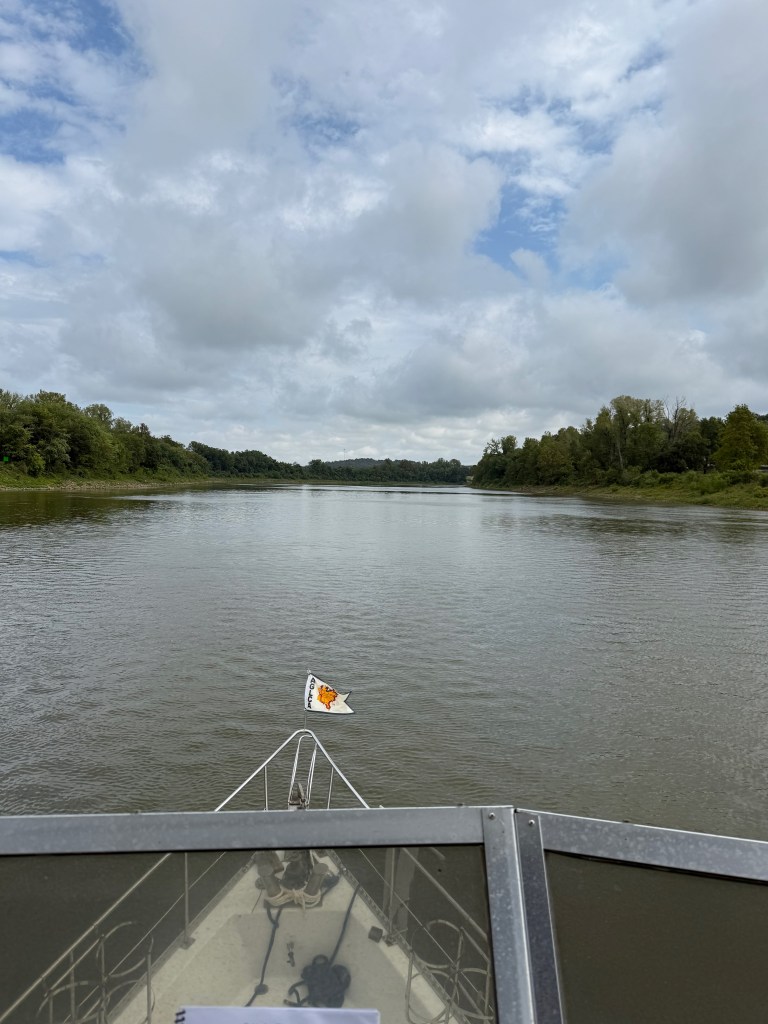


We woke a little later than usual, a couple of hours after our fellow loopers, and walked Duke before heading upstream on the Ohio for a few miles to the Cumberland River. The current was still mitigated by the pool at the Olmsted Lock and we were able to get into the Cumberland River in quick order. This river is navigable for 380 miles well into the Tennessee foothills, past Nashville, but we were only going about 30 miles on it to get up to the Kentucky Lakes which shared the watershed with the Tennessee River. We went past a few quarries and a lot of commercial traffic and were keeping a steady, if slow, speed around 5.8 knots. Hervey called up to the Barkley Dam and Lock and learned that our fellow loopers had been waiting there for two-and-a-half hours for the commercial traffic to clear. Calling again as we got closer, he learned that the lock was beginning to open for our folks to go through: “If you hurry, you might be able to make it with us. Otherwise it will be another few hours before you can get through!” The lock master held the traffic for us and we sped up as best we could, just dashing into the lock at the last minute under the bow of the large commercial barge that was ready to go.
Promising a round of drinks in compensation for any delay to our compatriots, we made it through lock and into the Kentucky Lake and to Green Turtle Bay Marina. We went paid our debts at dinner that night at the marina and, the next day, went to dinner at Patty’s 1880 Settlement Restaurant where we feasted.
We left the boat for a couple of weeks, with a request for some service to the props, the generator, the windlass, and the captains’s chair on the bridge. We rented a car and went back to Baltimore for appointments and to attend Hervey’s Sibling Trip at Lake Norman in North Carolina on the occasion of what would have been his father’s 100th birthday. We return on October 16 and we begin again on the last legs of the journey South.
 Bluebird's Great Loop Diaries
Leave a comment