We went from Chicago to St. Louis over the past nine days: a trip that included a lot of bridges, locks, and nostalgia as Hervey revisited the Illinois river valley where he lived when he worked for Cricket magazine. And it is near where Kitty lived for the first ten years of her life and spent time with her family. Some near disasters to report (as usual) with some heroics, a lot of beautiful scenery, and some great people!
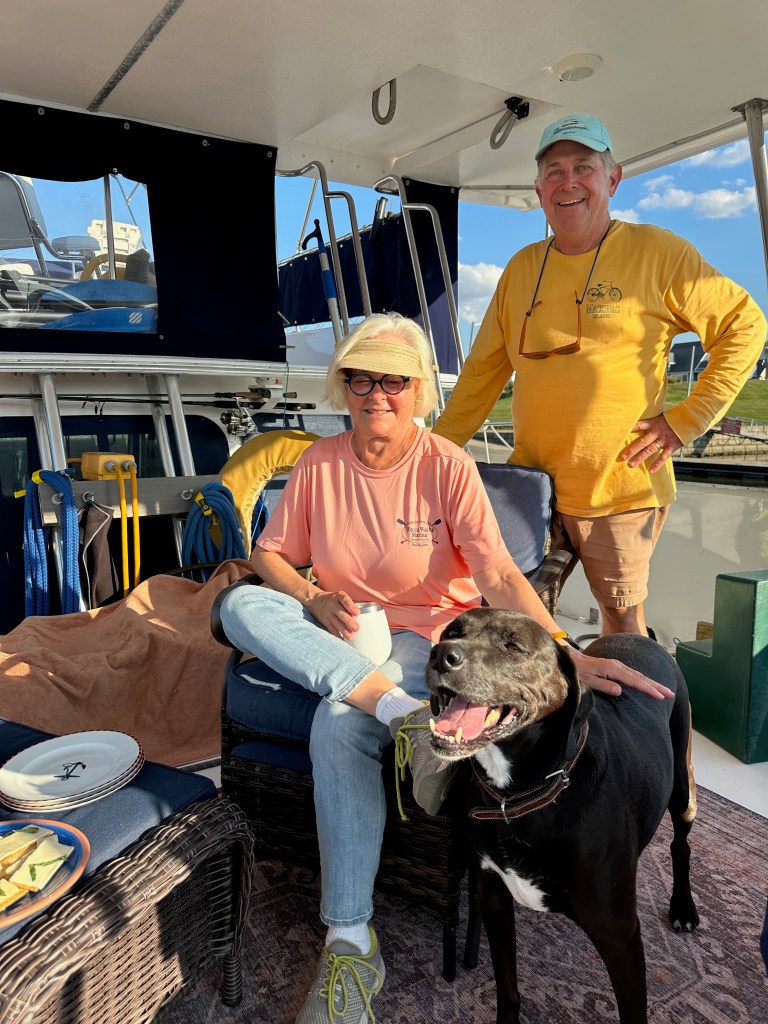
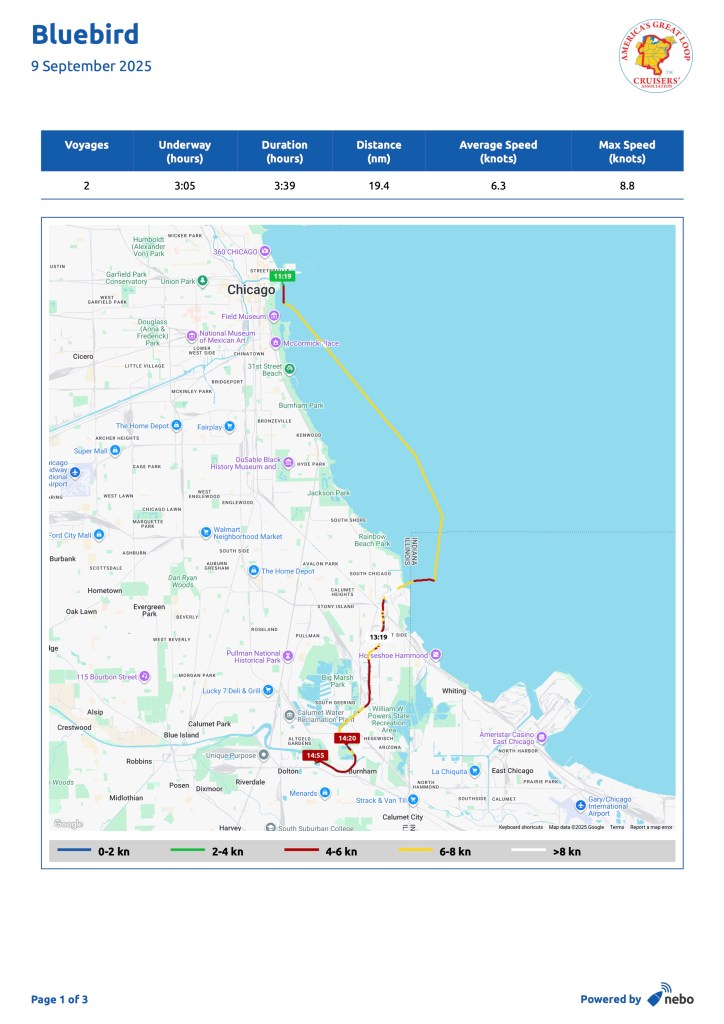
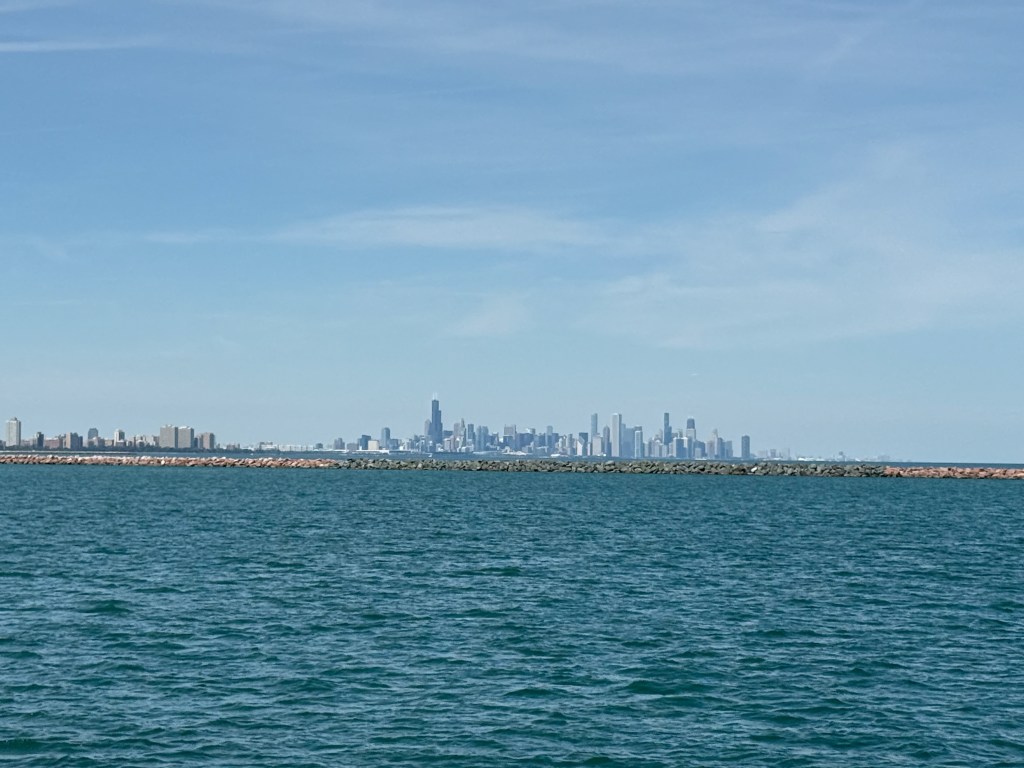
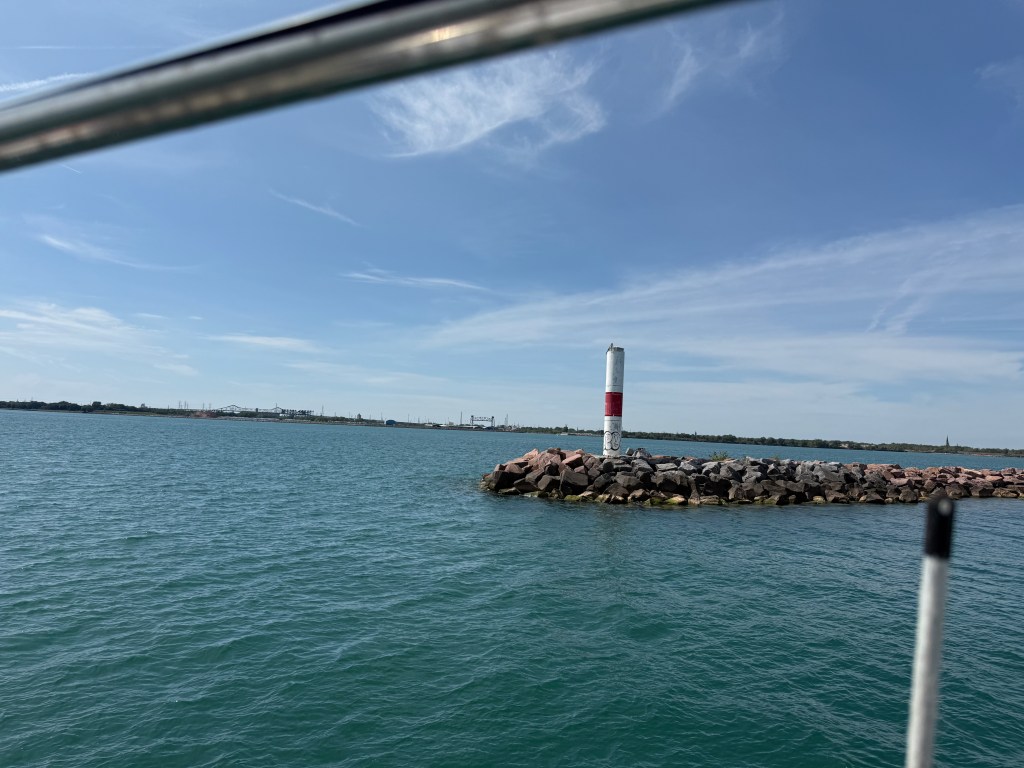
We left Chicago after our visit with our daughter, Kathy, who had flown in for a work conference. The waves were up a bit but settled down as we closed the 10 mile distance to the Calumet River and the Cal-Sag Canal. We had to adjust our minds to the calmer pace and challenges of bridges, keeping to the channel, and up-coming locks, so we followed other boats and tugs as we adjusted. Our course led us through chemical and other kinds of manufacturing plants that rely upon the river for raw materials and shipping. We passed tows and barges as we made our way inland down this narrower way. The initial Thomas J. O’Brien Lock came quickly and we did not have to wait long for the opening. But the bridges keep coming: there are 97 bridges on the entire route (plus 10 locks, 3 car ferries that cross the river, and one electric fish barrier). The day was short and we pulled into our anchorage just northwest of Hammond, Indiana.
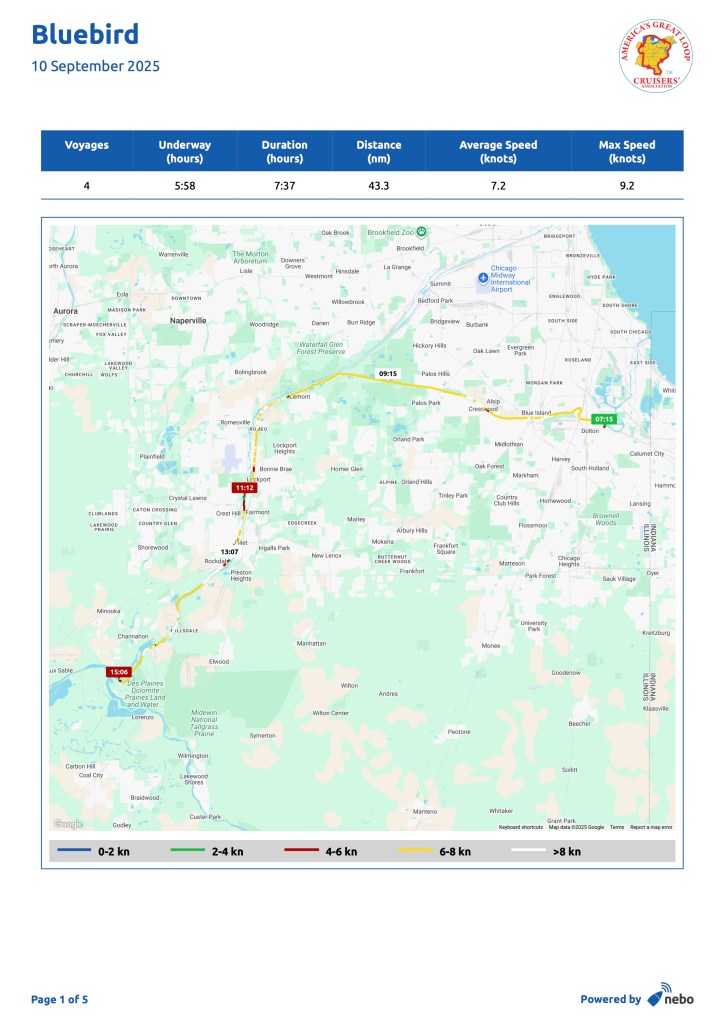
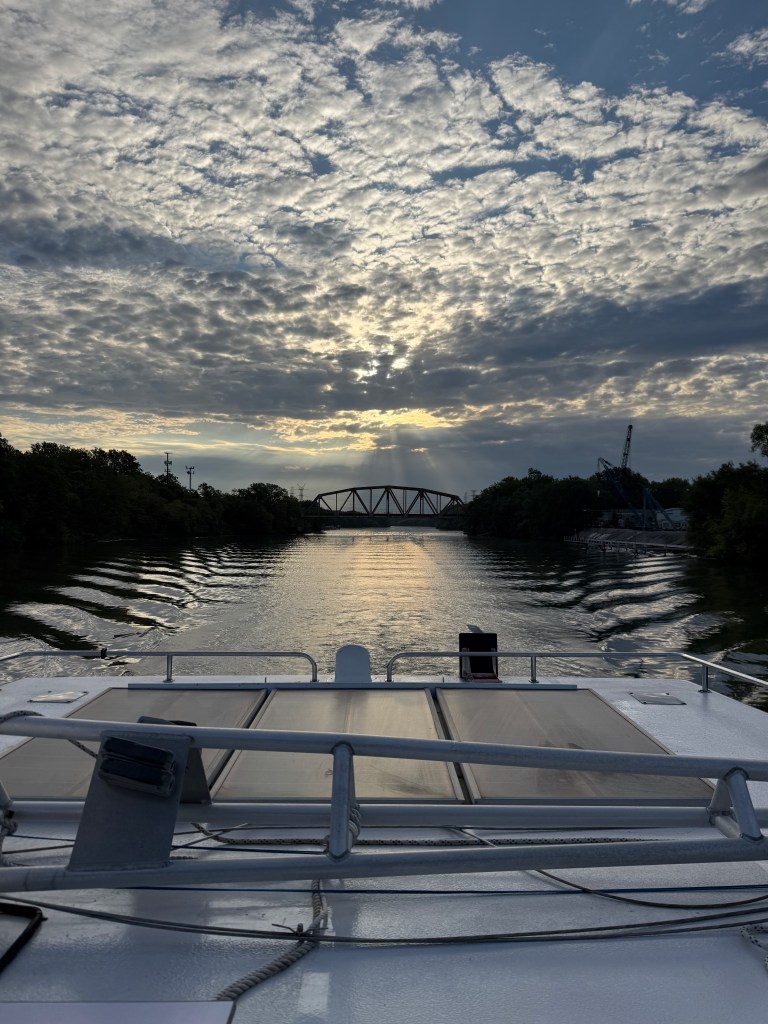
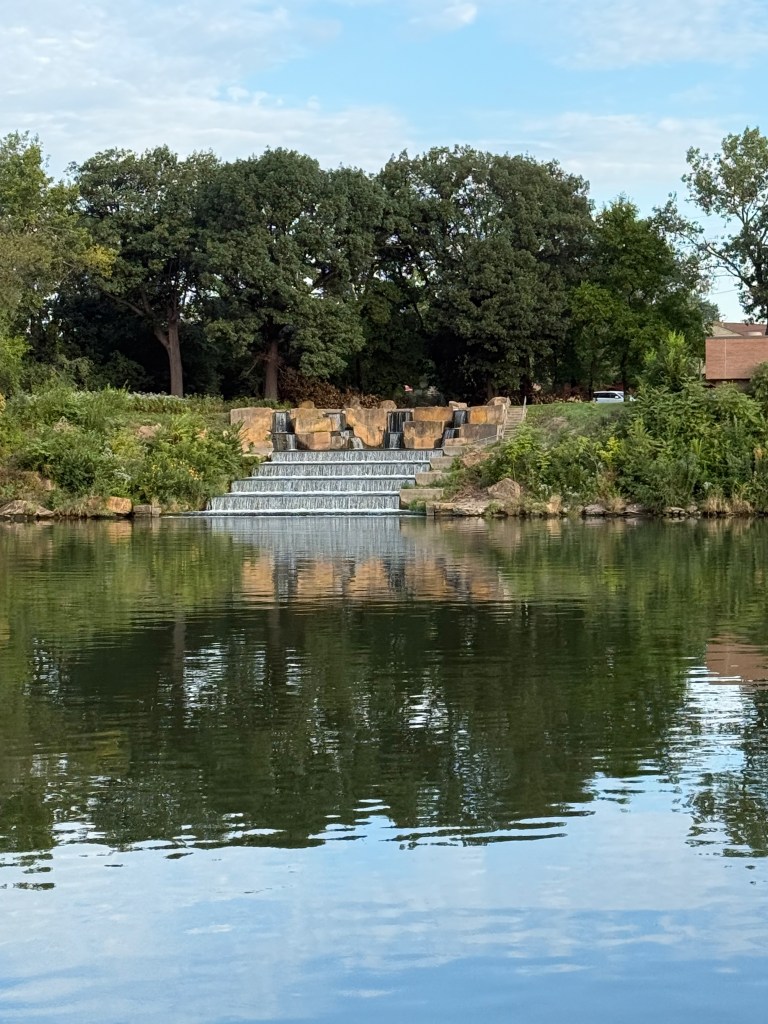
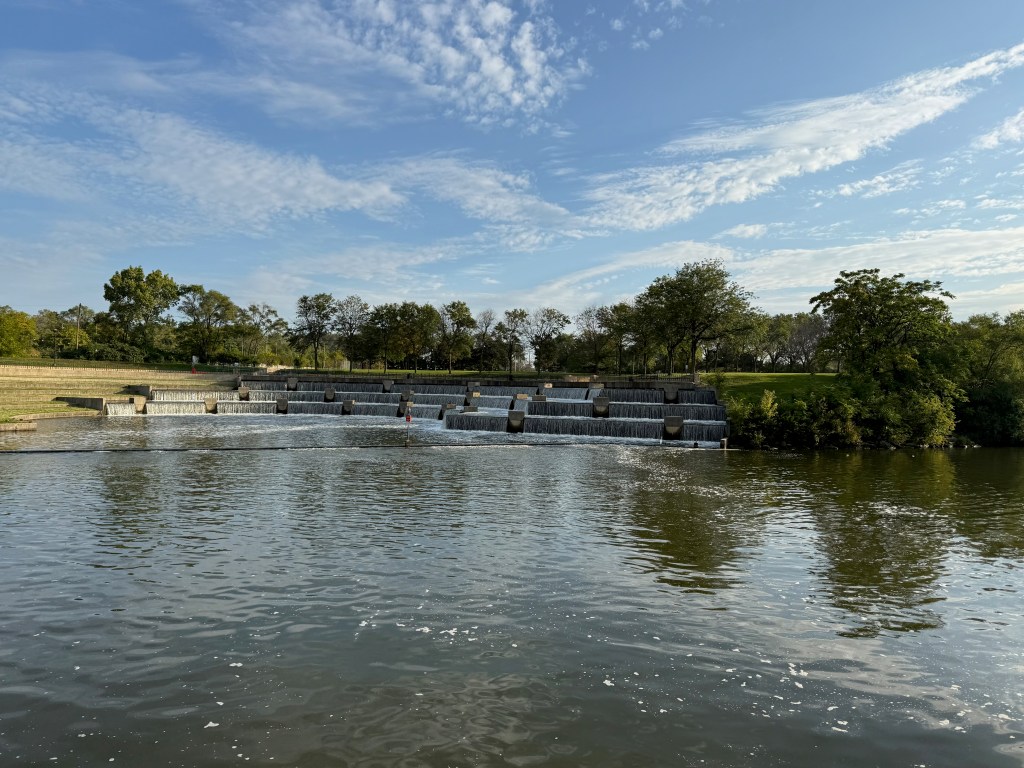
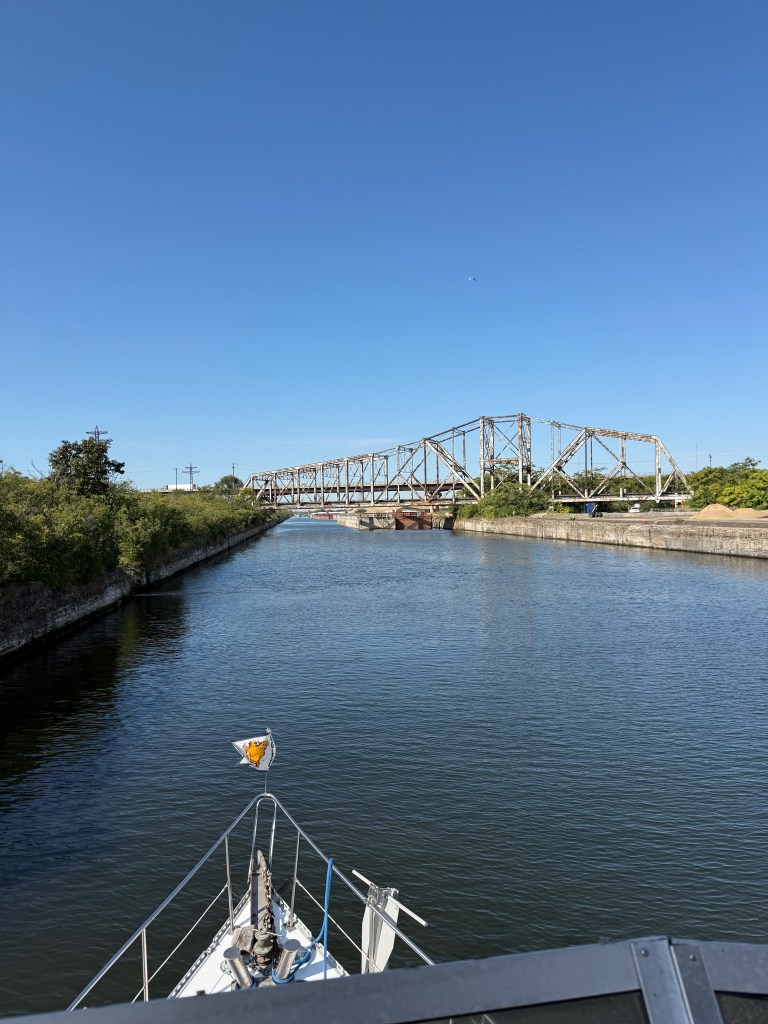
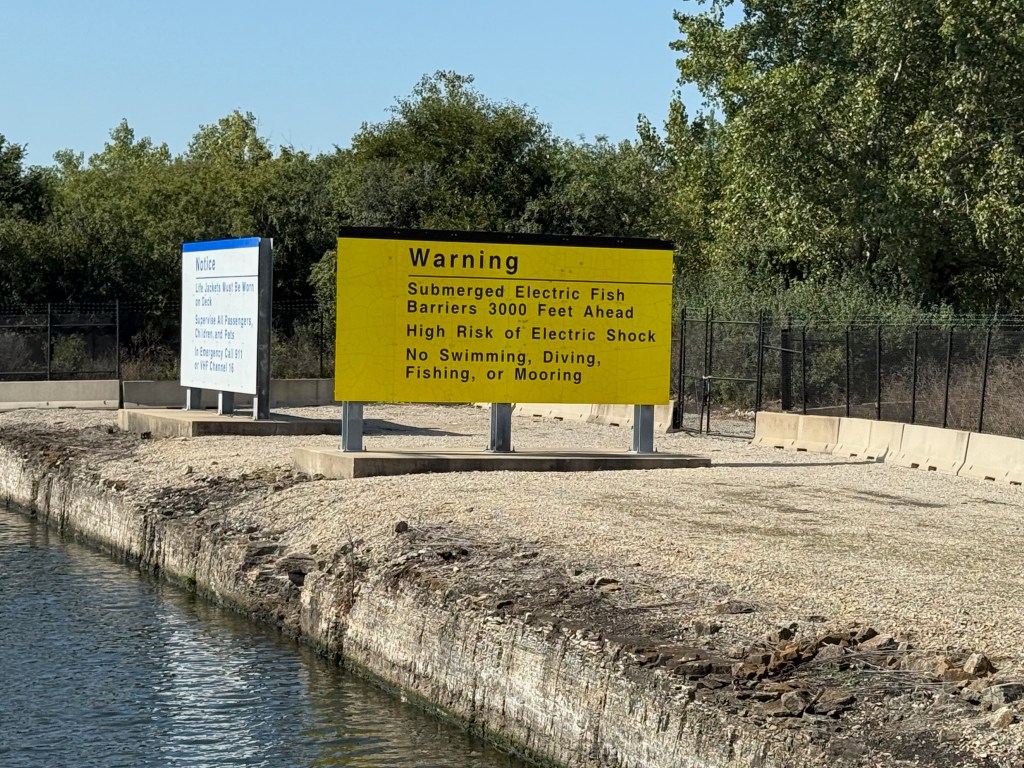
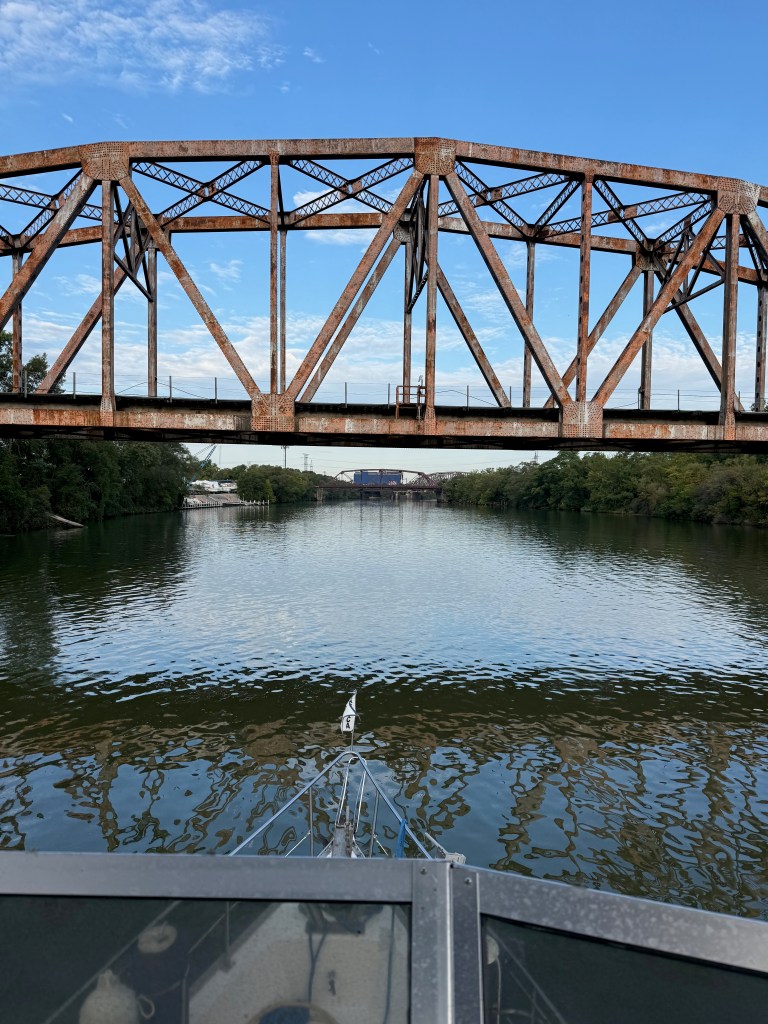
Early the next day, we left our marina and headed south towards the confluence of the Chicago River, 3o miles downstream from the city. In 1900, the city of Chicago reversed the flow of the Chicago River towards the Illinois River and away from Lake Michigan (the source of the city’s drinking water). This was near the end of the great canal building boom that started with the Erie Canal in 1826 and included a number of canals across New York, Pennsylvania, Ohio, Indiana, and Illinois that have since been abandoned. We also faced the daunting 19’7″ Atchison, Topeka, and Santa Fe fixed railroad bridge that is the lowest bridge we would see on the entire journey. Boats that cannot reduce their air draft below this height will do the “Great U-Turn” rather than the “Great Loop”! We made it with inches to spare.
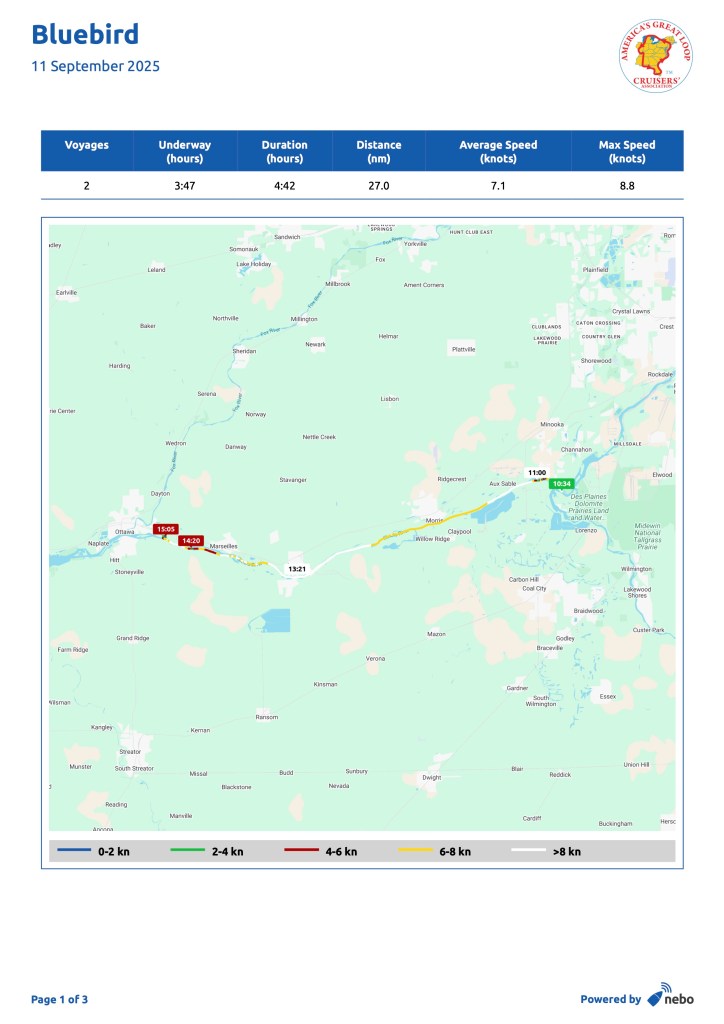
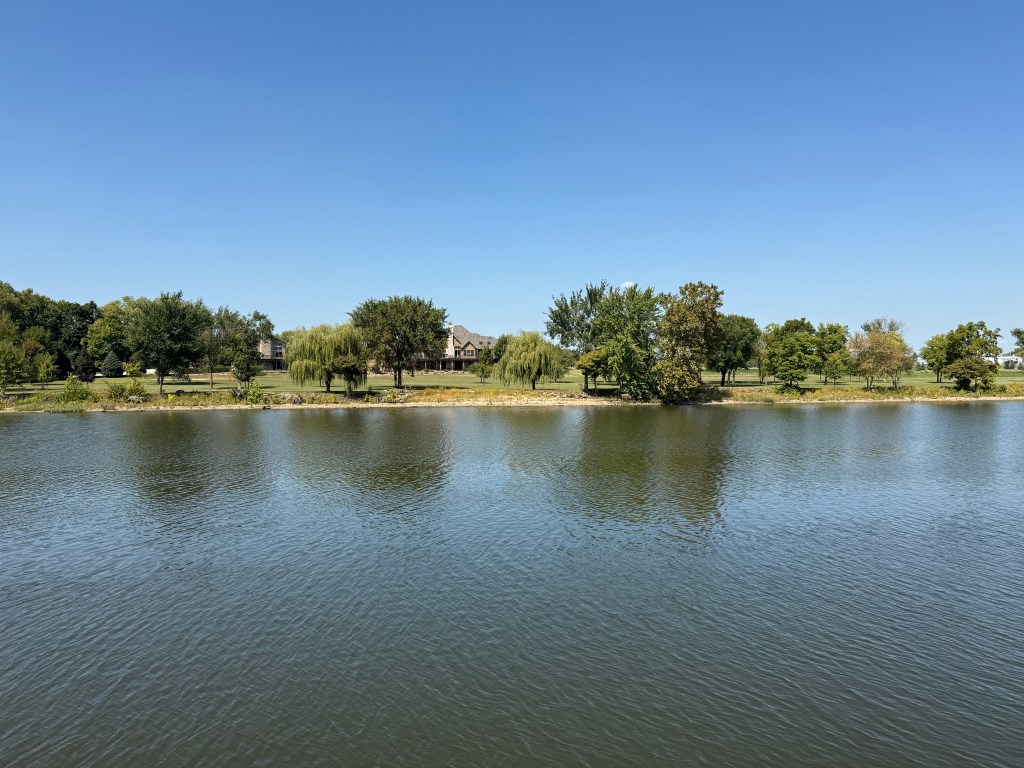
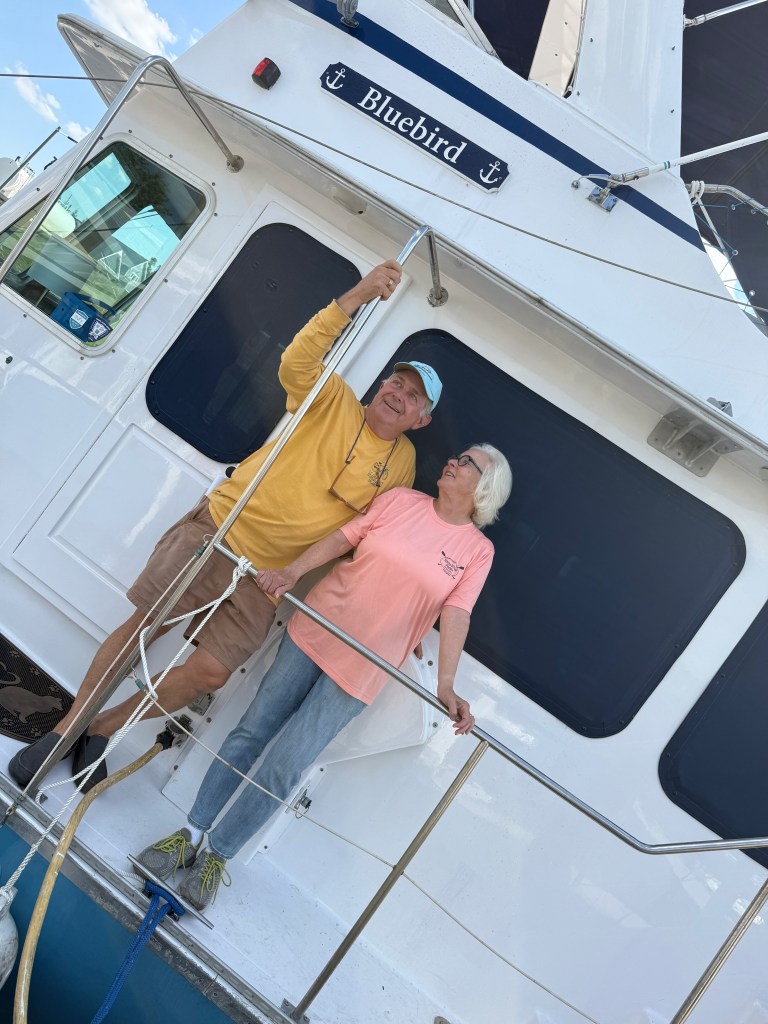
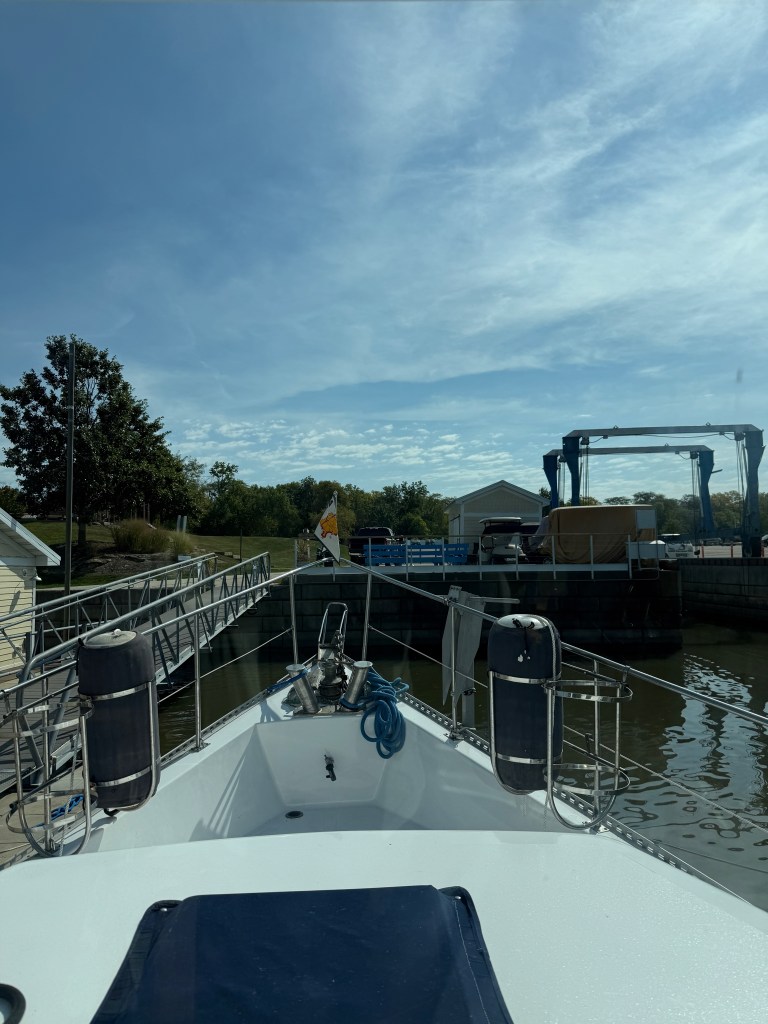
We spent two days at Ottawa and had dinner with Jim and Ann Wilkes (a colleague from Hervey’s time at Cricket magazine in the early 90’s). We also went to a laundromat to reduce our pile of dirty clothes, then back to Walmart for a grocery run. Hervey did this last trip by himself and, with a full load of groceries, was ignored by both Uber and Lyft. He had to resort to holding up a $20 and asking for help until a kind soul returned him to the boat.
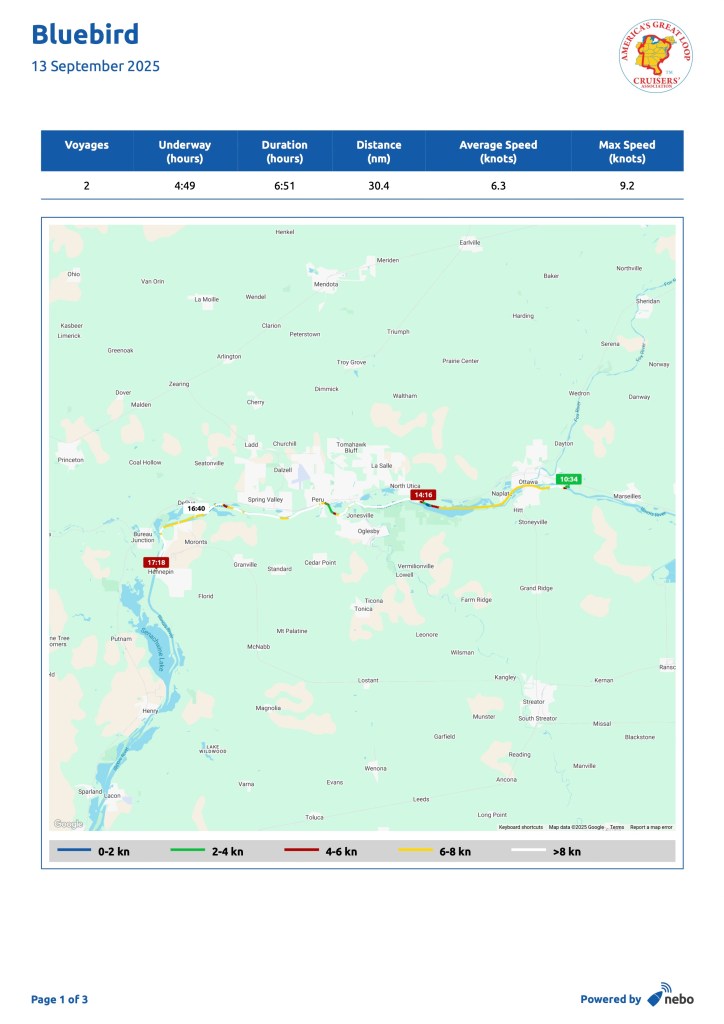
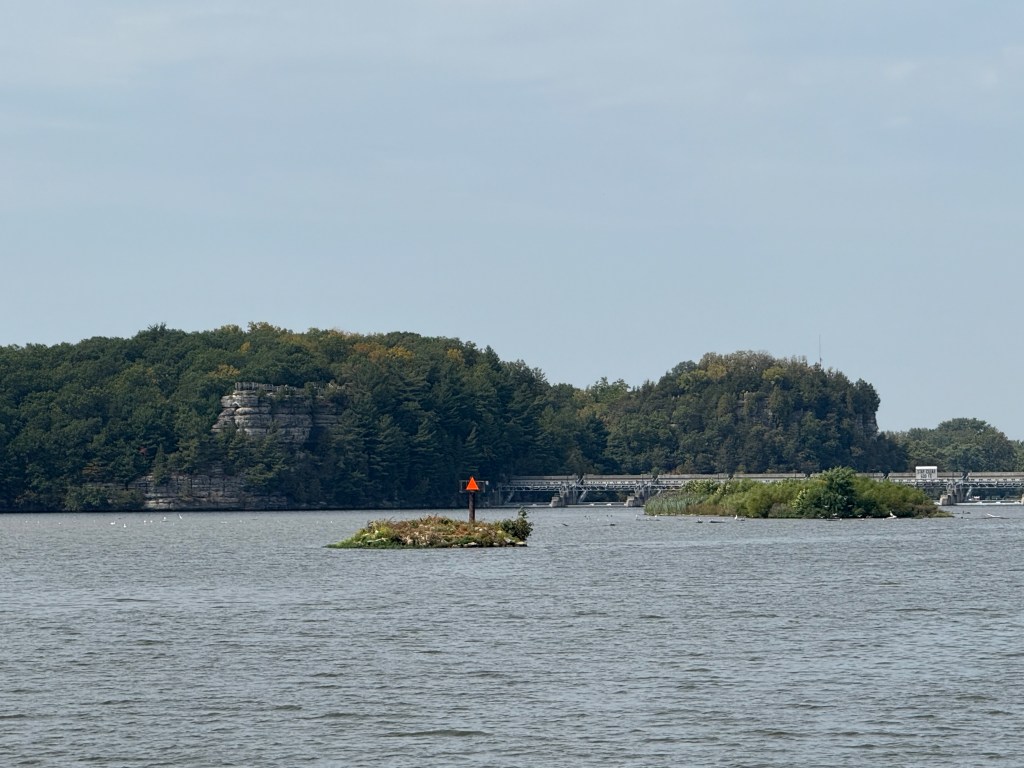
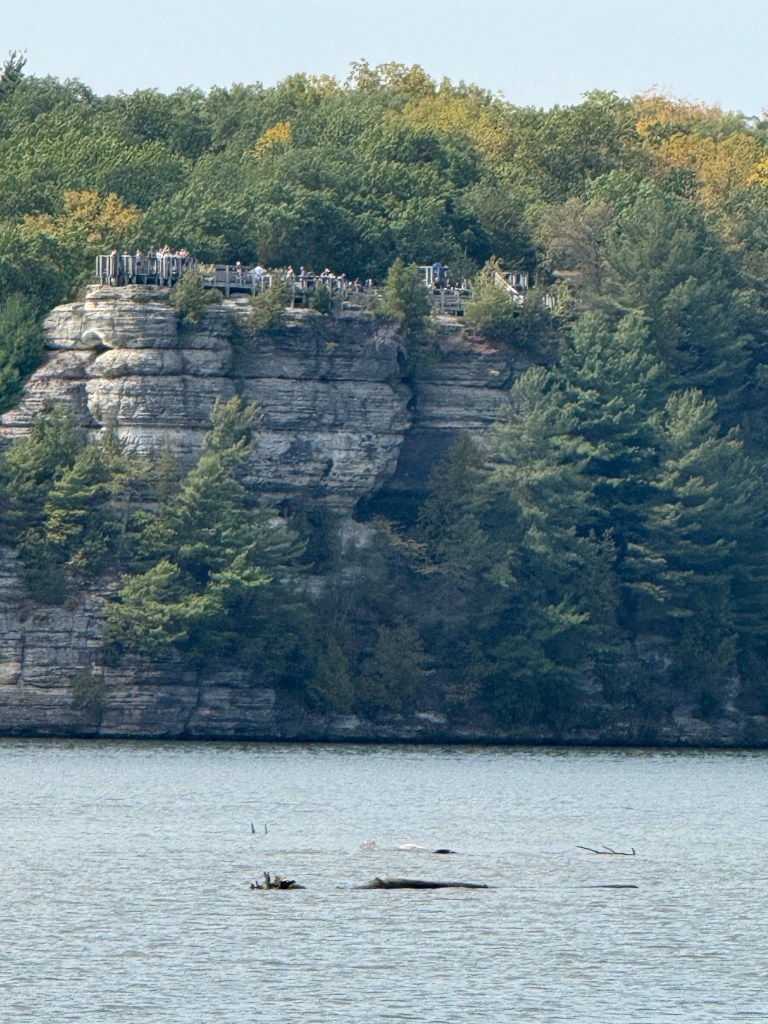
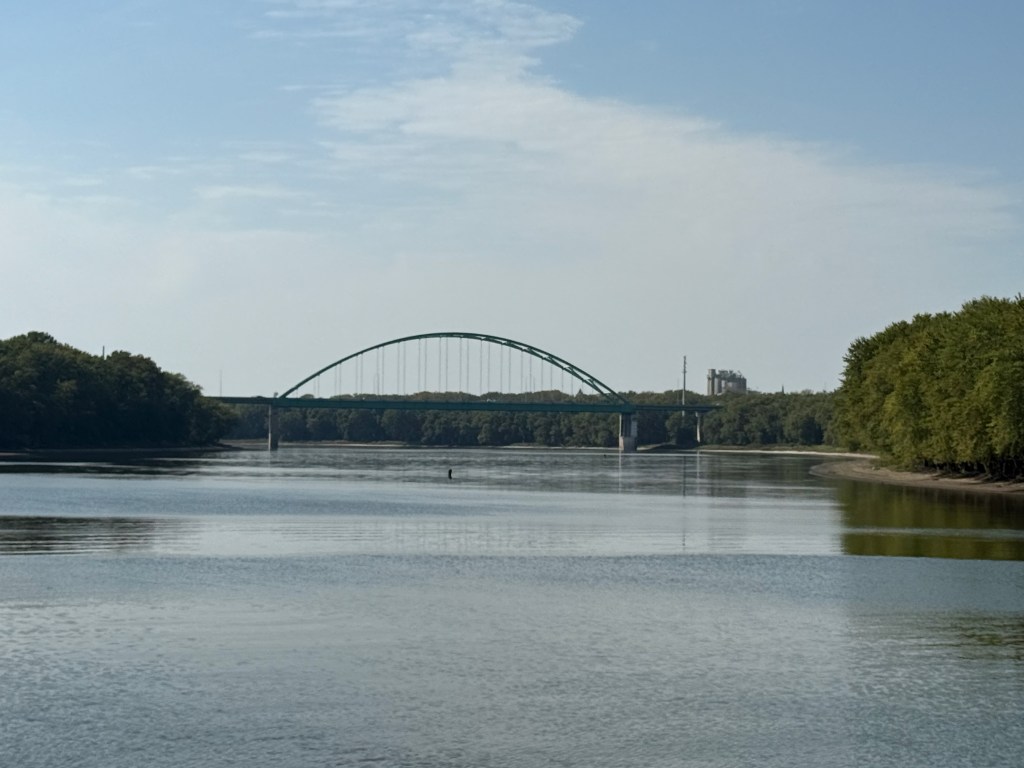
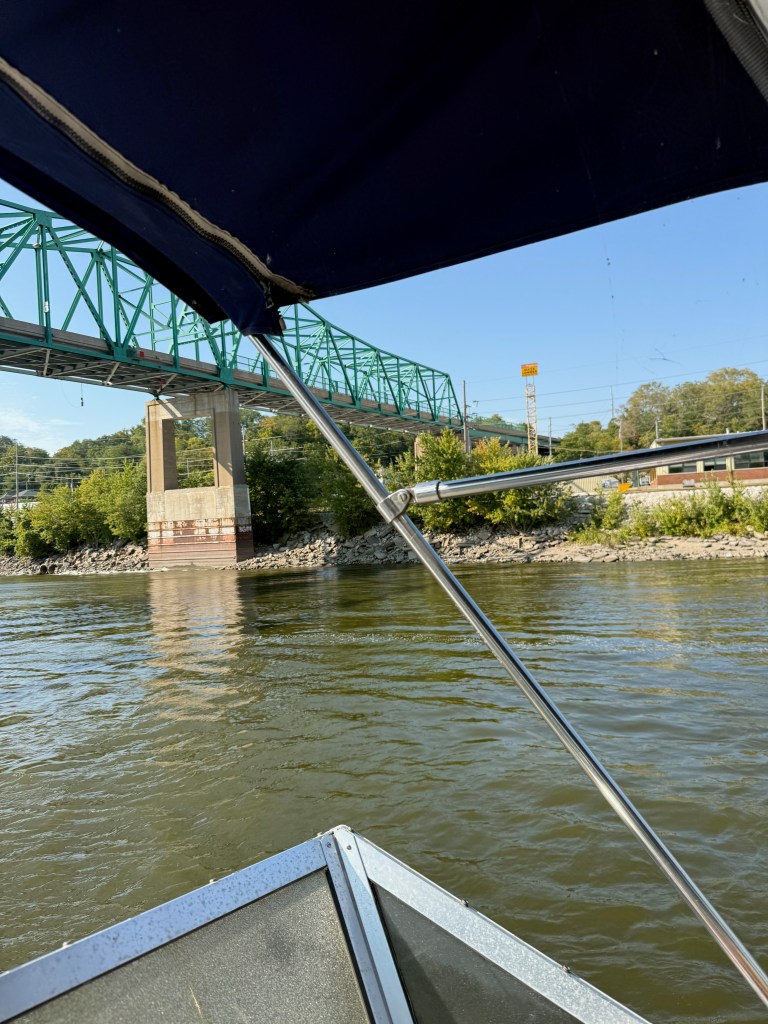
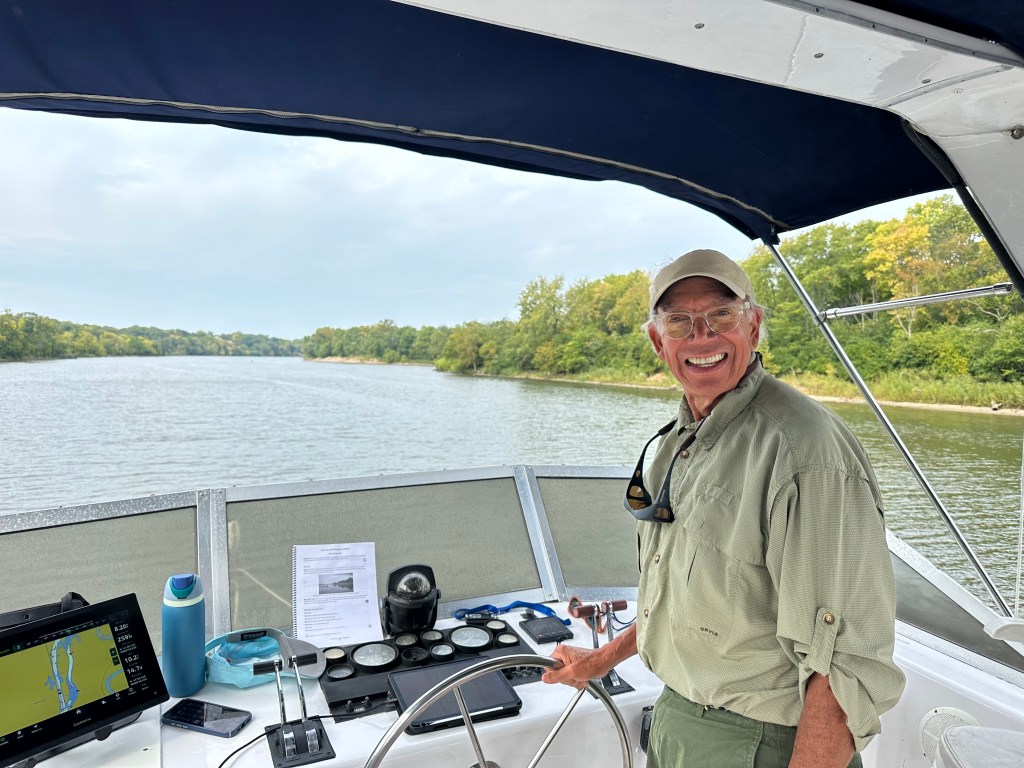
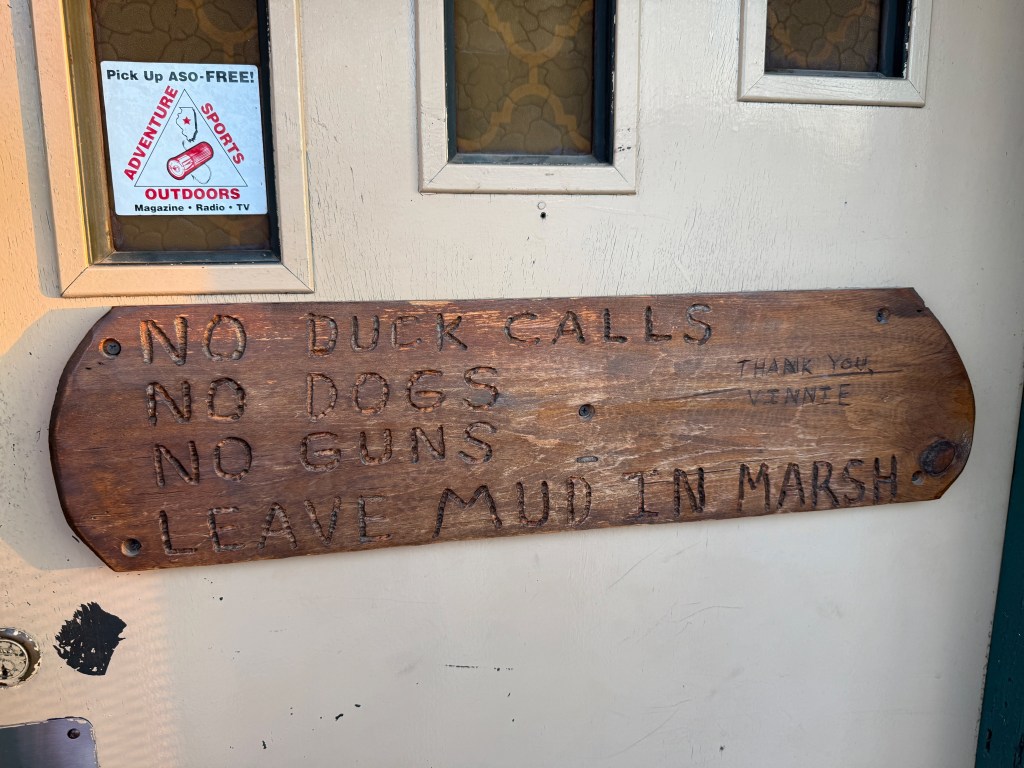
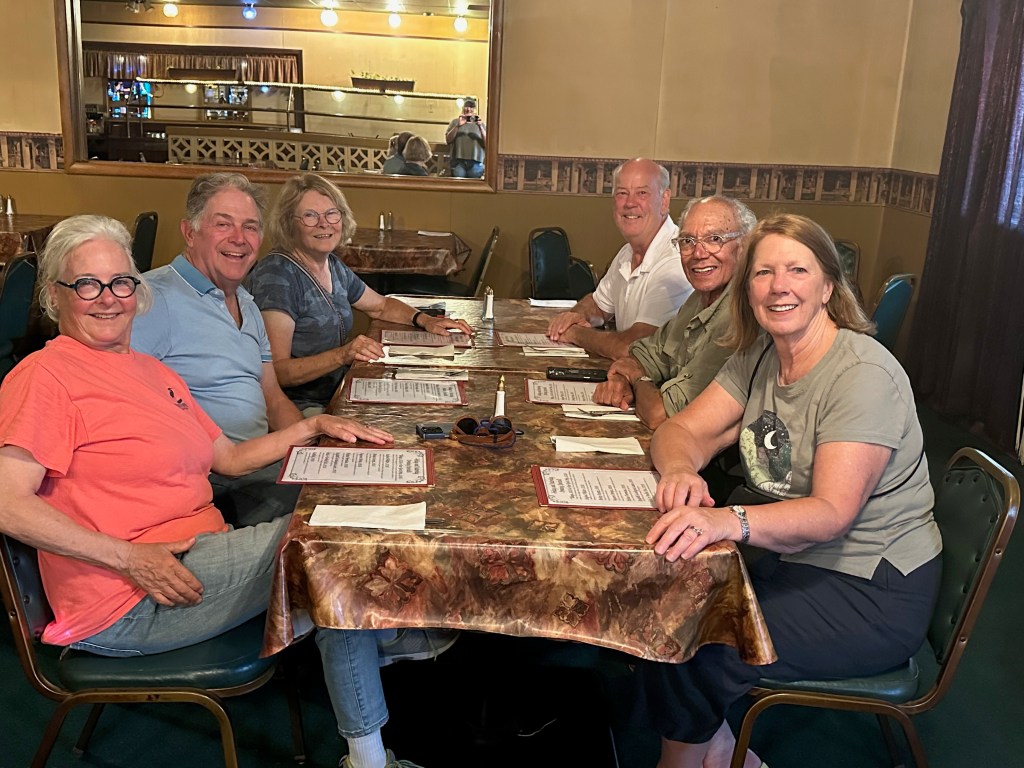
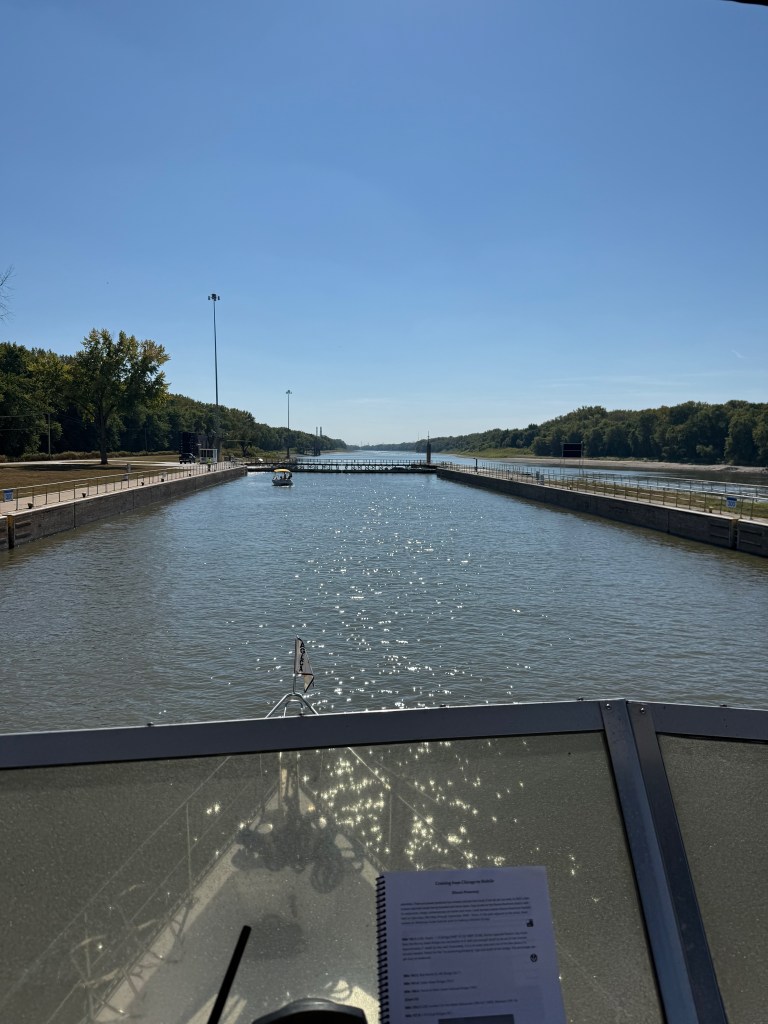
We invited Jim Wilkes to join us for a day on the river from Ottawa to Hennepin, IL. We started with a two-hour delay at the Starved Rock lock, but made it through quickly enough and made our way past many memories for Hervey to the little town of Hennepin, where Ann Wilkes captured our docking effort. We had a lovely dinner out, said goodbye to the Wilkes, and settled in for the night, contemplating the 200 miles remaining in our journey down the Illinois to St. Louis. What adventures await?
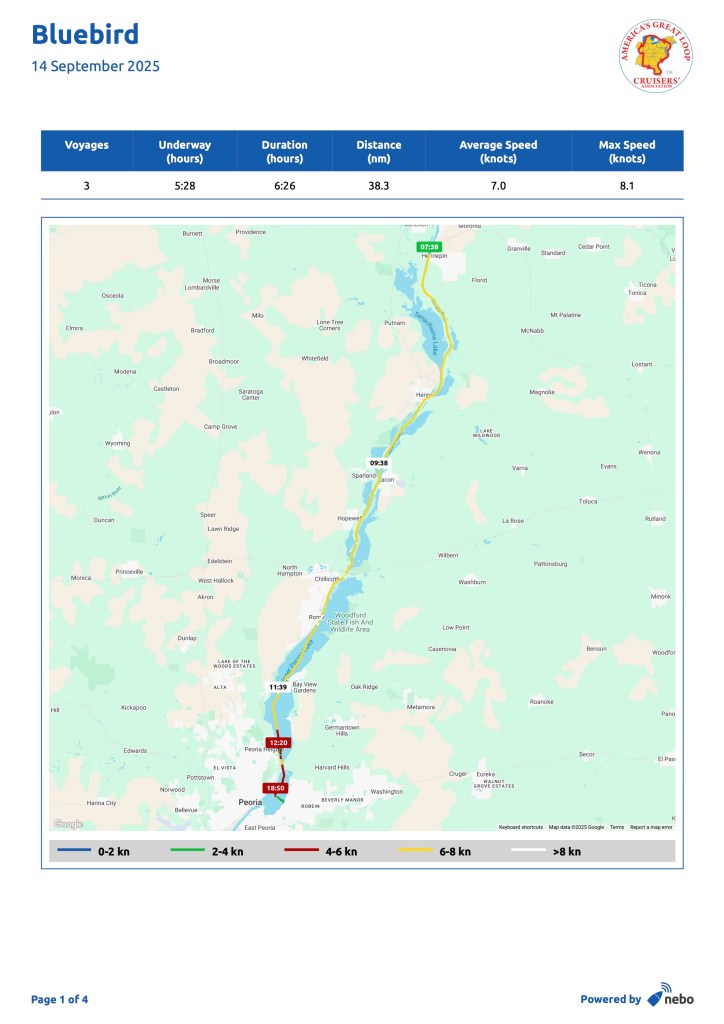
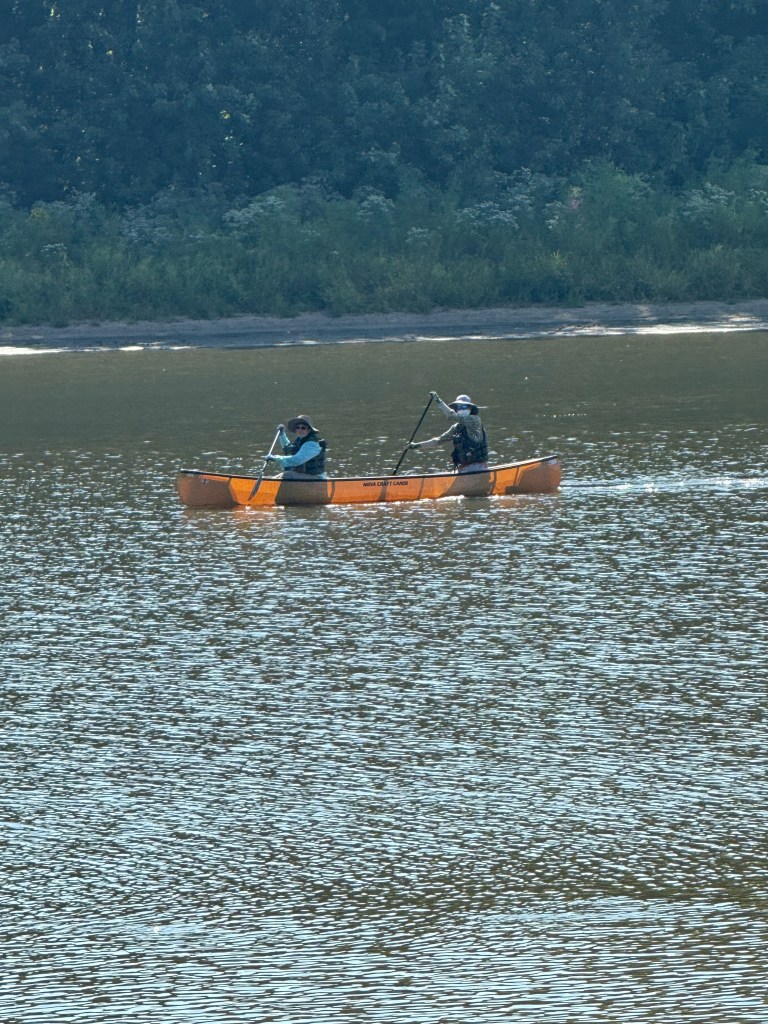
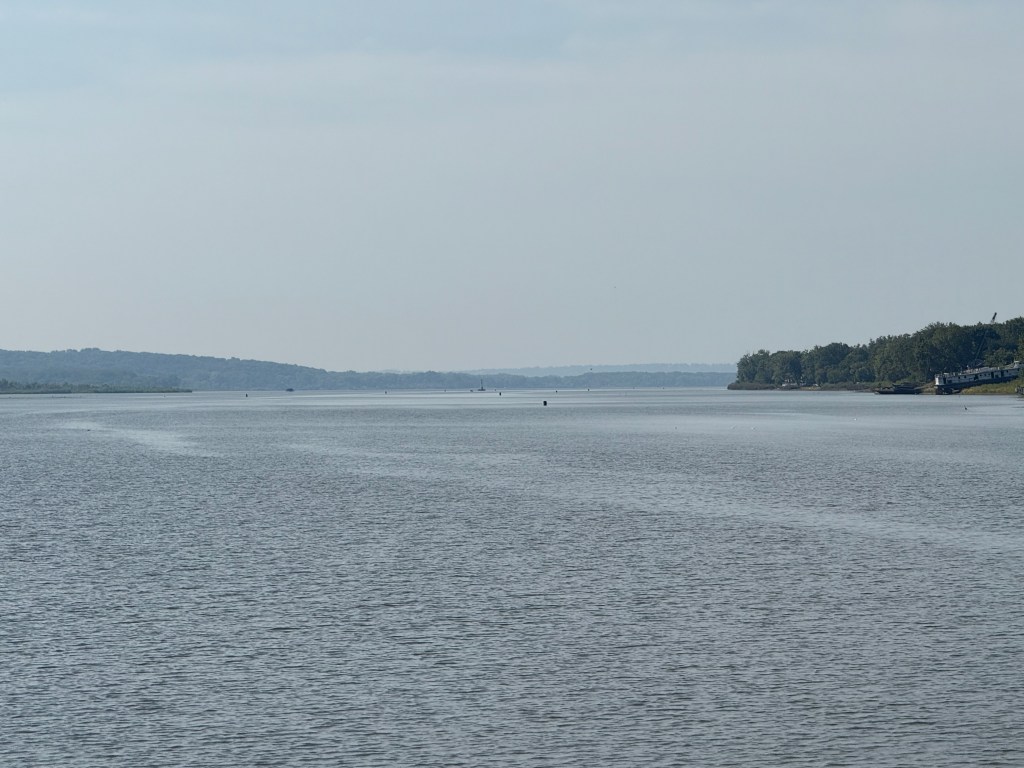
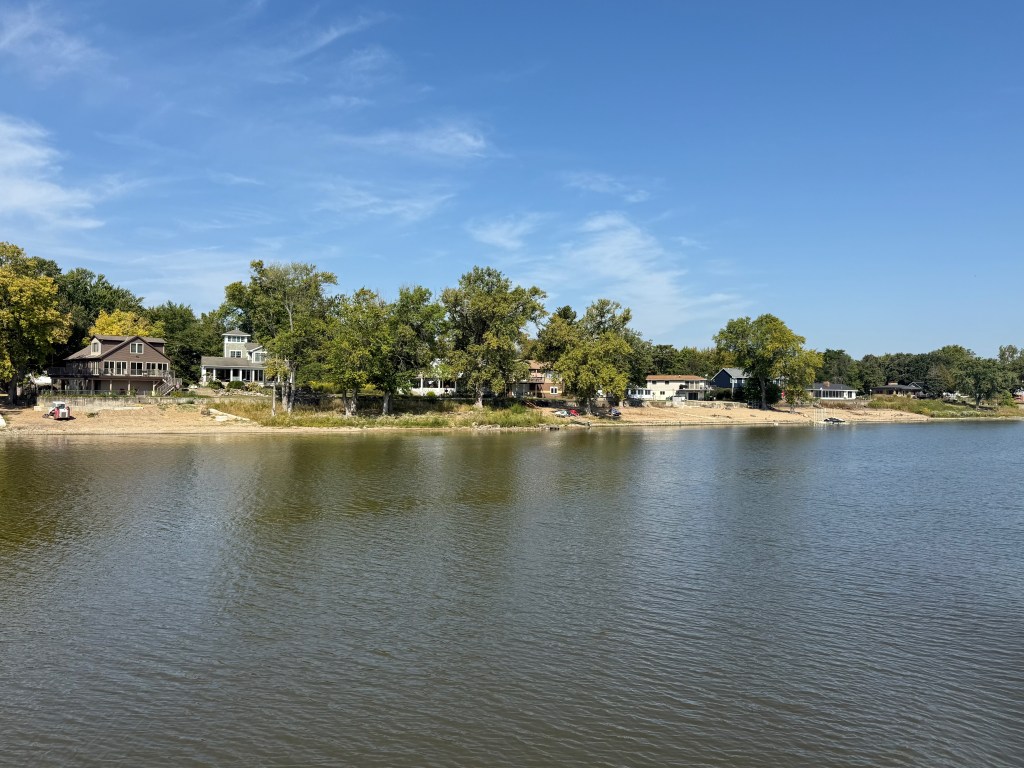
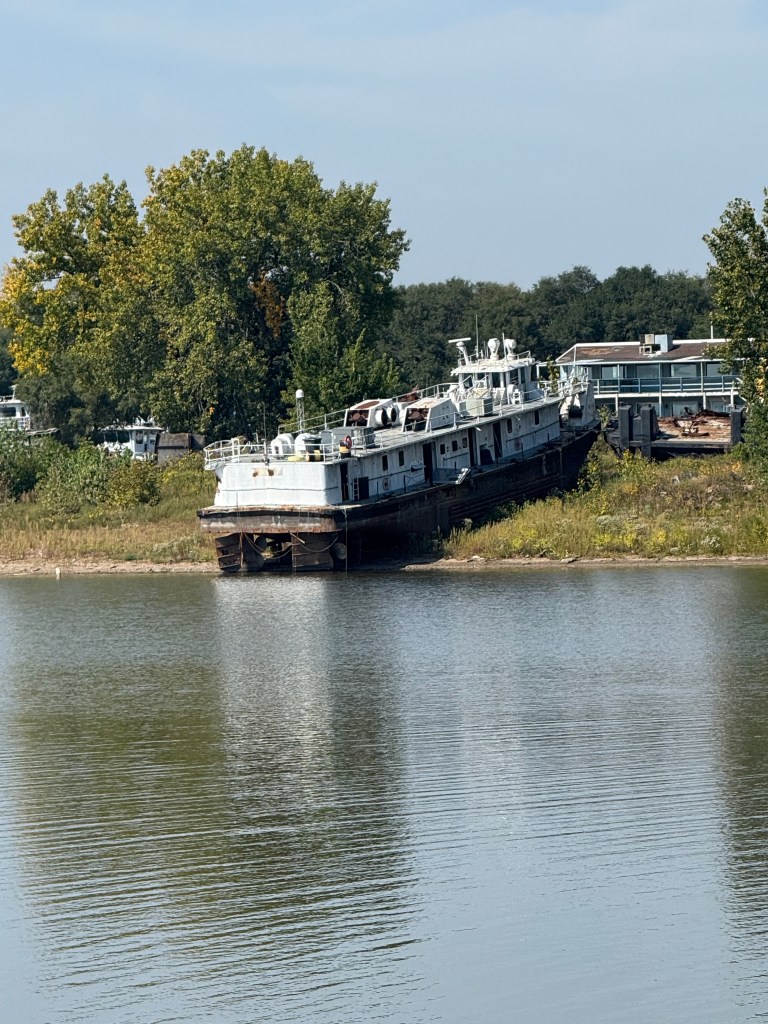
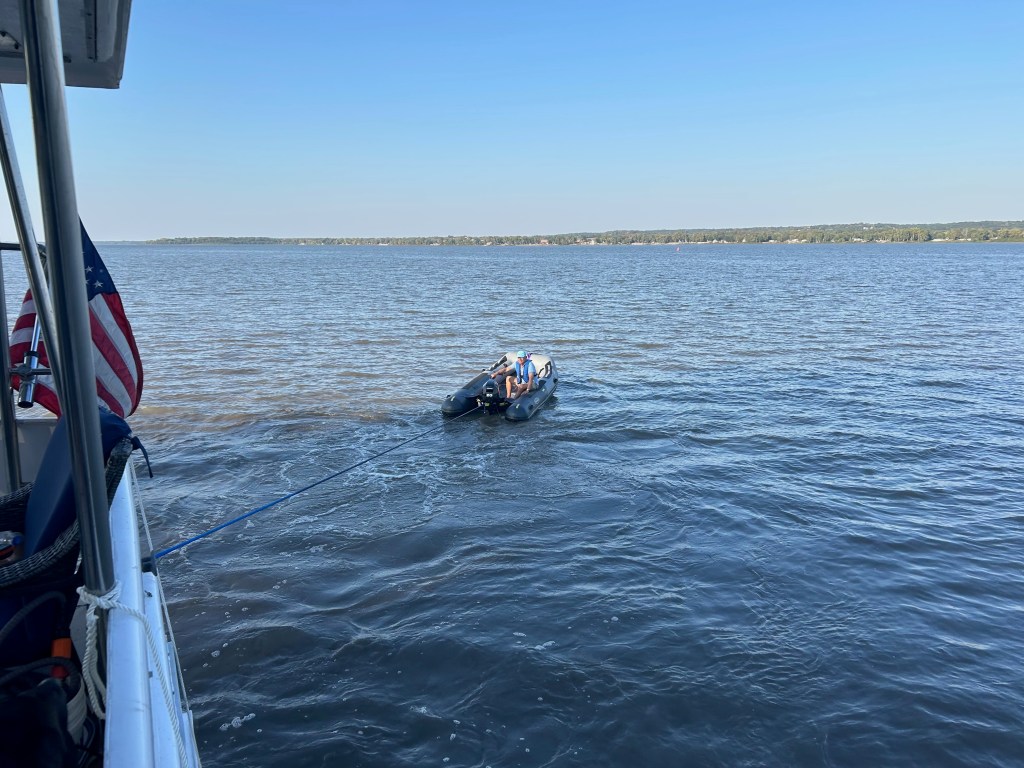
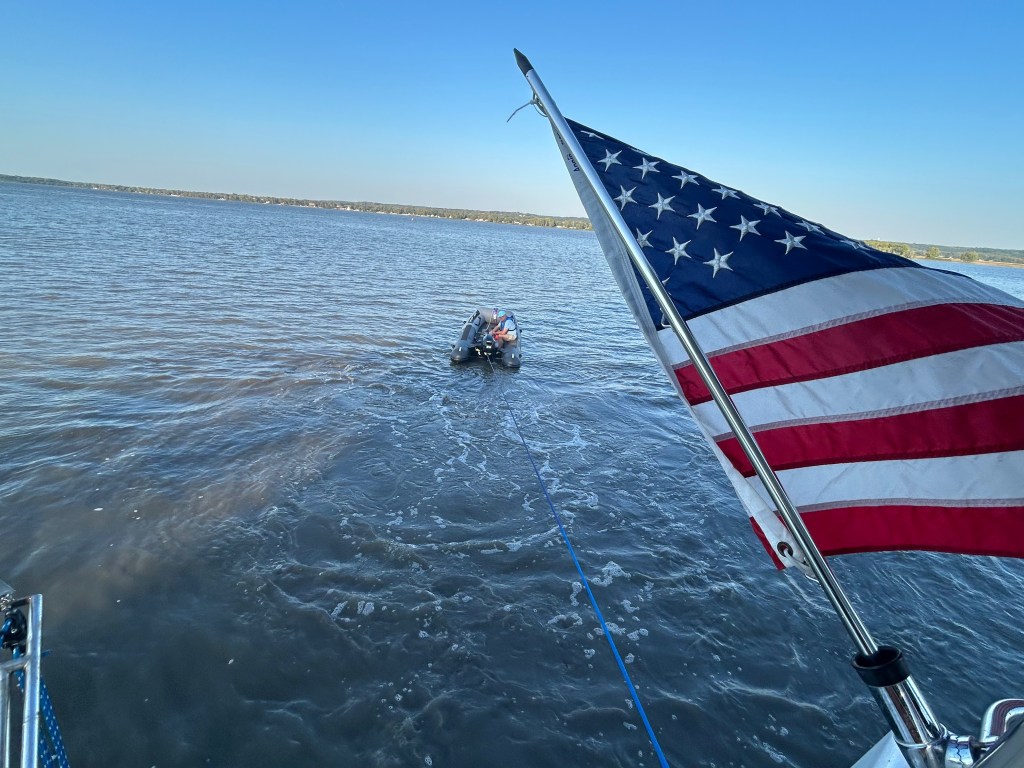
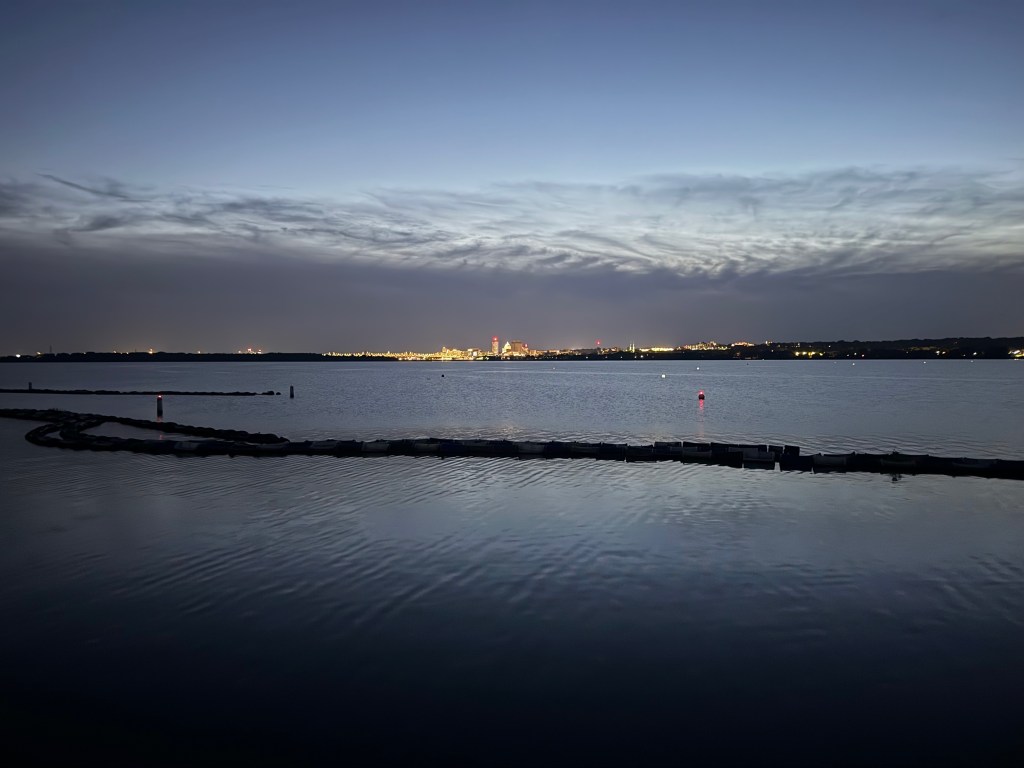
We ran aground. There is no way to sugarcoat the mistake as we tried to enter the Illinois Valley Yacht Club harbor, but it was made. At 11:30 on Sunday, we found ourselves truly stuck in the mud: no anchor needed! We called for a tow and learned that it would be six hours before they would arrive from 4 hours away. So we waited. After a time, Hervey got in the dinghy and, with our little 20 hp engine, began to pull. After about an hour, the muddy suction seal broke and the boat moved imperceptibly. Kitty noticed it and Hervey returned to the boat and turned on the main engines. With some maneuvering and persistence, we were able to get back to the mail channel.
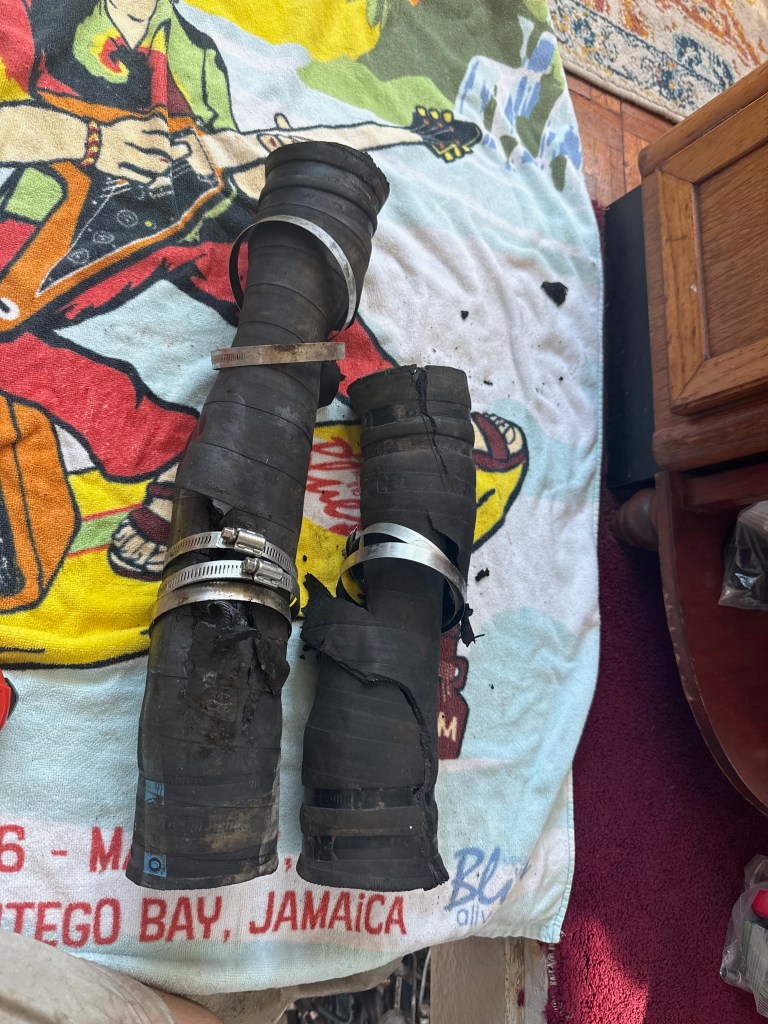
But the engines had sucked up a lot of mud into the freshwater cooling system (marine engines have two cooling systems: an open heat exchanger system that uses sea water to cool the antifreeze, and a closed antifreeze system like a regular car) The strainers had filled with mud and the starboard engine quit after blowing a hole in the exhaust hose and overheating. We limped along on the port engine for about a mile and were hailed by the East Point Marina who saw our distress. They invite us in and we turned to make the passage, but the port engine also overheated and a big smoke cloud indicated our predicament.
We were towed into the marina by the local boaters and settled into our slip, still in uncomfortably shallow water. Our fellow boaters came aboard and pulled the strainers, cleaned them, and ordered new exhaust hoses for us. The next day, Hervey cleaned out the stainer channels with a hose, replaced the impellers (part of the cooling system) and cleaned up the mess in the engine room. After replacing the exhaust hoses, the engines started right up and seemed no worse for the event.
Hervey also cleaned out the strainer in the generator and it seemed to start up without any damage. But it was not to be so.
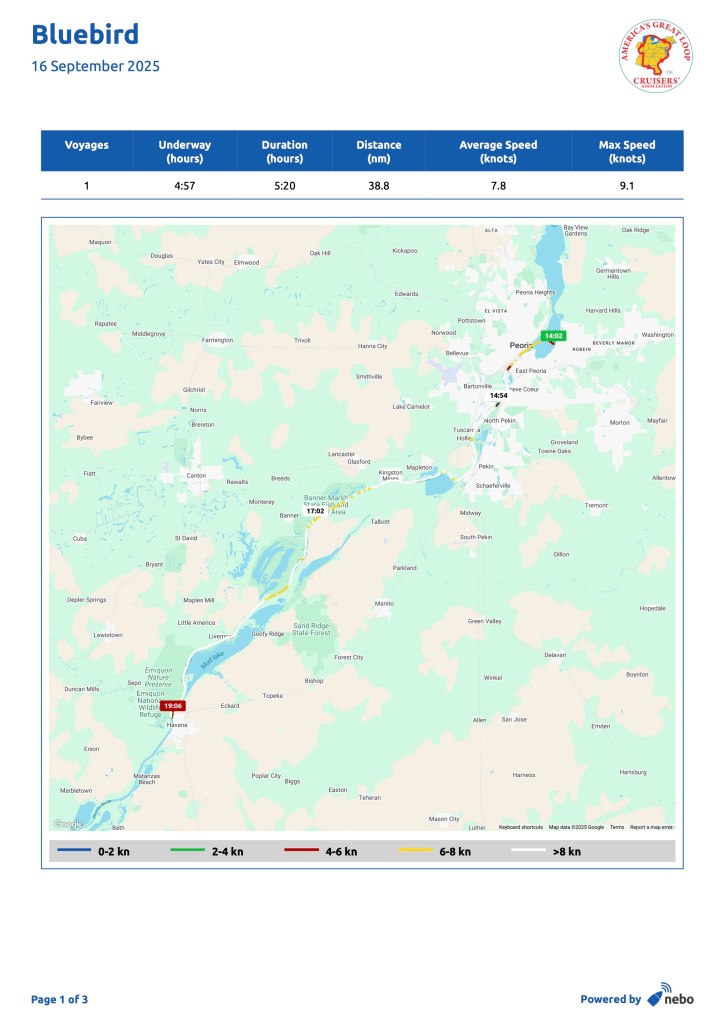
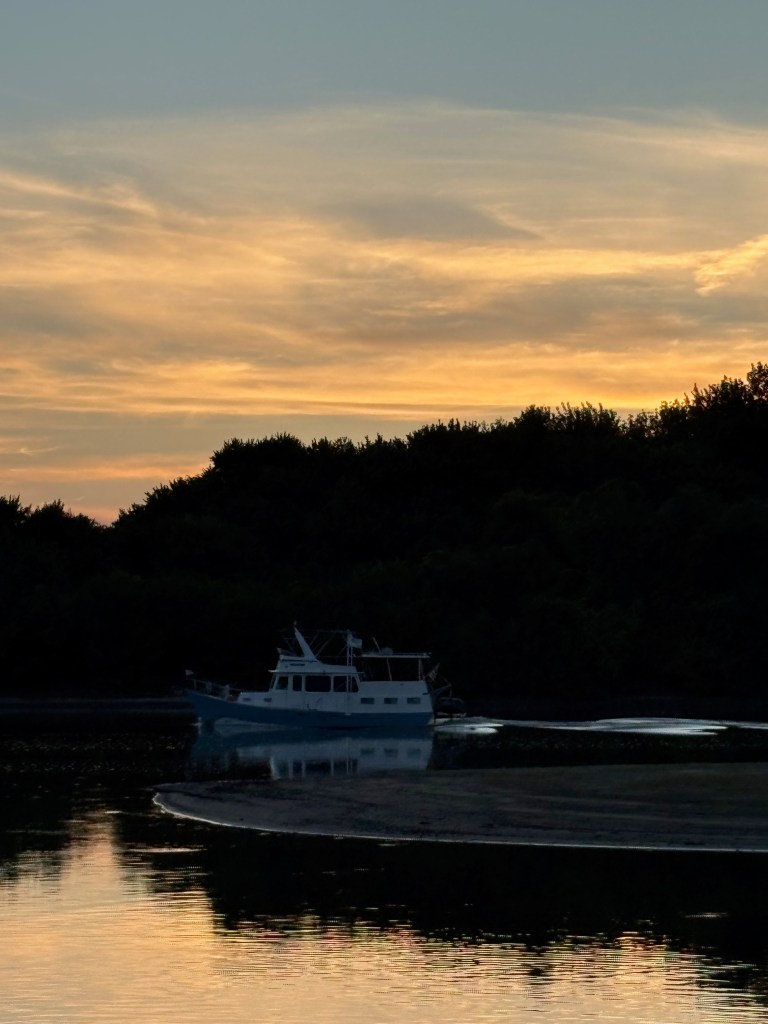
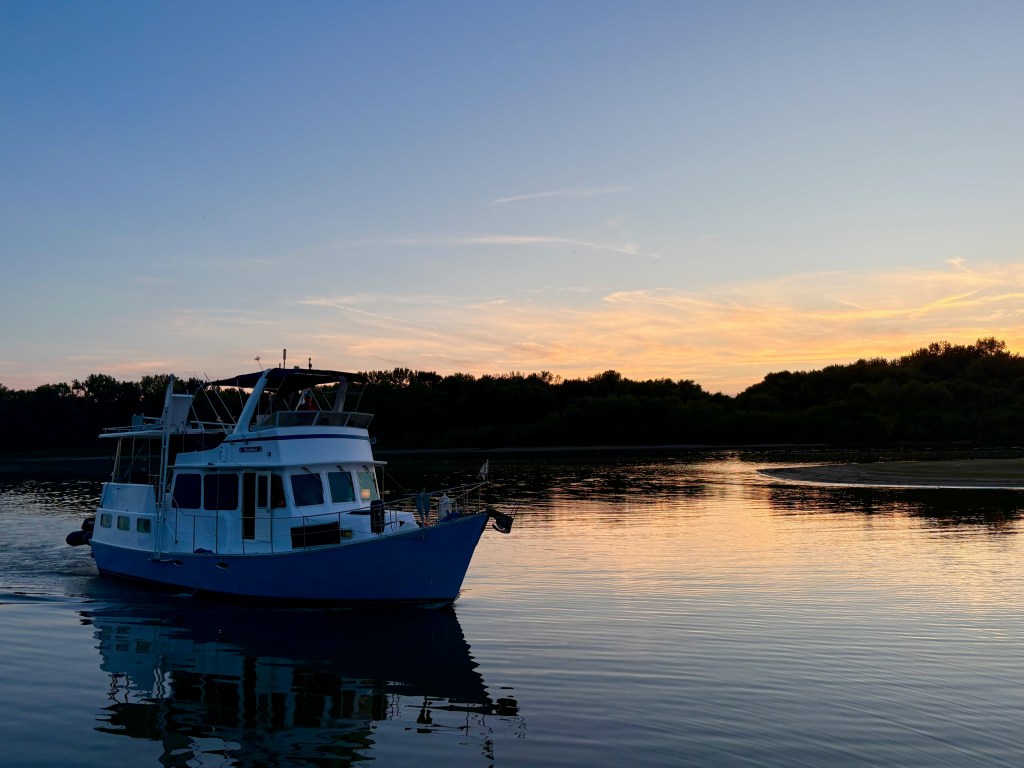
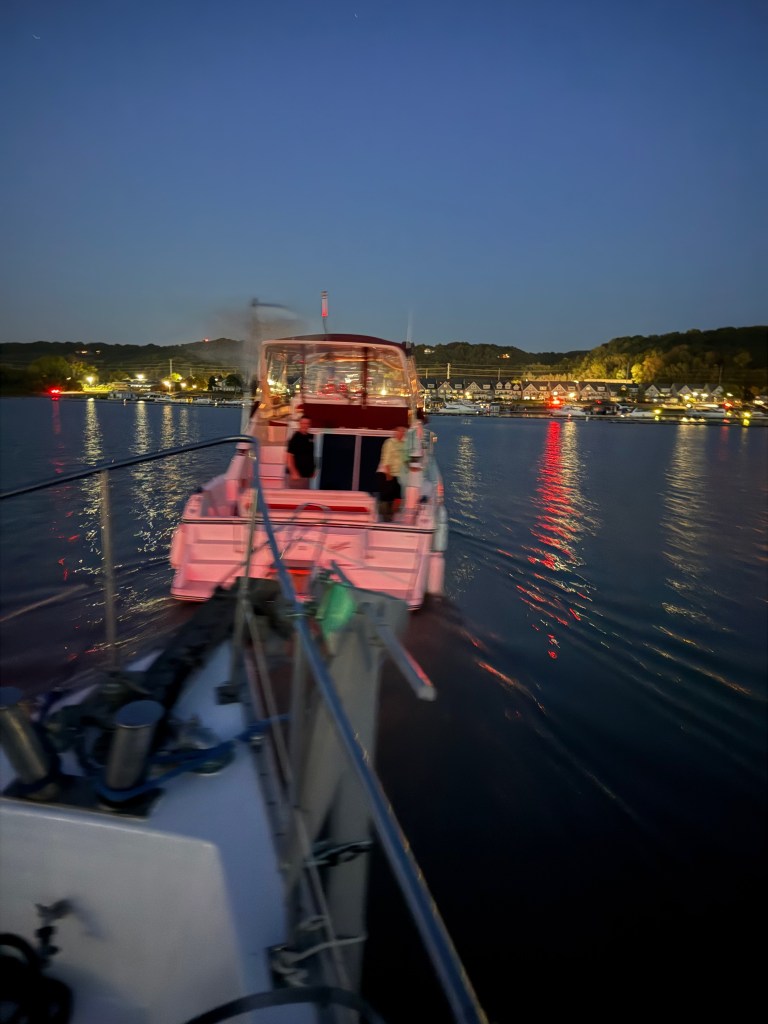
We left Peoria tentatively, watching all the gauges and gradually becoming more comfortable as everything seemed nominal. We decided to anchor out for only the second time on the trip and pulled in behind our friends on “Lake Effect” who photographed us coming in. Quiver island is just over 120 miles from St. Louis and we had left the Chicago metroplex for the midwest and one of the great grain growing regions of the world.
We dropped the anchor and backed down to set it firmly. Then we went started the generator to provide power for the AC system and batteries. It seemed to run all night and everything seemed fine. Then, ready to depart after taking Duke to shore for his constitutional in the dinghy, Hervey motored up onto the anchor and used the windlass to bring up the chain. But when the anchor came free, the windlass would not lift it to the boat and the entire 12 volt system shut down.
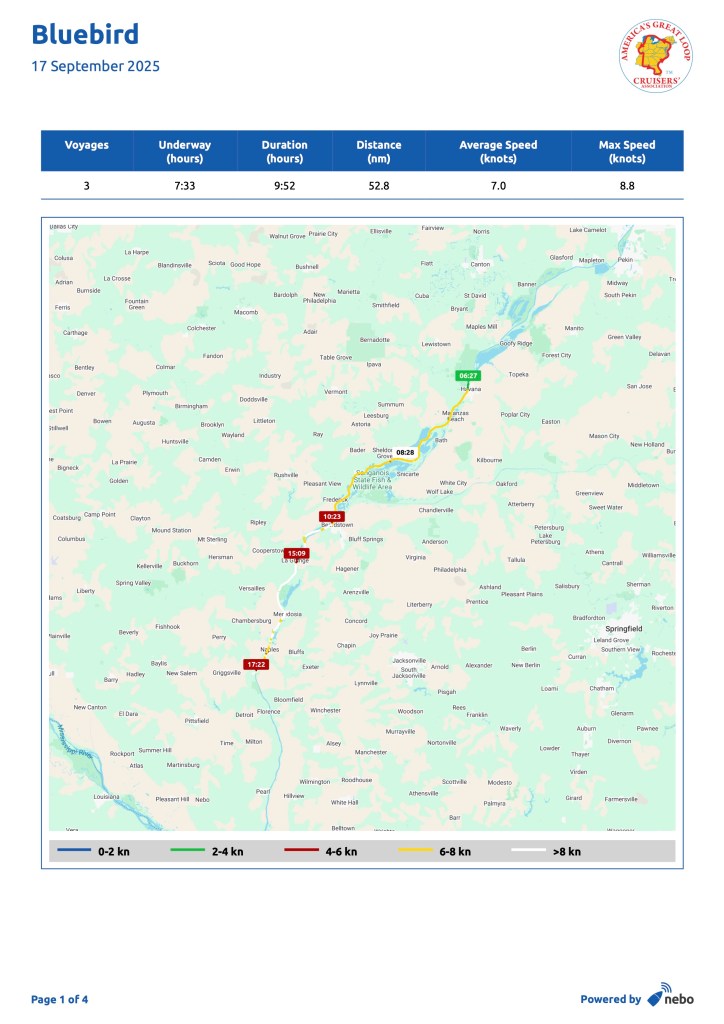
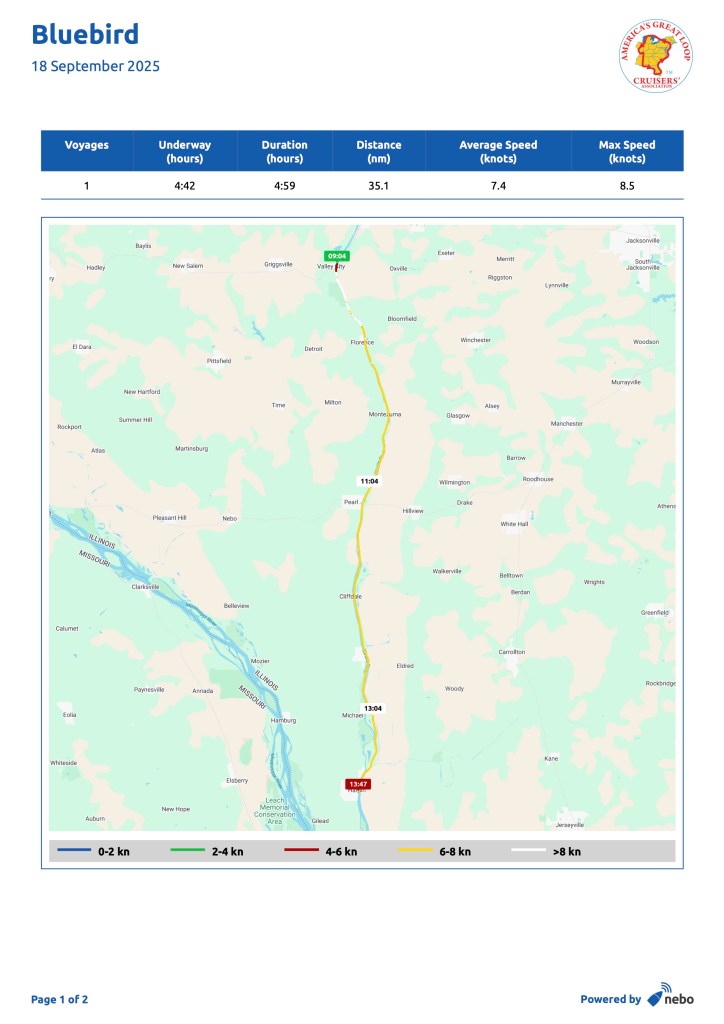
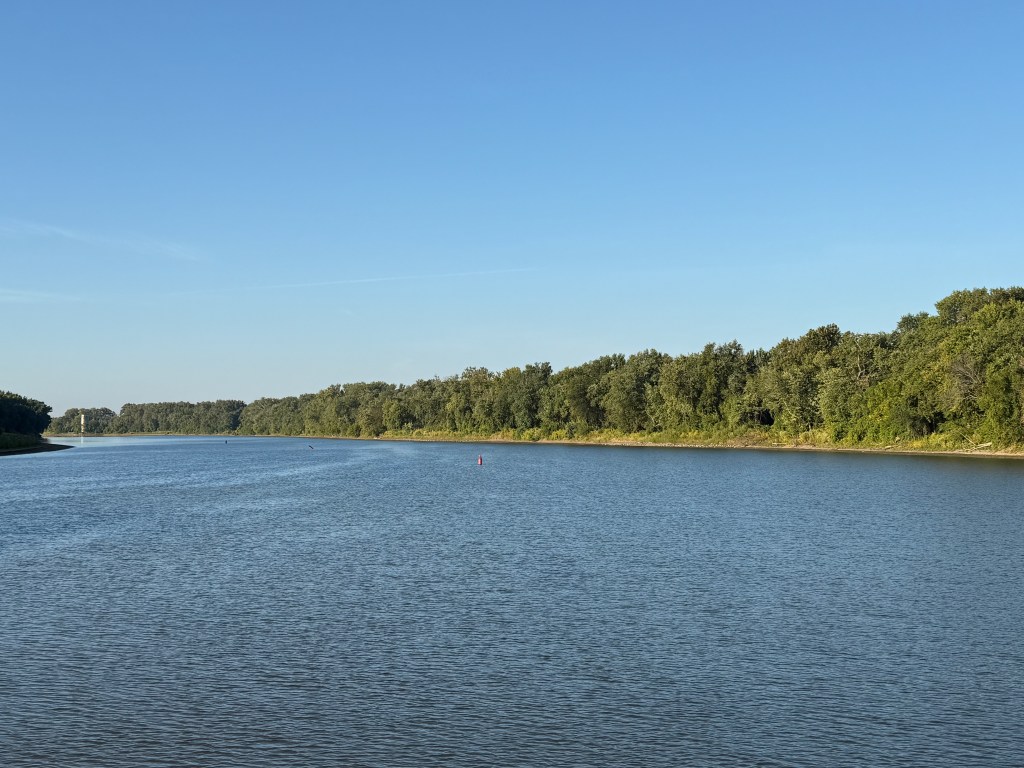
After a call to the electrician in Florida who had redone our electrical system in 2023, we were able to track down the proper fuse, with a replacement conveniently tied to the cable. After a brief stop at Logsdon Tug Service barge in Beardstown, IL, we were able to replace the fuse and proceed.
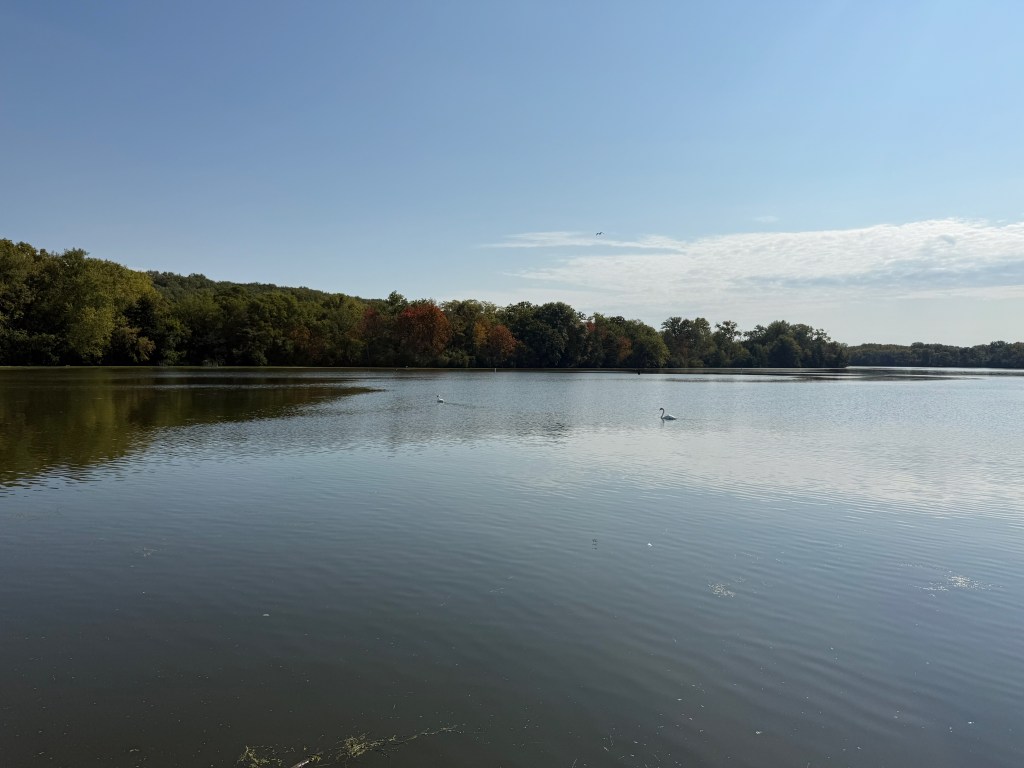
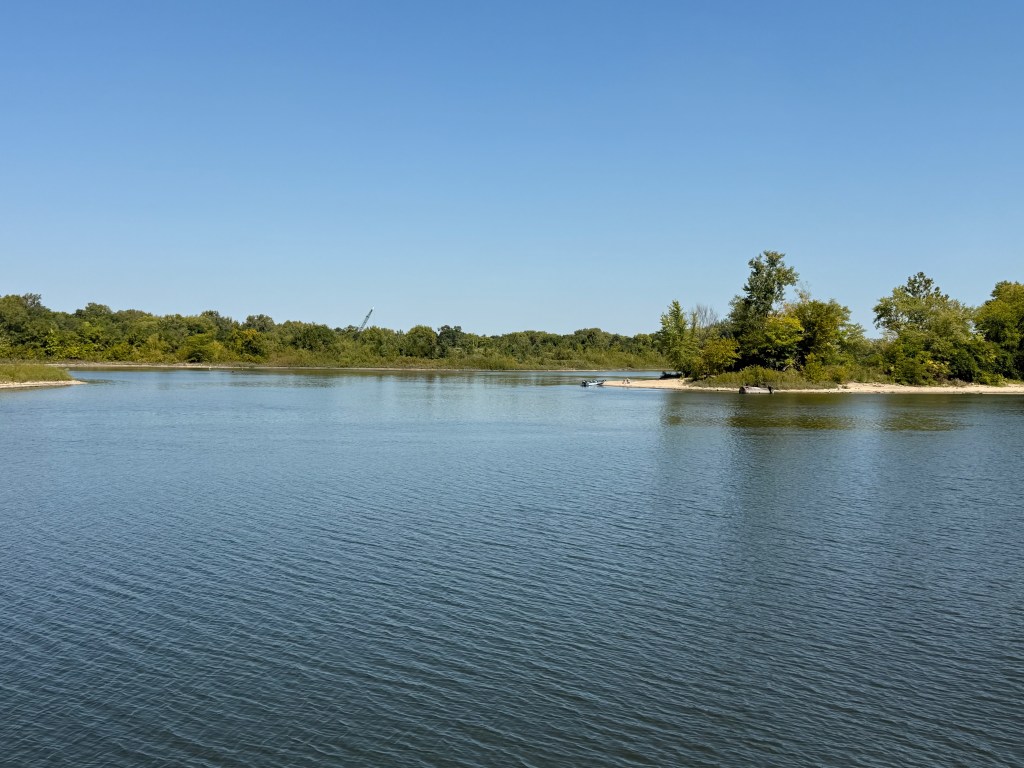
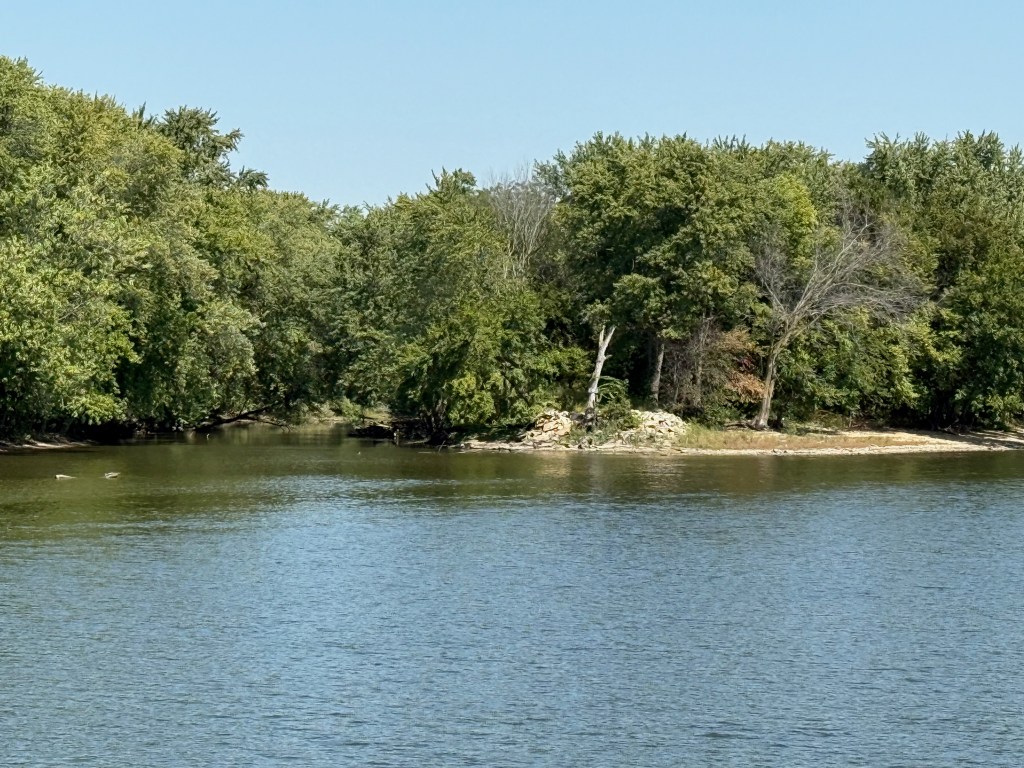
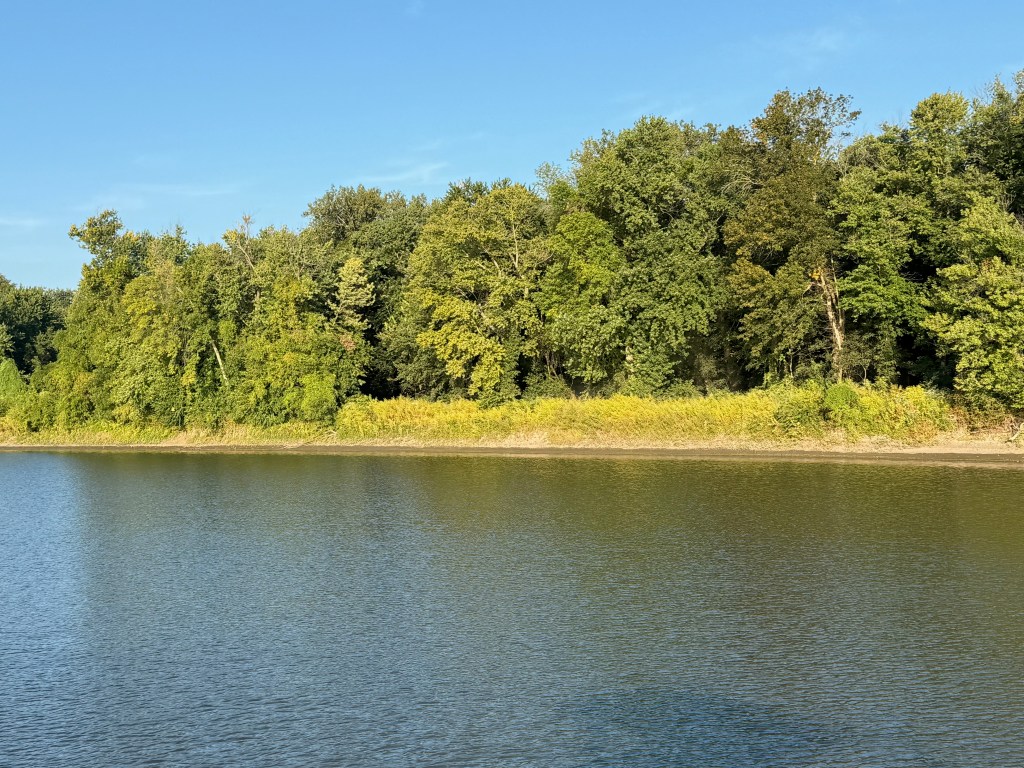
We kept going and made our way down the river. It felt wild and very rural, with barge traffic coming and going past us frequently, We had no problems with the traffic and Hervey’s southern accent become noticeably broader as he talk with the captains who all seemed to be from Louisiana.
We anchored out again that night just north of the Norfolk and Western Railroad bridge, 61 miles north of St. Louis, and out of the current of the river. With no windlass, Hervey had to raise the 30 kg (66 lbs) anchor by hand.
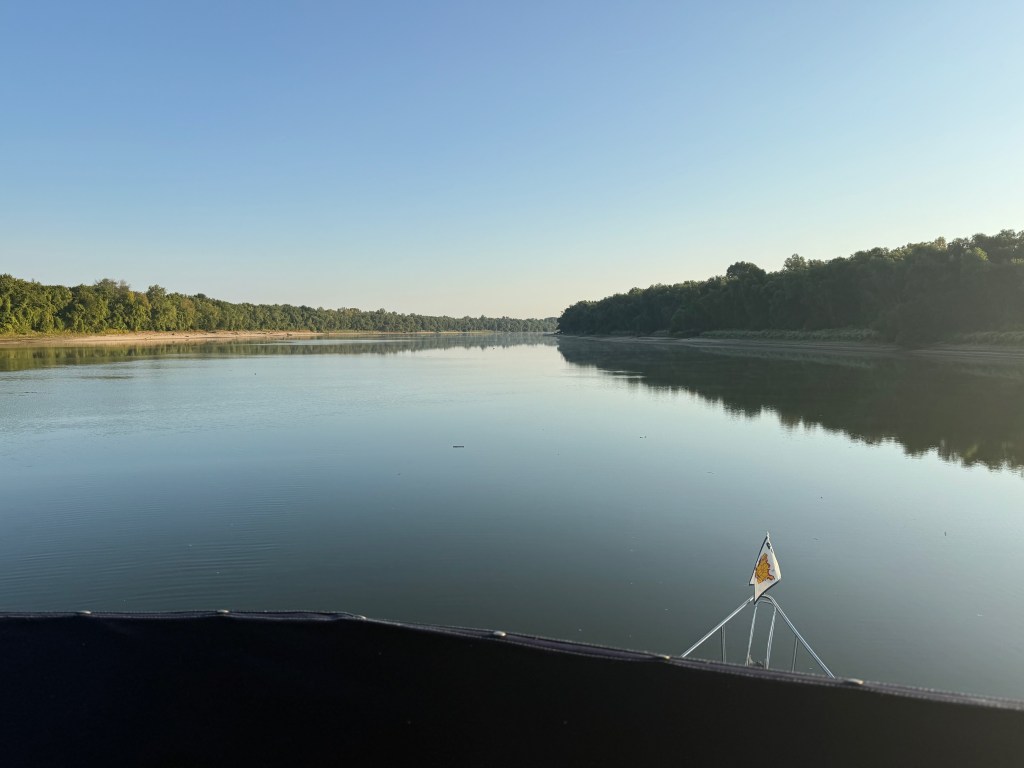
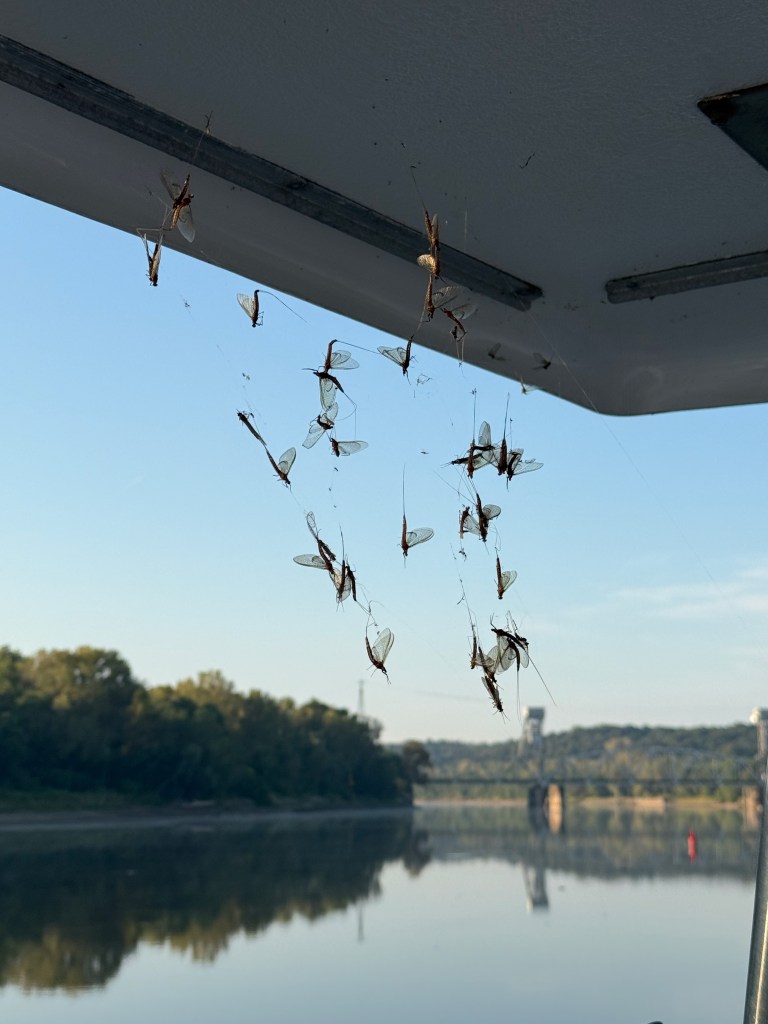
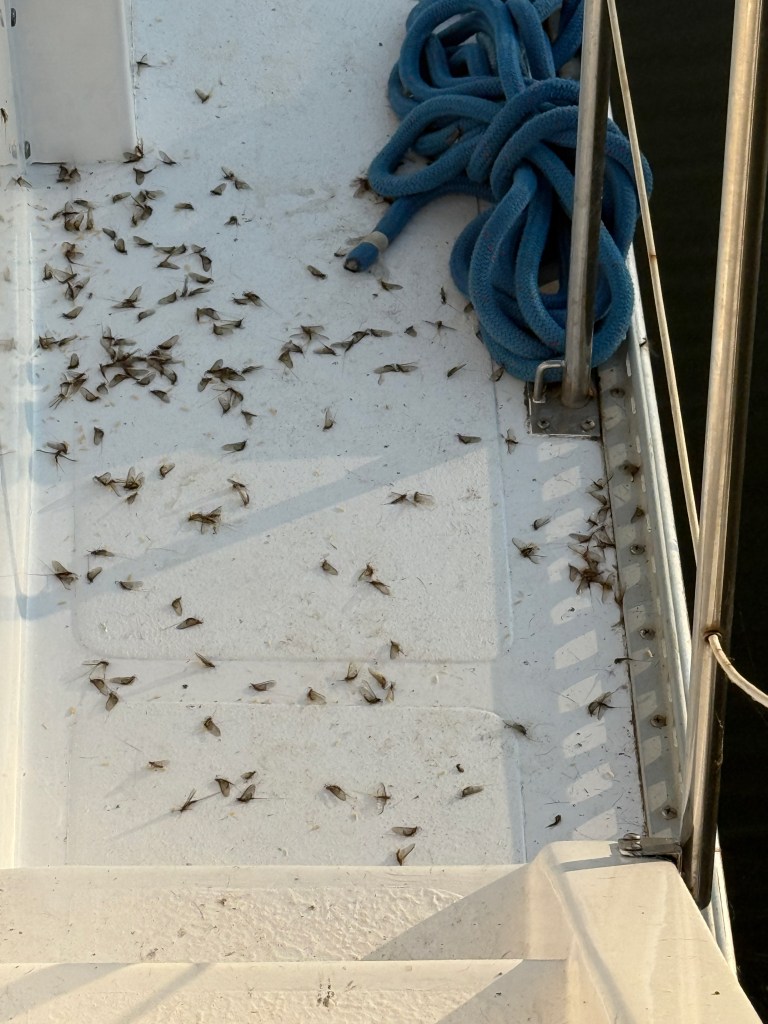
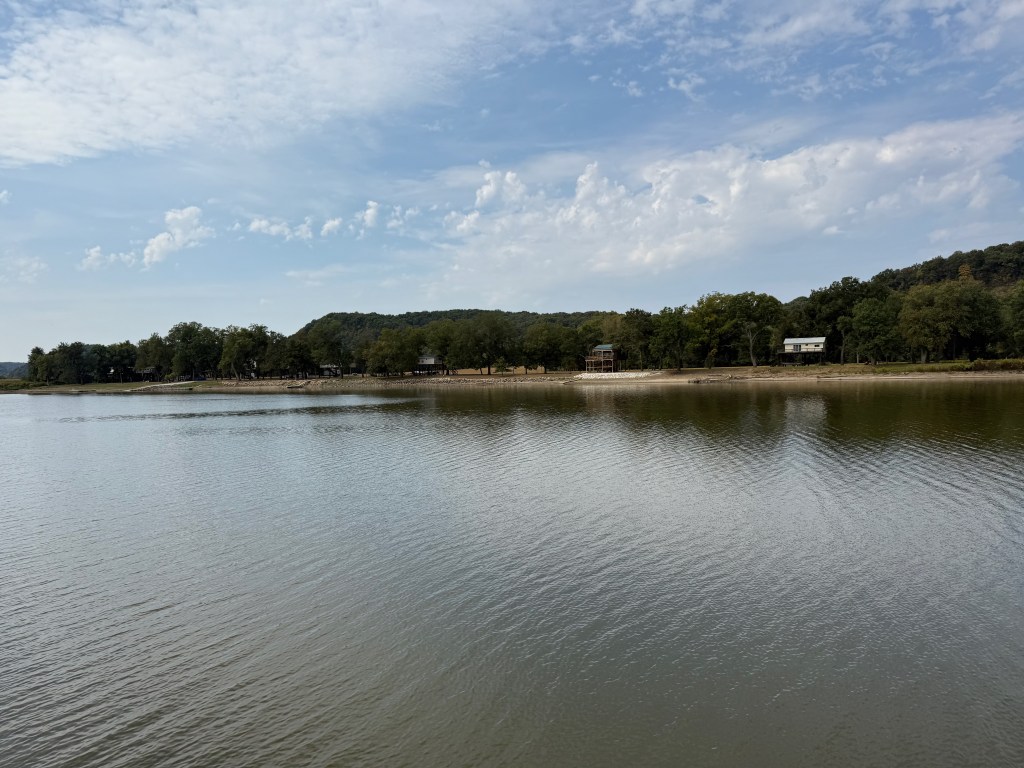
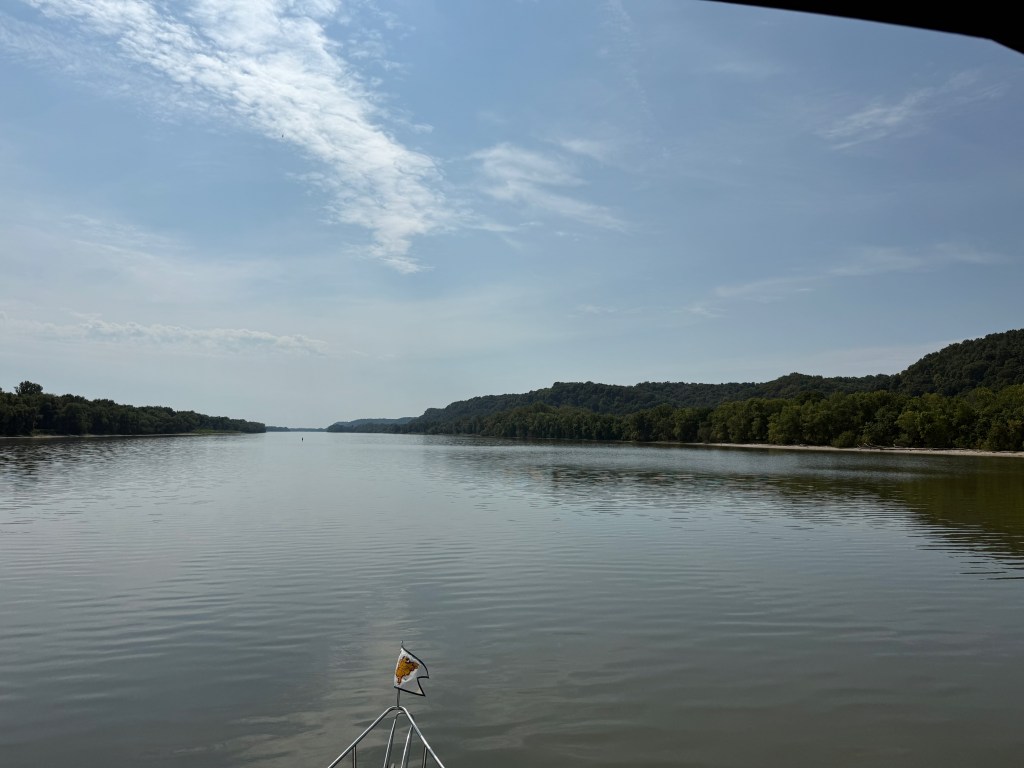
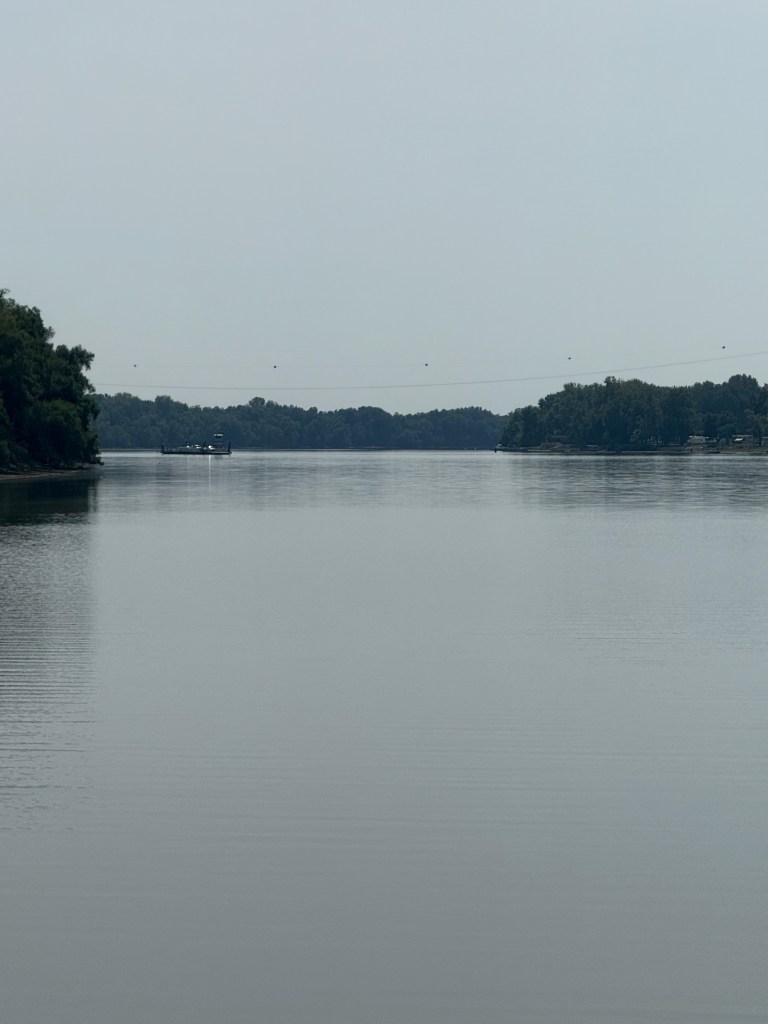
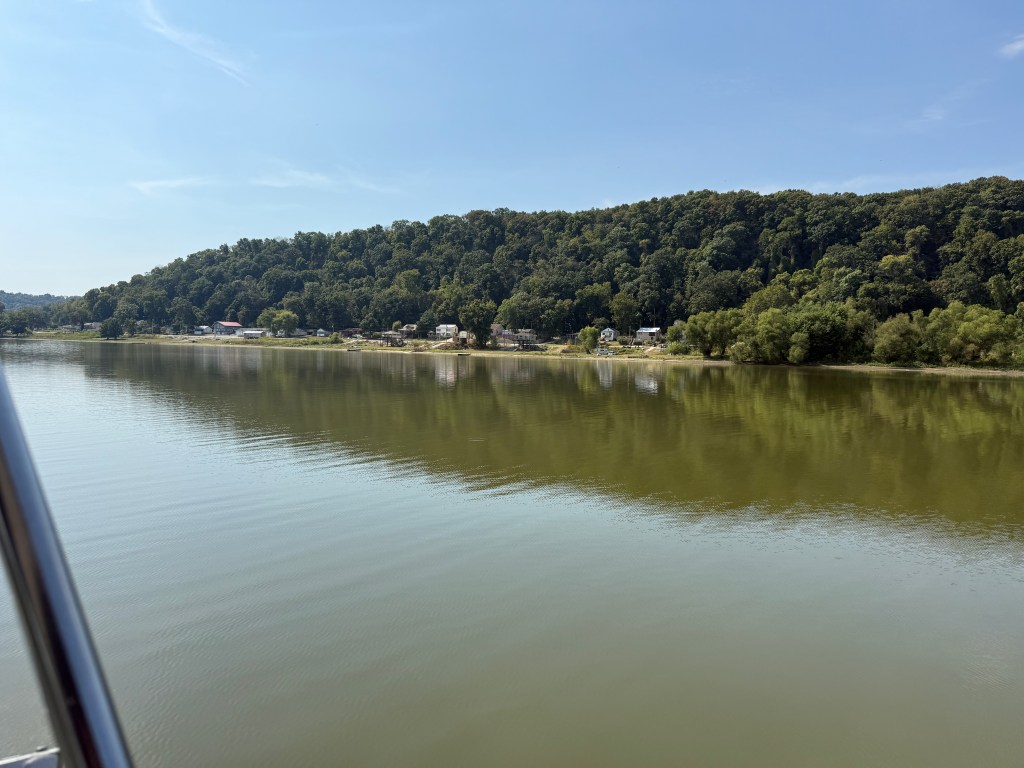
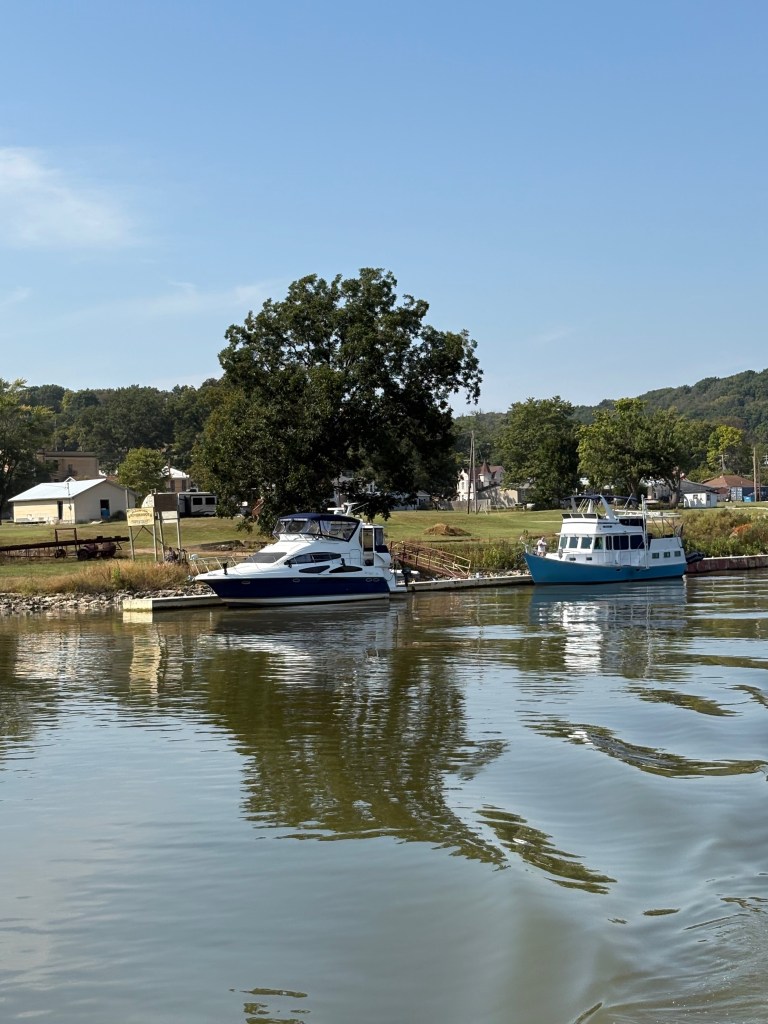
We woke up and Hervey took Duke in the dinghy for his morning walk. The mayflies were thick and the spiders were getting fat off them, which we didn’t mind. We named one of them Charlotte, but we could see no discernible writing in the web.
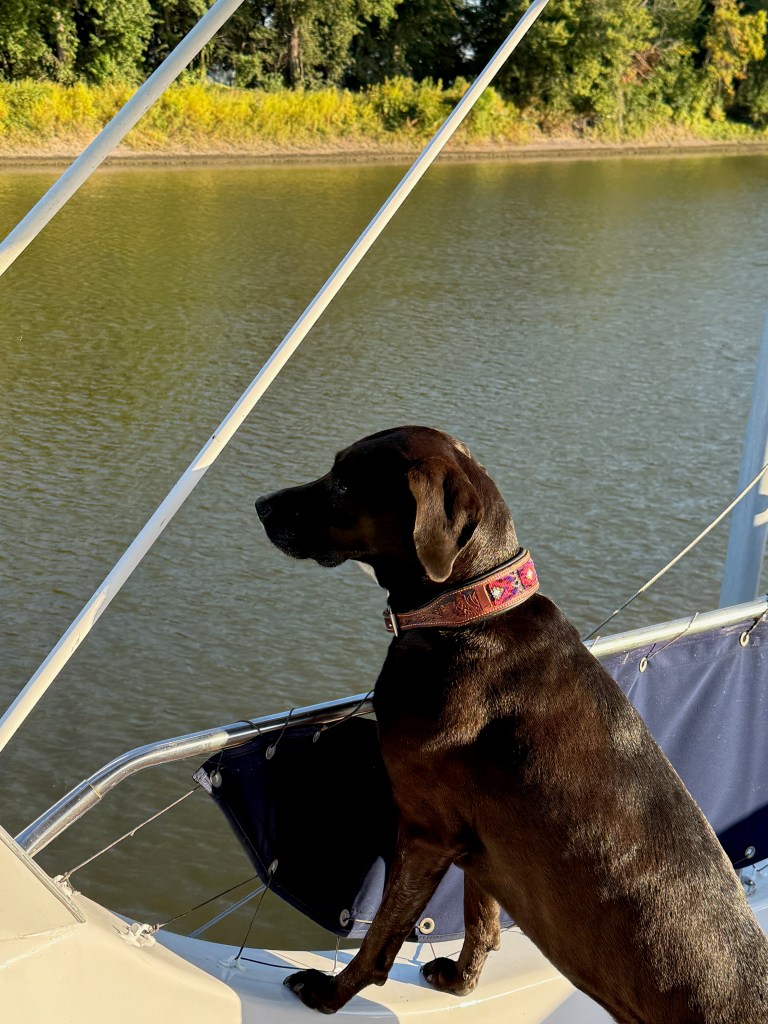
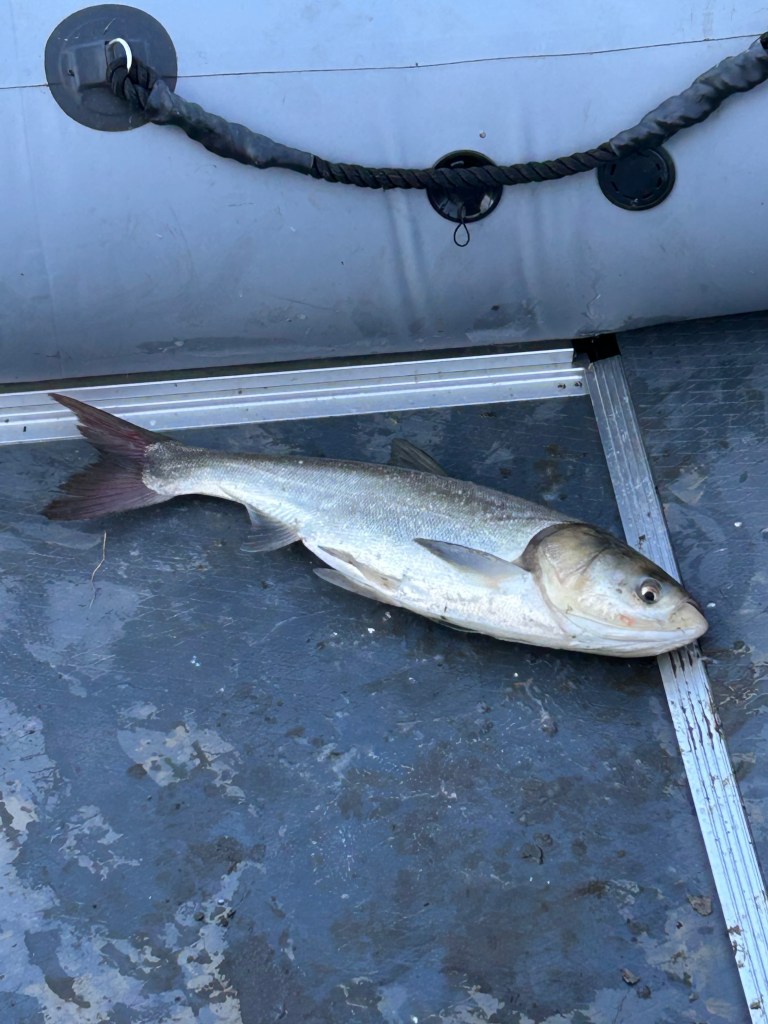
We pulled up the anchor and headed downriver. Duke had been very interested in the Asian Carp that had been jumping out o f the water as we passed schools of them. He would bark and bark, as he did for dolphins, but with no particular result that we could see. But all of a sudden, one mis-guided fish landed in the dinghy and flopped around for a while. Duke was very pleased with himself and Hervey climbed down to return the fish to the river.
Mel’s Illinois Riverdock Restaurant was a great stop. We were only 21 miles from the end of the Illinois River system and the beginning of the Mississippi River and the strong currents that would whisk us south. The dock had no power supply so we were dependent upon our generator for one more night. But it was not to be. After many tries, the generator would not start and we opened the windows to the sweltering night and conserved our battery power as best we could.
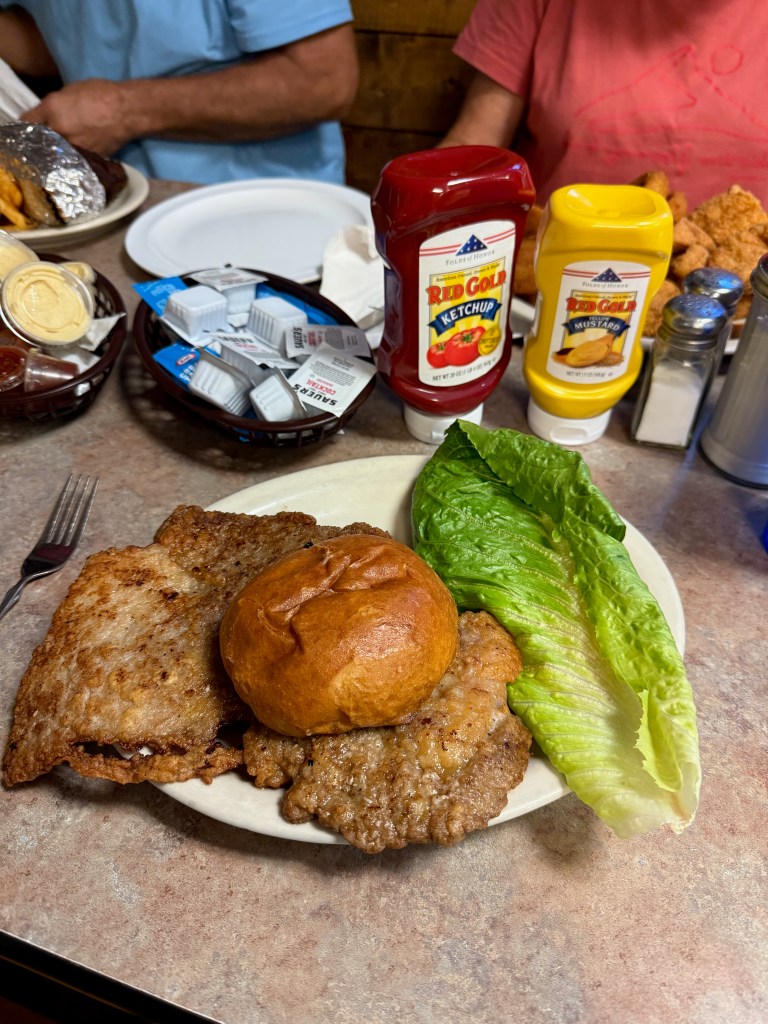
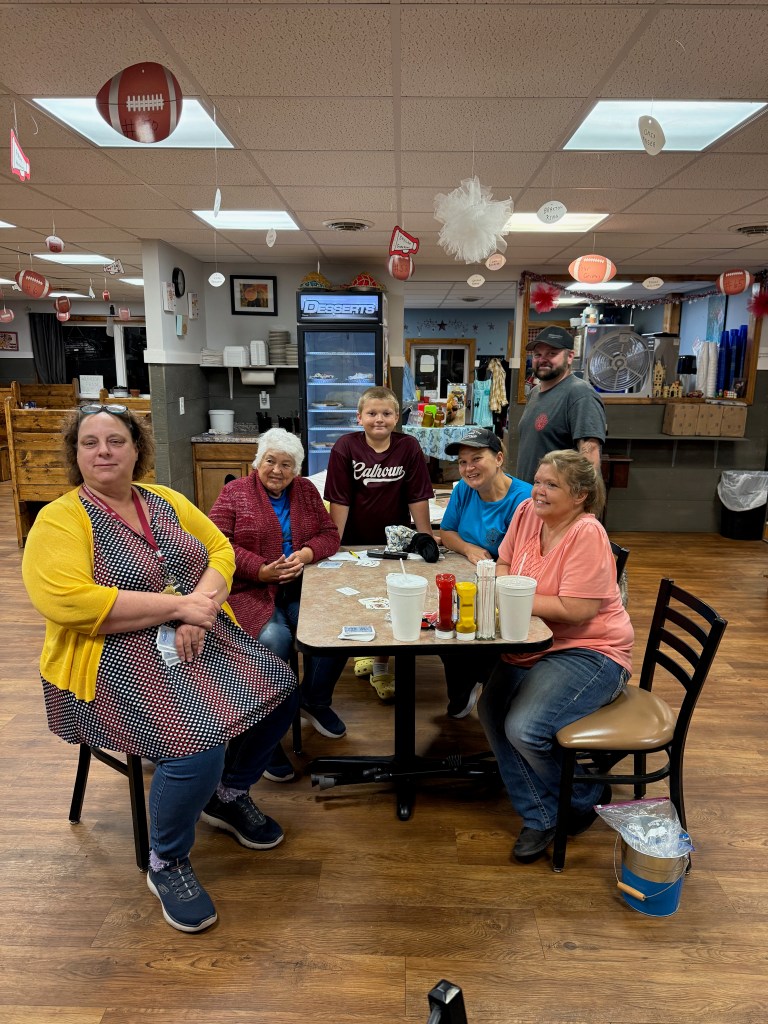
But before we left the Illinois Valley, Hervey wanted to have a Port Tenderloin sandwich! The management of the restaurant were all there, three generations of generous and fascinating people who told us all about the history of the region. Immensely intelligent and down-to-earth people, they were preparing to serve breakfast to the local Junior High softball team the next morning as they went off to the State Tournament (they won!)
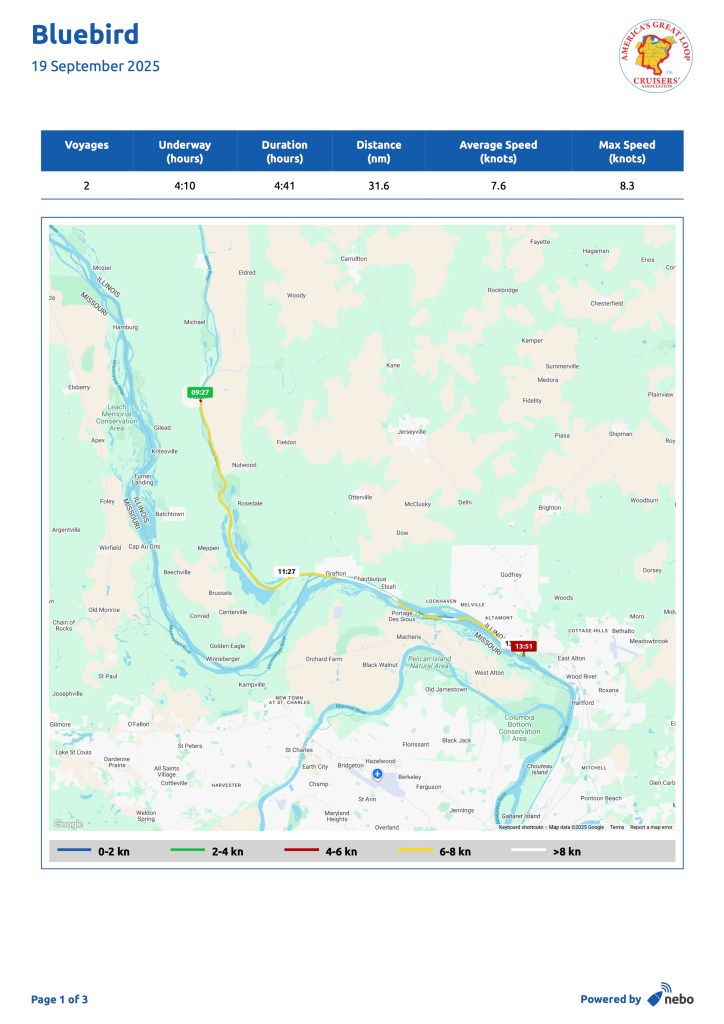
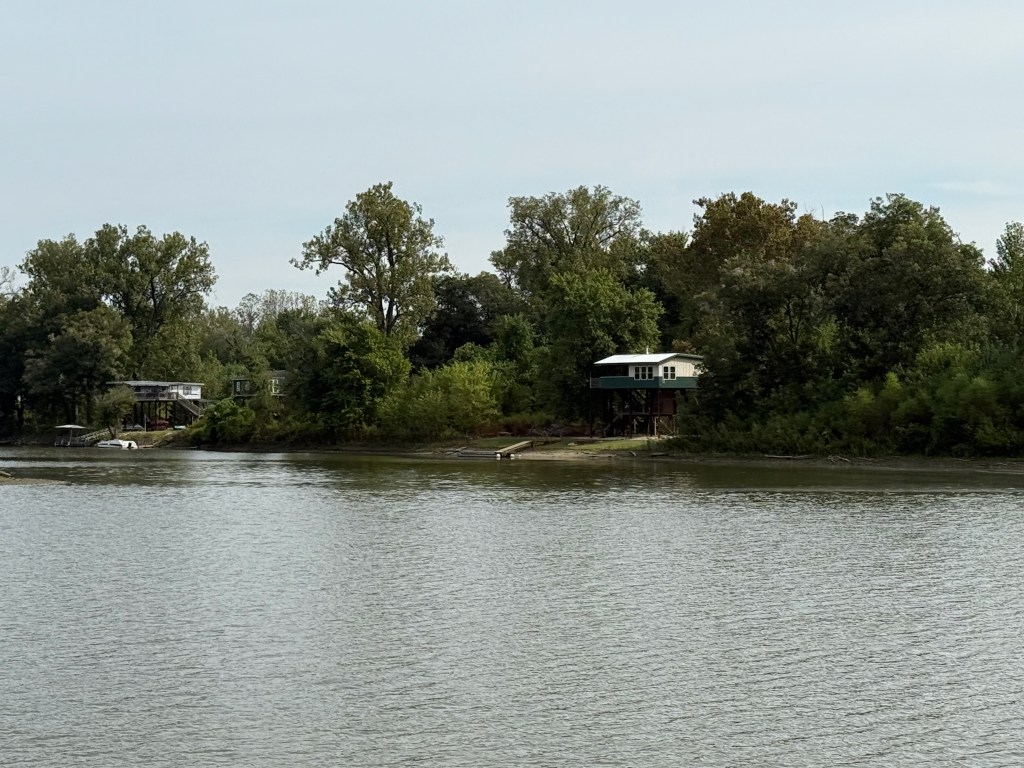
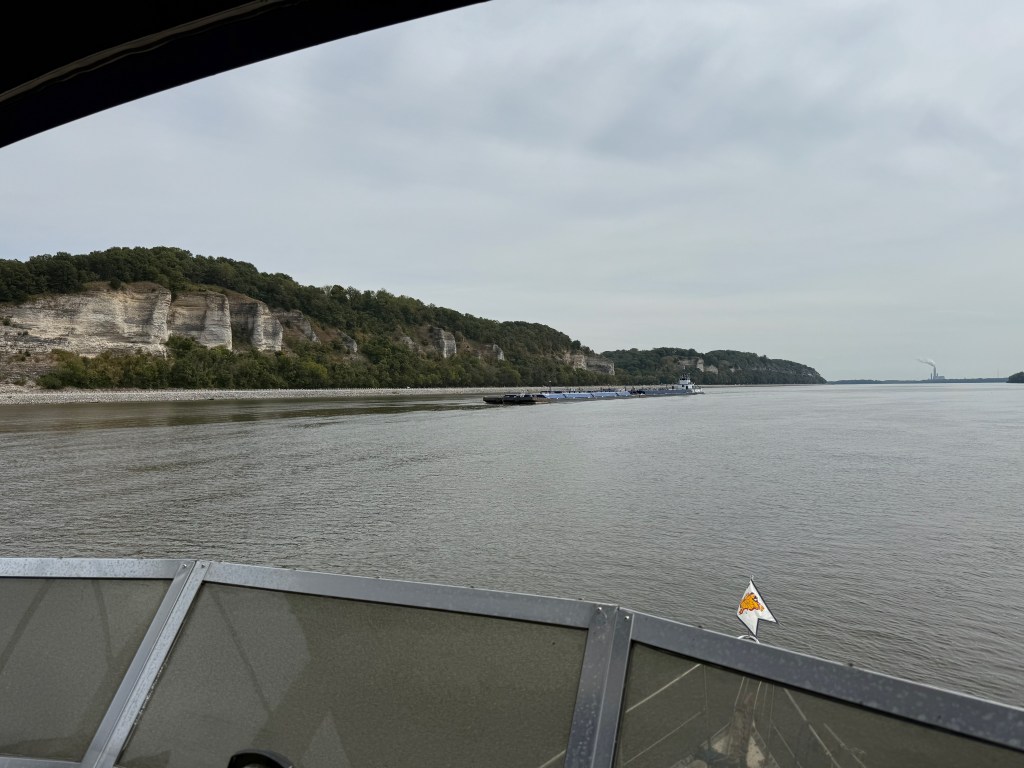
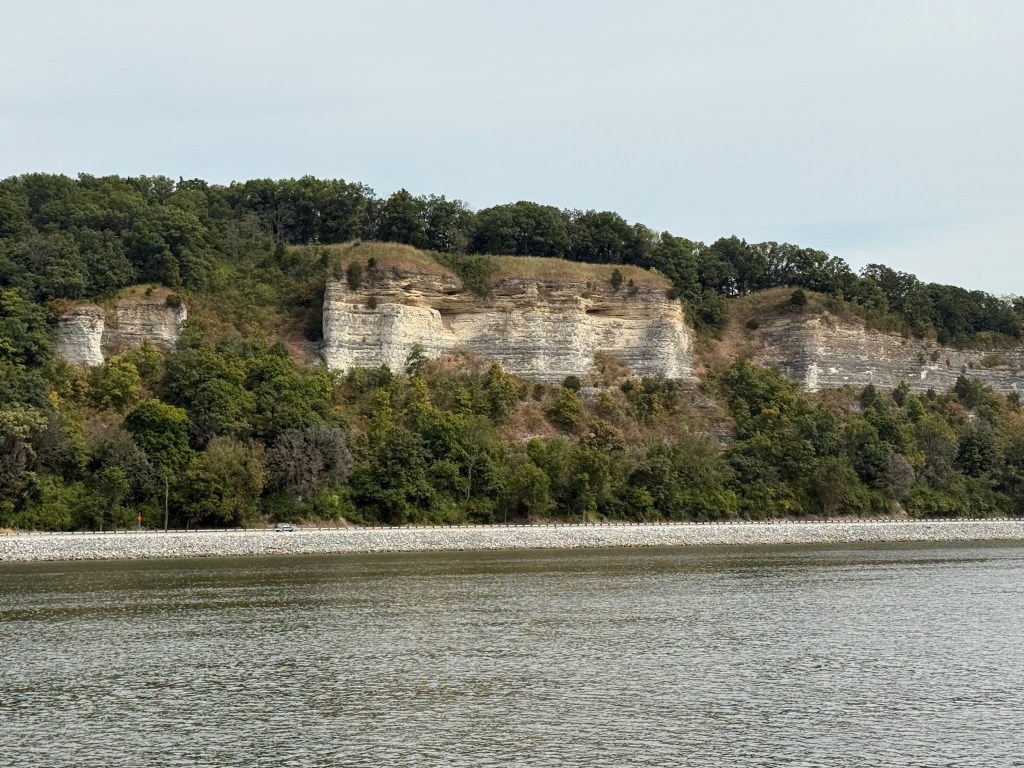
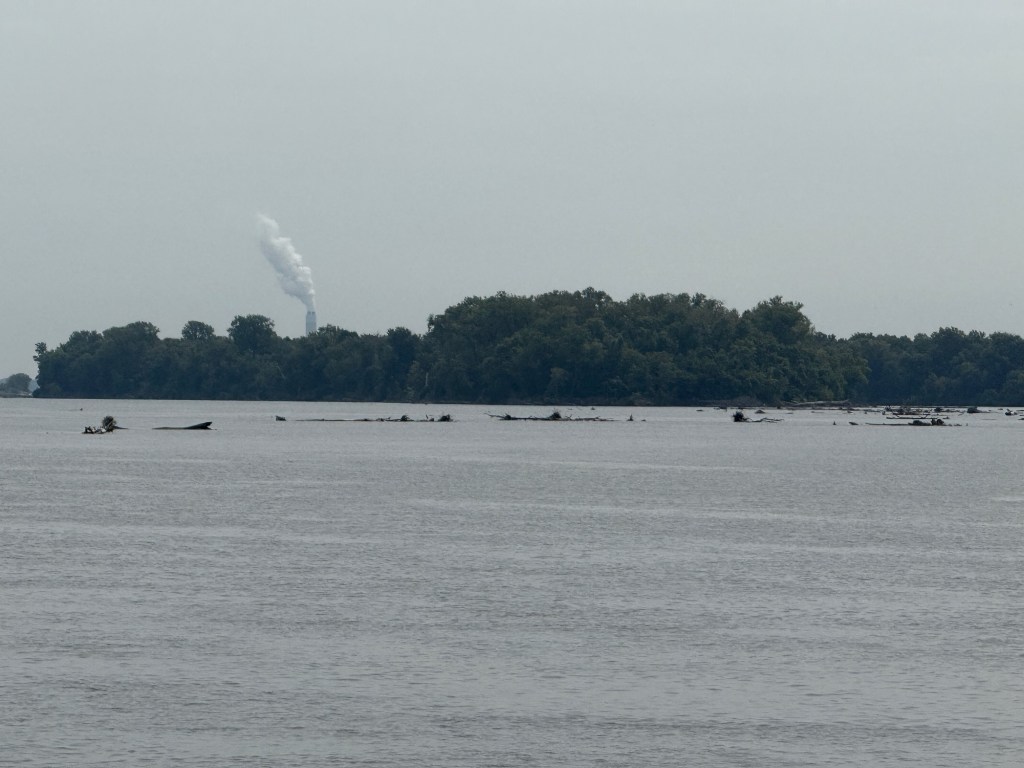
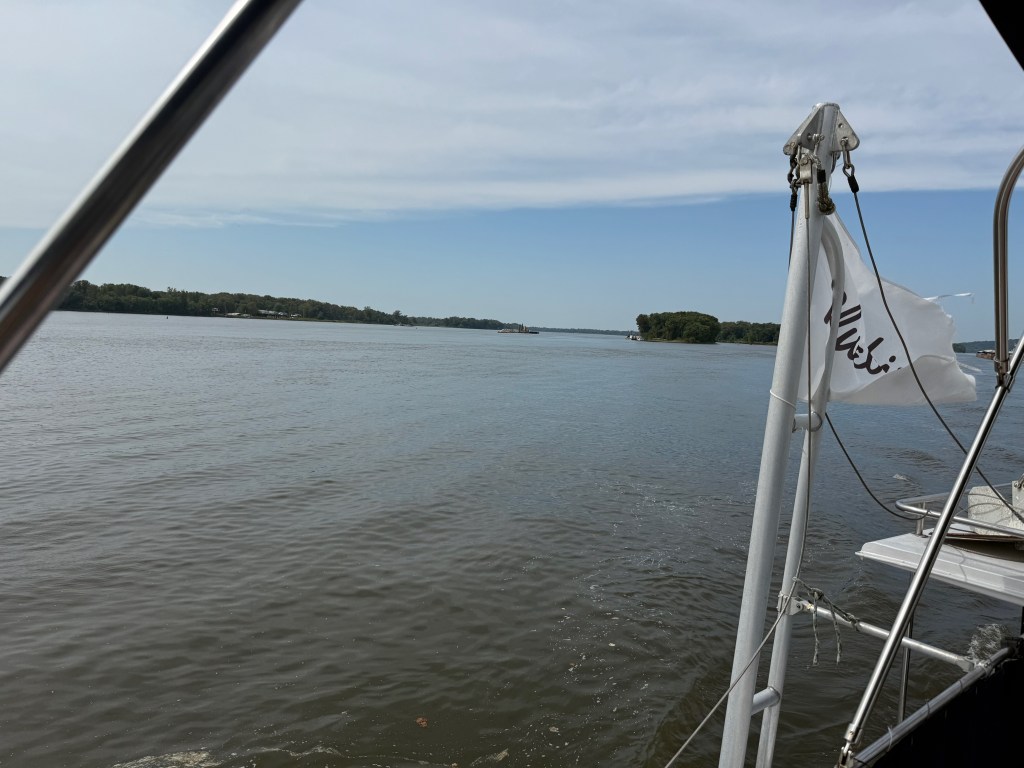
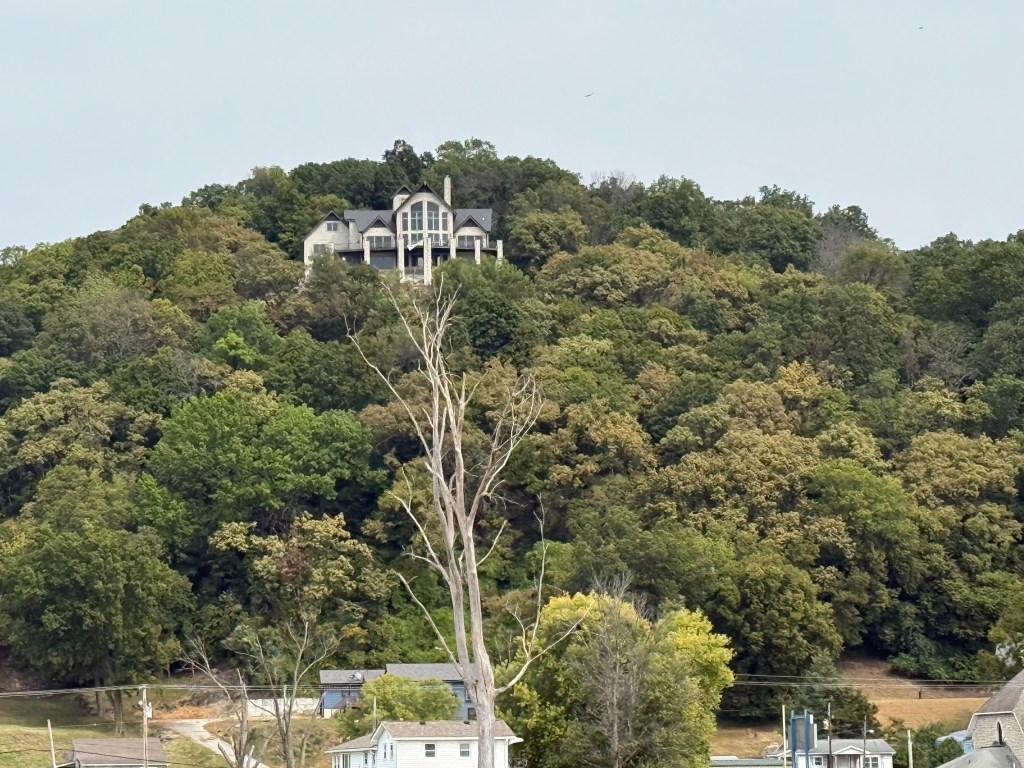
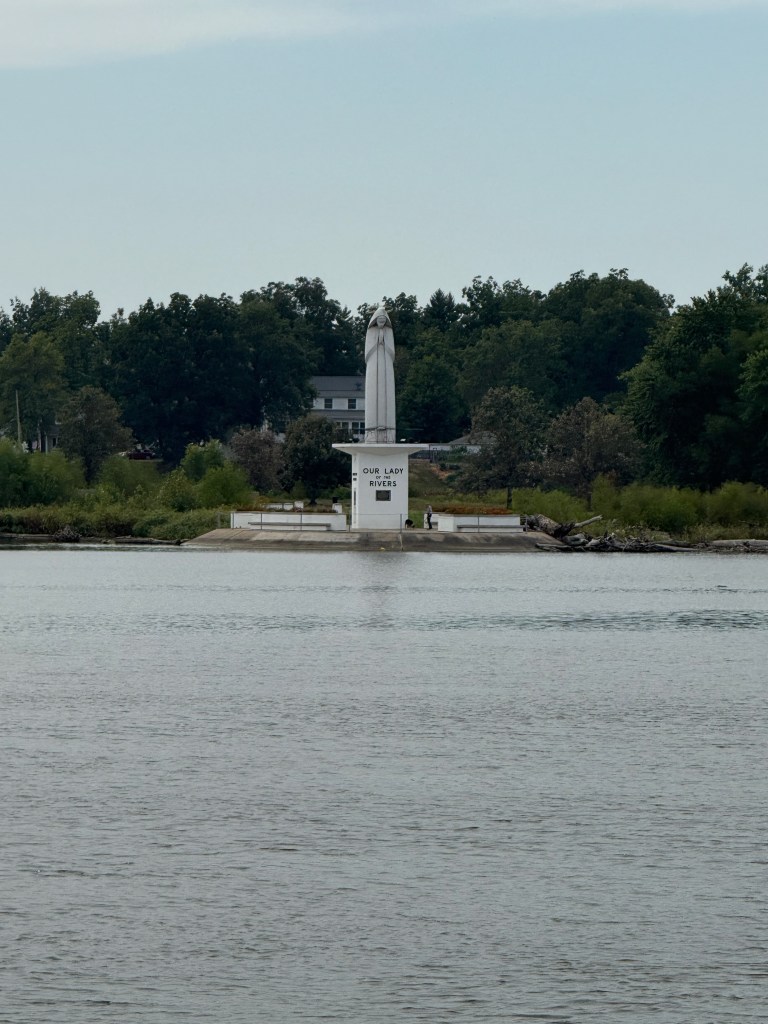
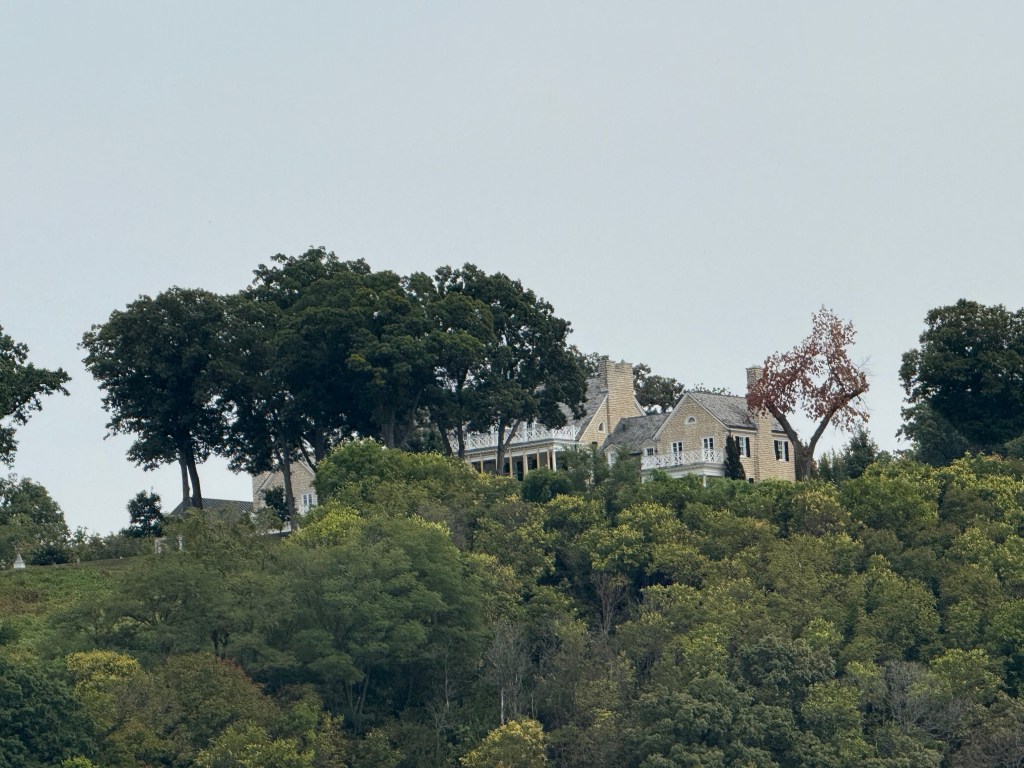
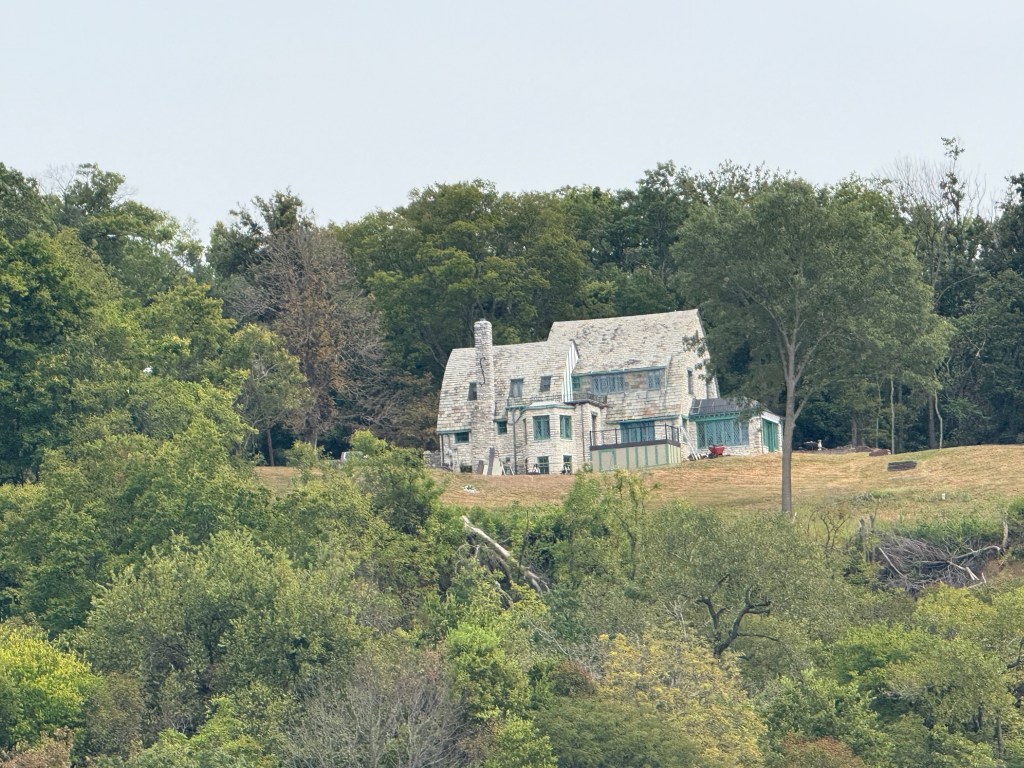
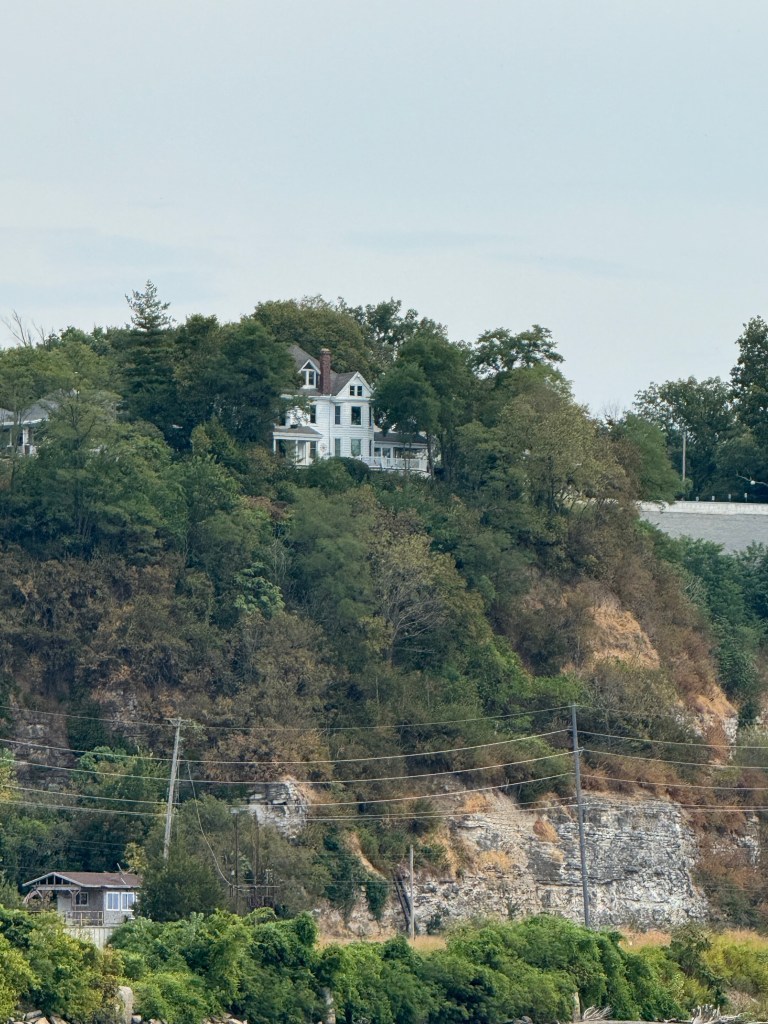
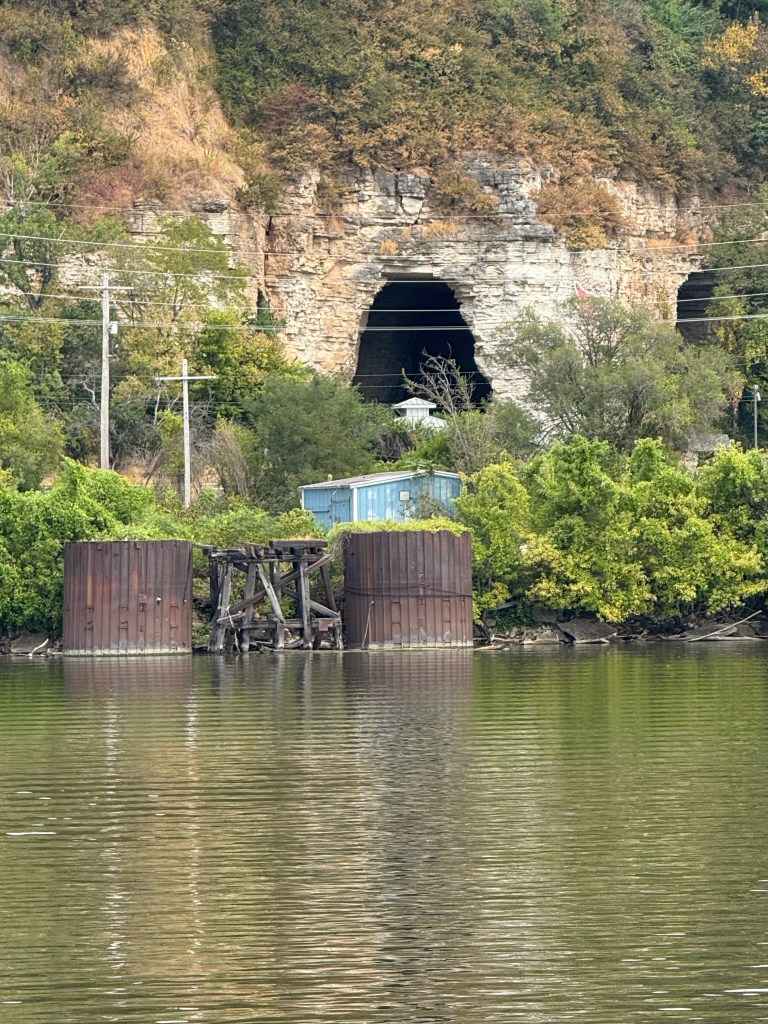
So this was the end of the Illinois River. We ran the last 20 miles down to the Mississippi and joined the river with much anticipation but little fanfare. We were definitely headed into an urban area and the boating traffic increased, as did the housing density and industrial facilities. We had expected a strong current at the beginning but the dam just below Alton at Chain of Rocks created a pool that was moving only slightly faster than the Illinois. St, Louis was still 20 miles downstream from Alton and we settled into our marina for the weekend, savoring our accomplishment and building up our energy for the mighty Mississippi.

 Bluebird's Great Loop Diaries
Leave a comment